Eric F. Clarke - Böcker
Visar alla böcker från författaren Eric F. Clarke. Handla med fri frakt och snabb leverans.
4 produkter
4 produkter
Ways of Listening
An Ecological Approach to the Perception of Musical Meaning
Inbunden, Engelska, 2005
1 182 kr
Skickas inom 5-8 vardagar
In Ways of Listening, musicologist Eric Clarke explores musical meaning, music's critical function in human lives, and the relationship between listening and musical material. Clarke outlines an "ecological approach" to understanding the perception of music, arguing that the way we hear and understand music is not simply a function of our brain structure or of the musical "codes" given to us by culture, but must be considered within the physical and social contexts of listening.
Practice in Context
Historically Informed Practices in Nineteenth-Century Instrumental Music
Inbunden, Engelska, 2025
677 kr
Skickas inom 5-8 vardagar
Historical performance research is undergoing a transformation as the research from different centers intersects in new ways. Practice in Context reflects this vibrant, diverse, and evolving field.The Historically Informed Performance --shorted to HIP-- movement first dipped its toe into the nineteenth century by tackling the symphonies of Beethoven in the nineteen eighties. Since then, there has been a burgeoning of performances and recordings of nineteenth- and early twentieth-century repertoire on period instruments. But the advance of HIP into post-Classical repertoires has exposed the specific challenges nineteenth-century historical performance styles present to a 'period' movement that is characterised by crisp, clean, light playing. Historically evidenced nineteenth-century style remains elusive to many professional performers even after four decades of marketing 'period' performances of this repertoire. A real transformation of professional post-Classical HIP will only be possible if scholars and performers start to find new ways to inter-relate, which is central to the work of many of the contributors to this book. Editors Claire Holden, Eric F. Clarke, and Cayenna Ponchione-Bailey have brought together a diverse group of international contributors to present different perspectives and offer new possibilities to performers, scholars, and scholar-performers.The book addresses a diverse range of pressing and exciting topics in nineteenth-century historically informed practices, focusing on new kinds of research that move away from traditional treatise archaeology. These include multi-disciplinary approaches, such as the use of empirical methods in the study of present-day HIP performance practices, and increased contextualisation through a closer relationship with cultural and social musicology. Practice in Context brings together scholars and performer/scholars who are interested in how historical research can contribute to greater understanding of the musical priorities and artistic decision-making processes when performing nineteenth-century pieces.
1 576 kr
Skickas inom 5-8 vardagar
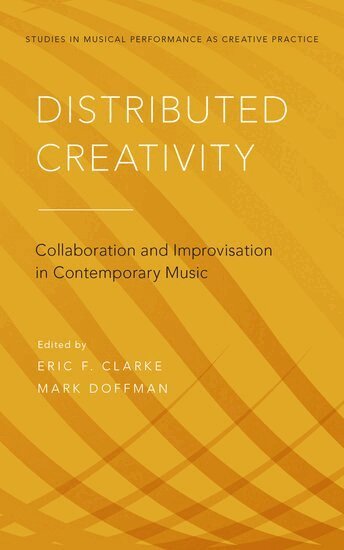
Creative practice in music, particularly in traditional concert culture, is commonly understood in terms of a rather stark division of labour between composer and performer. But this overlooks the distributed and interactive nature of the creative processes on which so much contemporary music depends. The incorporation of two features-improvisation and collaboration-into much contemporary music suggests that the received view of the relationship between composition and performance requires reassessment. Improvisation and collaborative working practices blur the composition/performance divide and, in doing so, provide important new perspectives on the forms of distributed creativity that play a central part in much contemporary music.Distributed Creativity: Collaboration and Improvisation in Contemporary Music explores the different ways in which collaboration and improvisation enable and constrain creative processes. Thirteen chapters and twelve shorter Interventions offer a range of perspectives on distributed creativity in music, on composer/performer collaborations and on contemporary improvisation practices. The chapters provide substantial discussions of a variety of conceptual frameworks and particular projects, while the Interventions present more informal contributions from a variety of practitioners (performers, composers, improvisers), giving insights into the pleasures and perils of working creatively in collaborative and improvised ways.
398 kr
Skickas inom 5-8 vardagar
In recent years, many psychologists and cognitive scientists have published their views on the psychology of music. Unfortunately, this scientific literature has remained inaccessible to musicologists and musicians, and has neglected their insights on the subject. In Ways of Listening, musicologist Eric Clarke explores musical meaning, music's critical function in human lives, and the relationship between listening and musical material. Clarke outlines an "ecological approach" to understanding the perception of music. The way we hear and understand music is not simply a function of our brain structure or of the musical "codes" given to us by culture, Clarke argues. Instead, cognitive, psychoacoustical, and semiotic issues must be considered within the physical and social contexts of listening. In essence, Clarke adapts John Gibson's influential ecological theory of perception to the complex process of perceiving music. In addition to making a theoretical argument, the author offers a number of case studies to illustrate his concept. For example, he analyzes the experience of listening to Jimi Hendrix's performance of the Star Spangled Banner at Woodstock in 1969. Clarke examines how Hendrix's choice of instrument and venue, use of distortion, and the political climate in which he performed all had an impact on his audience's perception of the anthem. A complex convergence of broad cultural contexts and specific musical features - the entire "ecology" of the listening experience - is responsible for this performance's impact.Including both the best psychological research and careful musicological scholarship, Clarke's book offers the most complex and insightful perspective on musical meaning to date. It will be of interest to musicologists, musicians, psychologists, and scholars of aesthetics.