Eric Smoodin - Böcker
Visar alla böcker från författaren Eric Smoodin. Handla med fri frakt och snabb leverans.
11 produkter
11 produkter
2 501 kr
Skickas inom 10-15 vardagar
What do we talk or write about when we talk and write about American film history? The answer is predictably complex and elusive. The American Film History Reader acknowledges and accommodates this complex task by showcasing a range of historical writing demonstrating that when we talk or write about film history we, by necessity, talk and write about a lot of different things. The American Film History Reader provides a selective history of American cinema and offers an introduction to historiographic practice in relation to American moviemaking and moviegoing. The Reader is composed of eighteen essays organized into six thematic sections: Industrial Practice Technology Reception Films and Filmmakers Censorship and Regulation Stardom Appreciating that methods and materials change over time, this structure allows the editors to showcase a breadth of historiographic approaches and a range of research materials within each section. Each essay acts as a point of entry into a history that accounts for the essential and inherent commercial, experiential, social, and cultural aspects of the medium. All eighteen essays are individually introduced by the editors, who provide additional context and suggestions for further reading, making it an ideal resource for students of film studies and particularly for students taking courses on film history.
914 kr
Skickas inom 10-15 vardagar
What do we talk or write about when we talk and write about American film history? The answer is predictably complex and elusive. The American Film History Reader acknowledges and accommodates this complex task by showcasing a range of historical writing demonstrating that when we talk or write about film history we, by necessity, talk and write about a lot of different things. The American Film History Reader provides a selective history of American cinema and offers an introduction to historiographic practice in relation to American moviemaking and moviegoing. The Reader is composed of eighteen essays organized into six thematic sections: Industrial Practice Technology Reception Films and Filmmakers Censorship and Regulation Stardom Appreciating that methods and materials change over time, this structure allows the editors to showcase a breadth of historiographic approaches and a range of research materials within each section. Each essay acts as a point of entry into a history that accounts for the essential and inherent commercial, experiential, social, and cultural aspects of the medium. All eighteen essays are individually introduced by the editors, who provide additional context and suggestions for further reading, making it an ideal resource for students of film studies and particularly for students taking courses on film history.
1 324 kr
Tillfälligt slut
Hirohito and his Mickey Mouse watch, Goofy and Donald as our "Goodwill Ambassadors:" Disney Discourse is an interdisciplinary examination of the founder and his empire. These essays use an interdisciplinary approach to read through Disney's domestic cultural production "innocent" national icons, as well as theme parks, cartoons and television to analyze the global impact of American popular culture, the politics of Disney, and the complex reception Disney productions have received around the world.The Disney corporation's ever-increasing visibility the opening of Euro Disney and new stores in malls and vast influence over global culture demands critical attention not only in film and television studies, but in international diplomacy, architecture, economics and other related fields. Disney Discourse consolidates the best of the current work on Disney and provides a representative sample of past analyses of the Disney empire.Contributors: Julianne Burton-Carvajal, Lisa Cartwright, Brian Goldfarb, Richard deCordova, Douglas Gomery, David Kunzle, Jon Lewis, Moya Luckett, Richard Neupert, Susan Ohmer, José Piedra, Mitsuhiro Yoshimoto, Alexander Wilson.
655 kr
Skickas inom 10-15 vardagar
Hirohito and his Mickey Mouse watch, Goofy and Donald as our "Goodwill Ambassadors:" Disney Discourse is an interdisciplinary examination of the founder and his empire. These essays use an interdisciplinary approach to read through Disney's domestic cultural production "innocent" national icons, as well as theme parks, cartoons and television to analyze the global impact of American popular culture, the politics of Disney, and the complex reception Disney productions have received around the world.The Disney corporation's ever-increasing visibility the opening of Euro Disney and new stores in malls and vast influence over global culture demands critical attention not only in film and television studies, but in international diplomacy, architecture, economics and other related fields. DisneyDiscourse consolidates the best of the current work on Disney and provides a representative sample of past analyses of the Disney empire.Contributors: Julianne Burton-Carvajal, Lisa Cartwright, Brian Goldfarb, Richard deCordova, Douglas Gomery, David Kunzle, Jon Lewis, Moya Luckett, Richard Neupert, Susan Ohmer, José Piedra, Mitsuhiro Yoshimoto, Alexander Wilson.
318 kr
Skickas
The first issue of Hollywood Quarterly, in October 1945, marked the appearance of the most significant, successful, and regularly published journal of its kind in the United States. For its entire life, the Quarterly held to the leftist utopianism of its founders, several of whom would later be blacklisted. The journal attracted a collection of writers unmatched in North American film studies for the heterogeneity of their intellectual and practical concerns: from film, radio, and television industry workers to academics; from Sam Goldwyn, Edith Head, and Chuck Jones to Theodor Adorno and Siegfried Kracauer. For this volume, Eric Smoodin and Ann Martin have selected essays that reflect the astonishing eclecticism of the journal, with sections on animation, the avant-garde, and documentary to go along with a representative sampling of articles about feature-length narrative films. They have also included articles on radio and television, reflecting the contents of just about every issue of the journal and exemplifying the extraordinary moment in film and media studies that Hollywood Quarterly captured and helped to create.In 1951, Hollywood Quarterly was renamed the Quarterly of Film, Radio, and Television, and in 1958 it was replaced by Film Quarterly, which is still published by the University of California Press. During those first twelve years, the Quarterly maintained an intelligent, sophisticated, and critical interest in all the major entertainment media, not just film, and in issue after issue insisted on the importance of both aesthetic and sociological methodologies for studying popular culture, and on the political significance of the mass media.
432 kr
Skickas inom 10-15 vardagar
Long considered "children's entertainment" by audiences and popular media, Hollywood animation has received little serious attention. Eric Smoodin's Animating Culture is the first and only book to thoroughly analyze the animated short film. Usually running about seven or eight minutes, cartoons were made by major Hollywood studios––such as MGM, Warner Bros., and Disney––and shown at movie theaters along with a newsreel and a feature-length film. Smoodin explores animated shorta and the system that mass-produced them. How were cartoons exhibited in theaters? How did they tell their stories? Who did they tell them to? What did they say about race, class, and gender? How were cartoons related to the feature films they accompanied on the evening's bill of fare? What were the social functions of cartoon stars like Donald Duck and Minnie Mouse?Smoodin argues that cartoons appealed to a wide audience––not just children––and did indeed contribute to public debate about political matters. He examines issues often ignored in discussions of animated film––issues such as social control in the U.S. army's "Private Snafu" cartoons, and sexuality and race in the "sites" of Betty Boop's body and the cartoon harem. Smoodin's analysis of the multiple discourses embedded in a variety of cartoons reveals the complex and sometimes contradictory ways that animation dealt with class relations, labor, imperialism, and censorship. His discussion of Disney and the Disney Studio's close ties with the U.S. government forces us to rethink the place of the cartoon in political and cultural life. Smoodin reveals the complex relationship between cartoons and the Hollywood studio system, and between cartoons and their audiences.
Regarding Frank Capra
Audience, Celebrity, and American Film Studies, 1930–1960
Häftad, Engelska, 2005
574 kr
Skickas inom 3-6 vardagar
In this innovative historical examination of the American movie audience, Eric Smoodin focuses on reactions to the films of Frank Capra. Best known for his Hollywood features—including It Happened One Night, It's a Wonderful Life, and Mr. Smith Goes to Washington—Capra also directed educational films, military films, and documentaries. Based on his analysis of the reception of a broad range of Capra's films, Smoodin considers the preferences and attitudes toward Hollywood of the people who watched movies during the "Golden Age" of studio production, from 1930 to 1960.Drawing on archival sources including fan letters, exhibitor reports, military and prison records, government and corporate documents, and trade journals, Smoodin explains how the venues where Capra's films were seen and the strategies used to promote the films affected audience response and how, in turn, audience response shaped film production. He analyzes issues of foreign censorship and government intervention in the making of The Bitter Tea of General Yen; the response of high school students to It Happened One Night; fan engagement with the overtly political discourse of Meet John Doe and Mr. Smith Goes to Washington; San Quentin prisoners' reaction to a special screening of It's a Wonderful Life; and at&t's involvement in Capra's later documentary work for the Bell Science Series. He also looks at the reception of Capra's series Why We Fight, used by the American military to train recruits and re-educate German prisoners of war. Illuminating the role of the famous director and his films in American culture, Regarding Frank Capra signals new directions for significant research on film reception and promotion.
397 kr
Skickas inom 11-20 vardagar
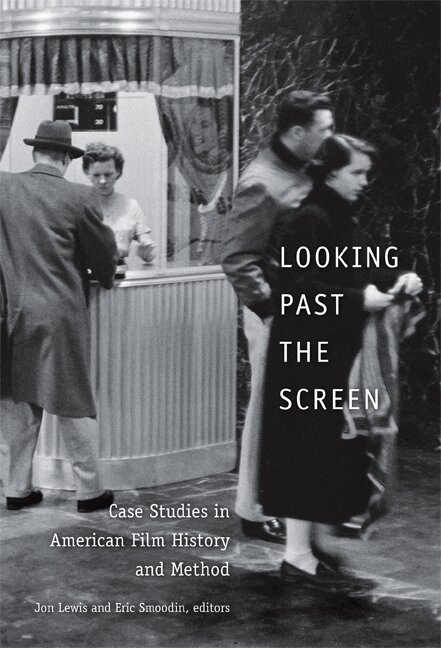
Film scholarship has long been dominated by textual interpretations of specific films. Looking Past the Screen advances a more expansive American film studies in which cinema is understood to be a social, political, and cultural phenomenon extending far beyond the screen. Presenting a model of film studies in which films themselves are only one source of information among many, this volume brings together film histories that draw on primary sources including collections of personal papers, popular and trade journalism, fan magazines, studio publications, and industry records.Focusing on Hollywood cinema from the teens to the 1970s, these case studies show the value of this extraordinary range of historical materials in developing interdisciplinary approaches to film stardom, regulation, reception, and production. The contributors examine State Department negotiations over the content of American films shown abroad; analyze the star image of Clara Smith Hamon, who was notorious for having murdered her lover; and consider film journalists’ understanding of the arrival of auteurist cinema in Hollywood as it was happening during the early 1970s. One contributor chronicles the development of film studies as a scholarly discipline; another offers a sociopolitical interpretation of the origins of film noir. Still another brings to light Depression-era film reviews and Production Code memos so sophisticated in their readings of representations of sexuality that they undermine the perception that queer interpretations of film are a recent development. Looking Past the Screen suggests methods of historical research, and it encourages further thought about the modes of inquiry that structure the discipline of film studies.Contributors. Mark Lynn Anderson, Janet Bergstrom, Richard deCordova, Kathryn Fuller-Seeley, Sumiko Higashi, Jon Lewis, David M. Lugowski, Dana Polan, Eric Schaefer, Andrea Slane, Eric Smoodin, Shelley Stamp
1 388 kr
Skickas inom 7-10 vardagar
In Paris in the Dark Eric Smoodin takes readers on a journey through the streets, cinemas, and theaters of Paris to sketch a comprehensive picture of French film culture during the 1930s and 1940s. Drawing on a wealth of journalistic sources, Smoodin recounts the ways films moved through the city, the favored stars, and what it was like to go to the movies in a city with hundreds of cinemas. In a single week in the early 1930s, moviegoers might see Hollywood features like King Kong and Frankenstein, the new Marlene Dietrich and Maurice Chevalier movies, and any number of films from Italy, Germany, and Russia. Or they could frequent the city's cinÉ-clubs, which were hosts to the cinÉphile subcultures of Paris. At other times, a night at the movies might result in an evening of fascist violence, even before the German Occupation of Paris, while after the war the city's cinemas formed the space for reconsolidating French film culture. In mapping the cinematic geography of Paris, Smoodin expands understandings of local film exhibition and the relationships of movies to urban space.
332 kr
Skickas inom 7-10 vardagar
In Paris in the Dark Eric Smoodin takes readers on a journey through the streets, cinemas, and theaters of Paris to sketch a comprehensive picture of French film culture during the 1930s and 1940s. Drawing on a wealth of journalistic sources, Smoodin recounts the ways films moved through the city, the favored stars, and what it was like to go to the movies in a city with hundreds of cinemas. In a single week in the early 1930s, moviegoers might see Hollywood features like King Kong and Frankenstein, the new Marlene Dietrich and Maurice Chevalier movies, and any number of films from Italy, Germany, and Russia. Or they could frequent the city's cinÉ-clubs, which were hosts to the cinÉphile subcultures of Paris. At other times, a night at the movies might result in an evening of fascist violence, even before the German Occupation of Paris, while after the war the city's cinemas formed the space for reconsolidating French film culture. In mapping the cinematic geography of Paris, Smoodin expands understandings of local film exhibition and the relationships of movies to urban space.
189 kr
Skickas inom 7-10 vardagar
On release in the 1930s, Snow White became a milestone in animated film, Disney production and the US box office. Today its fans cross generations and continents, proving that this tale of the loveable, banished princess and her seven outstanding friends possesses a special magic that makes it both an all-time Disney great and a true film classic.