Eric Wiberg – författare
298 kr
Skickas inom 5-8 vardagar
158 kr
Skickas inom 5-8 vardagar
888 kr
Skickas inom 3-6 vardagar
721 kr
Skickas inom 5-8 vardagar
24 kr
Läs direkt efter köp
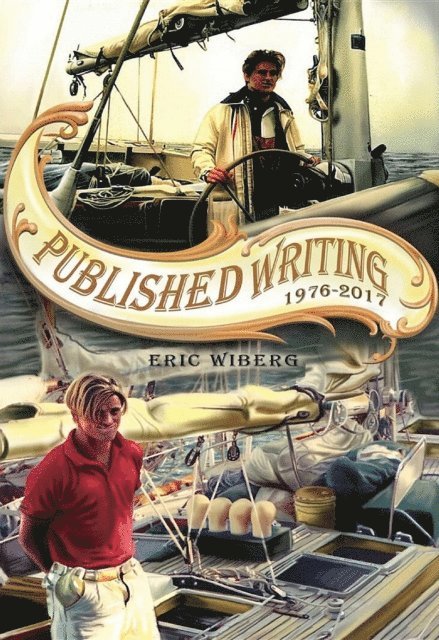
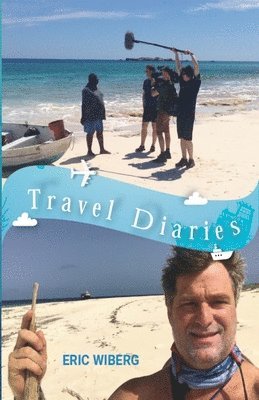
The 100-page collection of travel writing is non-fiction and unuique. There are first-hand narratives of hitchhiking alone through East Africa, of voyages with untested crews across the Atlantic and Pacific Oceans, of storms, knife and shark attacks, robberies and wrecks. Aside from travel writing, they are fiction. - Juvenilia is by definition a retrospective of someone's early work, to discern not so much quality as direction. This writing is not meant to impress, but it is hoped that teens today might empathize with some of the anger, the questioning of authority, and the rebelliousness - imaginary, idealized - herein. Umbrae Papilionis means shadows of the butterflies I hoped later to write. I was a 17-year-old junior at St. George's School in Newport, RI. I was not good in spring sports and took advantage of the school's little-known policy of producing a special project instead Z. (for Zarathustra) was overseen on my senior year by Mrs. Janet Buell. The title derives from my study of and flirtation with Persian and non-Judeo-Christian religions, and a featured essay. Shorts is by far the loudest scream this author has put to paper. My freshman year at 15,000-student Boston College was highly tumultuous and wrenchingly free. Shorts reflects my Beatnik bent. The collections features numerous maps, many of them penned during the author's teen years.
57 kr
Läs direkt efter köp
This book starts in Nassau Bahamas with a six-year old''s perspective on how calves are born, and ends with the mapping out of a newly discovered million-square-mile WWII battlefield. There are over 100 articles published in roughly 75 periodicals in nearly half a dozen countries. Publications range from Oxford Today to Cruising World, and the primary focus is on memoir, maritime history, and non-fiction. There is only one illustration, as they others haven''t held up well across over 40 years. From the mundane (an armed hold up in a college town, how tug boats are propelled) to articles on a coup in Haiti and the arrival of prisoners of war from Iraq back in the US. Articles range from witnessing Hurricane Andrew''s first landfall in the Bahamas to Alexander the Great''s little-known invasion of India in 326 B.C., to the first comprehensive expose of the mail boat fleet serving the Bahamian archipelago. This book is meant to be both fun and informative, and to allow readers an insight into how one writer''s craft has developed.
25 kr
Läs direkt efter köp
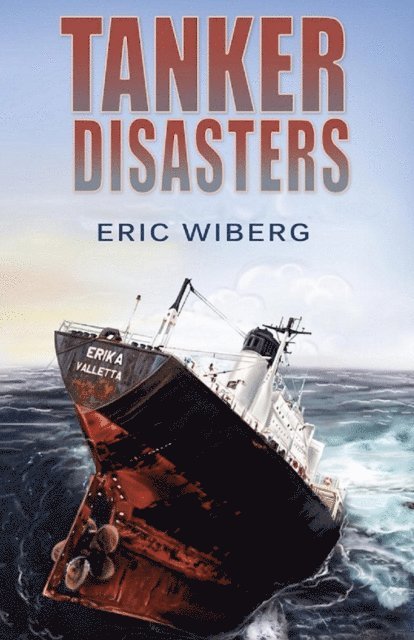
Written in fulfillment of a Master's in Marine Affairs Degree at the University of Rhode Island in 2005, this is the harrowing tale of some 70 vessels over the past 30 years who have found themselves distressed at sea and begged coastal states for a safe place to stabilize their problems. As this unique research points out, more often than not they were turned away - and in the case of the Prestige in 2002, with disastrous results which polluted the coastlines of three countries, cost over US$5 billion, and indirectly led to the overthrow of the Spanish government. With careful analysis of the salvors point of view and with a windward eye on the environment, this study brings the reader through step-by-step analyses and methodologies through which to debunk or confirm assumptions. The research and listings of the 70 or so casualties themselves make harrowing reading, the analysis sections aret more academic, and the bibliography provides for extensive further research. This research has been requested by and supplied to all parties in the litigation between the Spanish government, the American Bureau of Shipping (ABS), the Bahamas Maritime Authority, and their attorneys in the U.S. and Europe. Eric Wiberg is qualified as a maritime lawyer and a member of the Maritime Law Association of the US and the American Salvage Association. A licensed captain, he has over 80,000 nautical miles of seagoing and command experience. For three years he hepled commercially operate a fleet of tankers for the firm which lost the Braer. He has written several books about travel and naval history. A citizen of the US and Sweden, he grew up in Bahamas and lives, works and writes in New York City. His son is Felix.
25 kr
Läs direkt efter köp
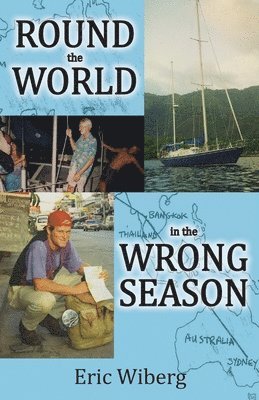
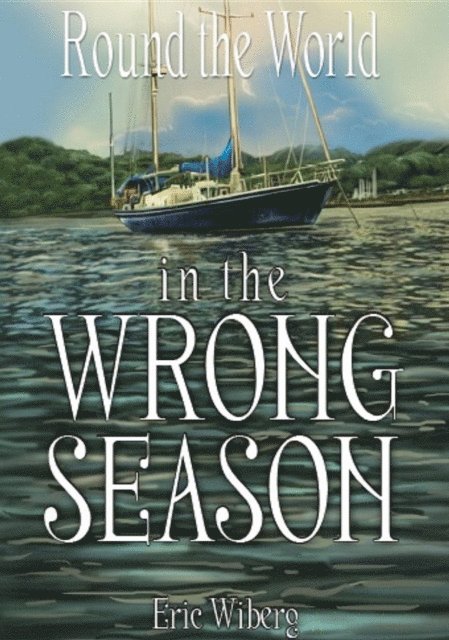
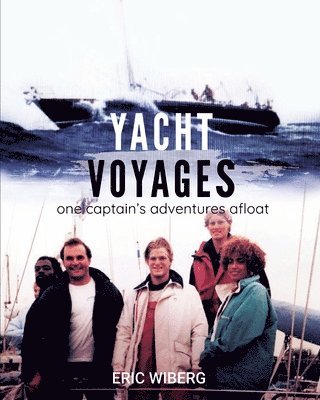
Written between 1994 and 2009, is a memoir of global travel and an unfulfilled college crush. The book follows the narrator out of school and across the Pacific. At only 23 he has command of a 68-foot Burmese-teak ketch built in Scotland thrust upon him. The owner is on a voyage home to his death, and along the way they hire sailors twice the skipper's age. They makes it to New Zealand in a storm which sinks seven yachts, then spends months shearing sheep and writing a memoir. By the time the narrator makes a rendezvous with his college sweetheart (who has been teaching Thai students on the Burmese border), she seems to have all but forgotten him. This leads to a less than satisfactory denouement and puts at least one of them in the hospital. The book includes extensive photographs and hand-drawn charts and a detailed bibliography.
24 kr
Läs direkt efter köp
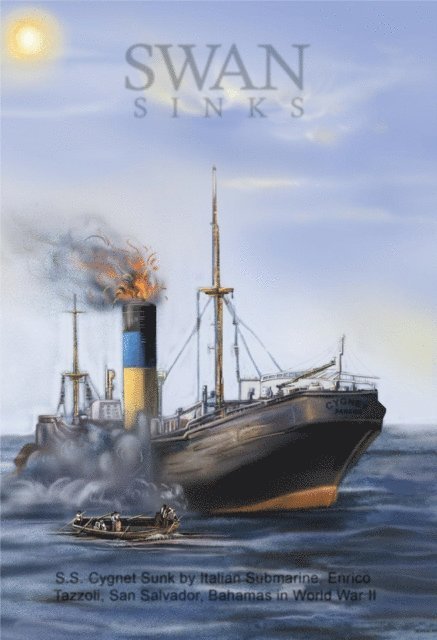
The human element of a relatively small incident like the loss of the relatively small, 3530-ton Cygnet, is both compelling and illustrative of the larger, global struggle. The ship itself had served the US government in World War I, and run between Europe and South America for decades. Built Dutch, she was owned and crewed mostly Greek, flagged to Panama, and trading for Canadians to and from South America and the Caribbean. Though the owners had a contract (charter party) stating no deck cargo was to be carried, a young Bahamian boy and his family retrieved bales of rubber which floated free after the sinking. The Cygnet men were the only Allied sailors rescued by the Monarch of Nassau, though on another Bahamian vessel, the Ena K., they shared space with survivors of other shipwrecks, and missed sailing with Sydney Poitier by mere weeks.The attack itself was recorded for posterity live by the Italians, so that we can watch it online - even whilst on the move ourselves. The crew, mostly from small islands in the Greek archipelago (only two out of 28 Greeks were from Athens, and most were from Andros or Chios), were also from Romania and Spain. They were able to interact with their Italian attackers for roughly an hour, then encounter a one-legged white man in a rowboat who guided them between the reefs at 4 am, then accept a ride from Captain Roland Roberts aboard his British-built freighter, before meeting the Duke and Duchess of Windsor in the colony's capital, Nassau. Overall the men would travel by lifeboat, lorry, passenger ship, a motor sailor and train over two weeks before they reached a base, albeit in exile.In Nassau the sailors were given an open-armed welcome from fellow Greeks from Kalymnos, living industriously in the Bahamas since the late 1800s when they had arrived for the prosperous sponge fishing trade, which had recently collapsed. They shared the island - and no doubt the pubs - with over 100 other cast-up sailors from other vessels. From there Captain Charles A. Pettee, master of a wooden freighter built in Harbour Island that was overcrowded with castaways and farmers, were cleared outwards by two American consuls from Minnesota, and interviewed by US Navy intelligence officers before being reunited with their employers in New York. They too had been forced by the war to move from Andros to Athens, London, then to New York. For most of the sailors, it would take years, until war's end, before they were able to reunite with friends and family in Greece. Some of them would opt to stay in America, because of the Cygnet.The loss of the Cygnet gave the men on both sides of the steel vessels involved plenty to photograph and film, talk and write about, and remember. There is a certain irony in the Cygnet skipper's letter of protest, filed in Nassau, when men on both sides admit that interactions between Italians and Greek were jocular and relaxed. Interestingly, it was the Greek, and not the Italian sailors, who lived to tell the tale. Within a year the Tazzoli, too, was at the sea floor, her commander dead by his own hand, his legacy only resurrected, with an Italian submarine named after him, long after the war.
60 kr
Läs direkt efter köp
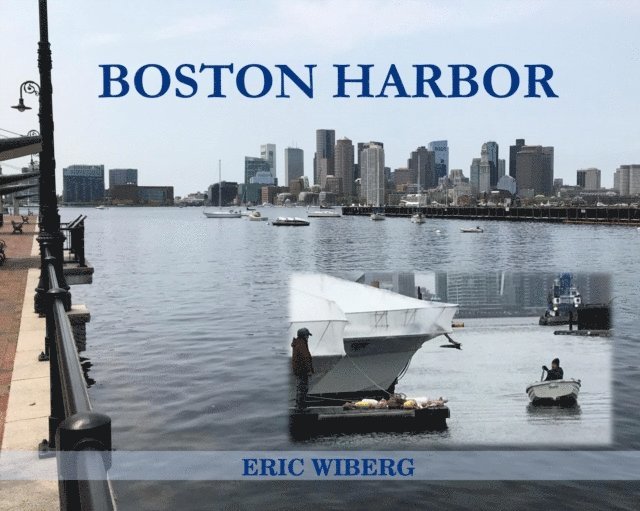
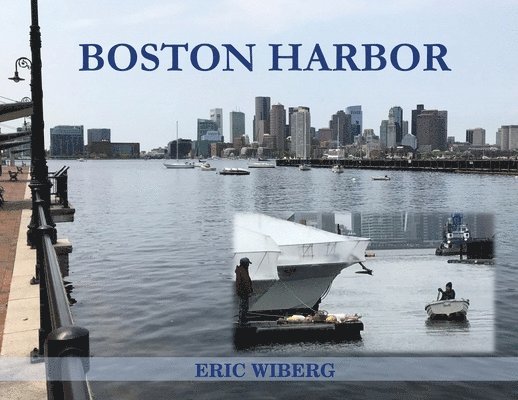
This book aims to be unusual; there is very little text, as the images are meant to be self-explanatory. Themes such as weather, geography, wind, snow, rain, fog and dark all become characters of sorts, as do the vessels themselves. Often the vessels being photographed are difficult to distinguish against the buildings and maritime clutter. That is intentional; these different industrial craft are part of the fabric, yet also to many are invisible. Though the reader cannot hear the VHF radios cackle, and the slap of a ship’s wake hitting one’s boat, or the wind lifting and dropping awnings like the sigh of bellows, and the churn of a faithful propeller around the debris which is a constant threat to all except the biggest ships, the hope is that the images will provide some kind of tactile experience and exposure.
Boston Harbor is an extraordinary and busy and lively and commercial place. It is also a danger-fraught region of the nations’ waterways where global mega-ships carrying cargoes that range from cars to Egyptian salt to gypsum intermingle with cross-harbor water-taxis and water workers of all stripes and dialects in all conditions, dark, foggy, and bright. The several radio frequencies convey a myriad of accents from far eastern to colloquial Boston and Charlestown; Braintree and the Bayou and maritime academies all mixed, whether raising a bridge or requesting permission to pass, or inquiring whether a certain boat may have cables out, that might trip up your boat.
The central characters of this book are not buildings, but boats; not people so much as the weather they are constantly adjusting to. There is a cycle at play; on a summer afternoon it seems like a delicate ballet as unspoken rules allow a dozen boats to untangle from a wharf without hitting each other. That cycle can turn brutal as smaller vessels struggle against three-or-four-foot waves, four runs of powerful current daily, each at least nine feet high, debris, radio messages not received, very cold conditions, challenging lack of visibility, and pure tedium.
No camera tripod was used in the making of this book. Nor was a “camera” in the traditional sense, and nor was a professional photographer utilized. The craft photographed include survey boats to whale watchers, tugs, push-boats, oil-supply boats (called bunker barges), others carrying distillates like methanol, some anchored, some public safety boats whizzing by well lit, others rowing, or in fast dinghies, paddle boards, electric-powered boards, and little Sunfish. These, meanwhile were all being dodged by ferries to Hingham, Hull, Provincetown, Salem, the casino in Everett, commuter boats to Lovejoy and Constitution Wharf; massive cruise ships, LNG tankers, product tankers and articulated tug and barges; all in a day’s work, and more.
504 kr
Skickas inom 5-8 vardagar
247 kr
Skickas inom 5-8 vardagar
307 kr
Skickas inom 5-8 vardagar
189 kr
Skickas inom 5-8 vardagar
166 kr
Skickas inom 5-8 vardagar
407 kr
Skickas inom 5-8 vardagar
565 kr
Skickas inom 5-8 vardagar
137 kr
Skickas inom 5-8 vardagar
470 kr
Skickas inom 5-8 vardagar
429 kr
Skickas inom 5-8 vardagar
118 kr
Läs direkt efter köp