Erika Džajić Uršič - Böcker
Visar alla böcker från författaren Erika Džajić Uršič. Handla med fri frakt och snabb leverans.
2 produkter
2 produkter
2 258 kr
Kommande
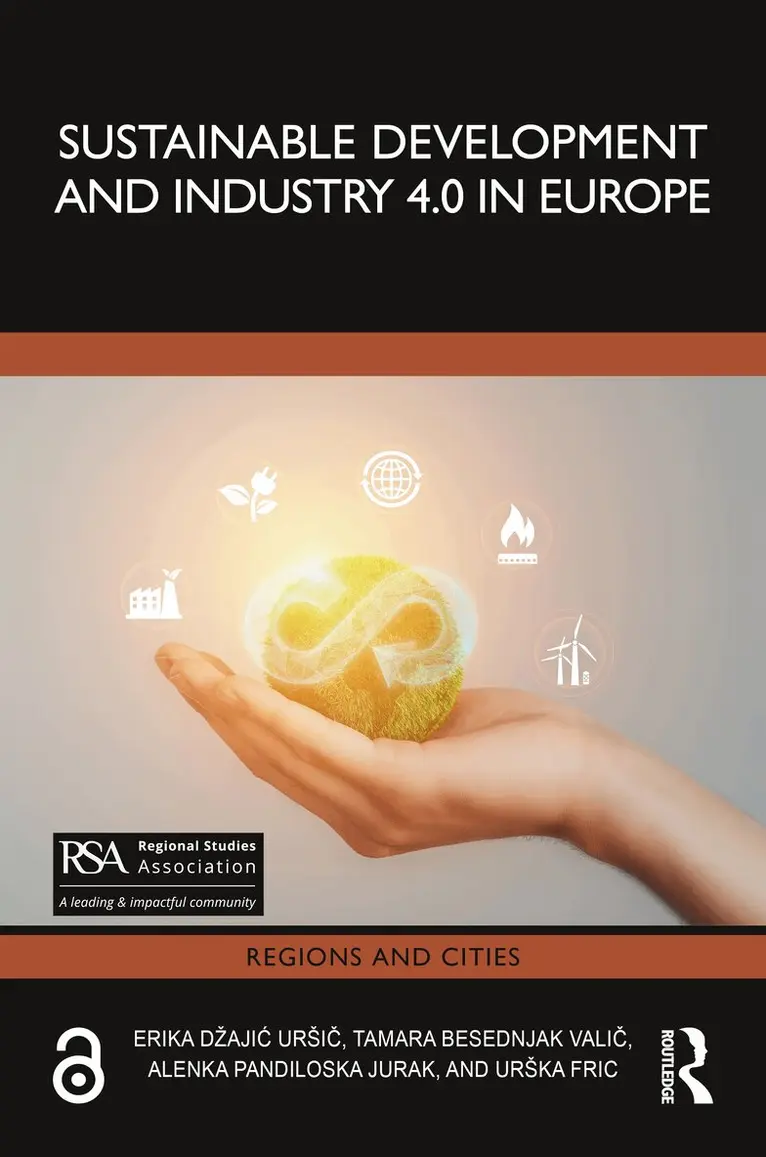
The accelerating convergence of digital transformation and sustainability represents one of the most profound structural changes in contemporary Europe. This scientific monograph examines how Industry 4.0 technologies—artificial intelligence, Internet of Things, advanced data systems, and smart manufacturing—can be strategically embedded within the European Union’s sustainability framework.Bringing together perspectives from political economy, circular economy theory, innovation studies, and socio-economic analysis, the book explores important themes such as the European Green Deal and climate-neutrality targets, the role of Industry 4.0 in enabling sustainable industrial transformation, the circular economy approaches and best practices in Slovenia, the socio-economic implications of the green transition and the transformative potential of Cultural and Creative Industries (CCIs).Through an interdisciplinary approach, the authors demonstrate that technological innovation alone is insufficient. Sustainable Industry 4.0 requires coordinated governance, social investment mechanisms, and regionally differentiated strategies to ensure that the green transition is both environmentally effective and socially inclusive.This monograph contributes to ongoing academic and policy debates on digitalisation, sustainability, and Europe’s strategic future.
457 kr
Skickas inom 5-8 vardagar
The study deals with Industrial Symbiosis (IS), a term used to describe a network of diverse organizations that make use of different by-products to improve their facility to achieve common goals, improve environmental conditions or improve business and technical processes. Industrial symbiosis is understood as a technological material as well as a social relationship between so-called social actors, which are involved in the exchange of secondary resources.The author proposes a model for the evaluation of the possibilities to establish such industrial symbiosis with a study benchmark of seven industrial symbiotic examples used to build a qualitative multi-criteria decision model for the evaluation of the industrial symbiotic network model. With the data obtained from the best-known industrial symbiotic cases in the world, the author examines the importance of social actors’ involvement in industrial symbiosis both in their industrial and non-industrial technological processes.