Erika Harris – författare
Visar alla böcker från författaren Erika Harris. Handla med fri frakt och snabb leverans.
9 produkter
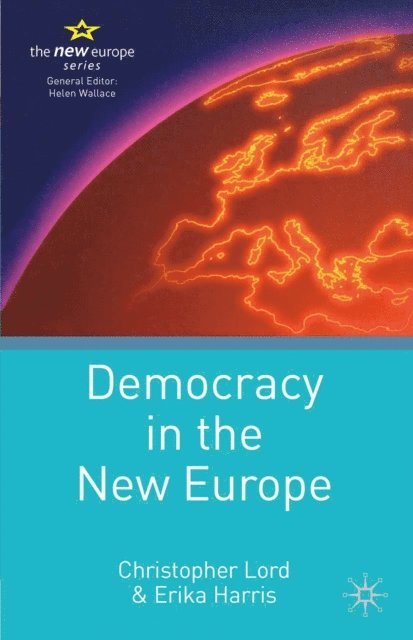
Democracy in the New Europe
Av Christopher Lord, Erika Harris
E-bok, 2017
624 kr
Lägg i varukorg
Behind the fa ade of democracy are a number of unanswered questions, foremost among them how to relate democracy beyond the state especially at the EU level to democracy within the state. This important new text provides a wide-ranging assessment of the theory and practice of democracy at all …
Nationalism
Theories and Cases
Av Erika Harris
Häftad, 2009
662 kr
Lägg i varukorg
This highly original contribution to studies of nationalism focuses on its ideological foundations, tracing its historical beginnings and charting its varied manifestations in world politics today.Its broad theoretical and empirical inquiry explores the dynamics of nationalism and its theories and …
Nationalism and Democratisation: Politics of Slovakia and Slovenia
Av Erika Harris
Häftad, 2019
531 kr
Lägg i varukorg
This book is concerned with the relationship between nationalism and democracy in a particular setting - the larger framework is post communist Eastern and Central Europe, the focus is on newly dependent democracies, explored through the case studies of Slovakia and Slovenia.The year 1989 marks a …
Nationalism and Democratisation
Politics of Slovakia and Slovenia
Av Erika Harris
Inbunden, 2017
1521 kr
Lägg i varukorg
This title was first published in 2002: The year 1989 marks a turning point in world history. The rigid division of Europe into East and West and the bipolarity of the Cold War system disintegrated, with communism as a political system dismantled by 1991. In the wake of the communist multinational …
Nationalism and Democratisation
Politics of Slovakia and Slovenia
Av Erika Harris
E-bok, 2018
1022 kr
Lägg i varukorg
This title was first published in 2002: The year 1989 marks a turning point in world history. The rigid division of Europe into East and West and the bipolarity of the Cold War system disintegrated, with communism as a political system dismantled by 1991. In the wake of the communist multinational …
Nationalism and Democratisation
Politics of Slovakia and Slovenia
Av Erika Harris
E-bok, 2018
1000 kr
Lägg i varukorg
This title was first published in 2002: The year 1989 marks a turning point in world history. The rigid division of Europe into East and West and the bipolarity of the Cold War system disintegrated, with communism as a political system dismantled by 1991. In the wake of the communist multinational …
Democracy in the New Europe
Av Christopher Lord, Erika Harris
Inbunden, 2006
1984 kr
Lägg i varukorg
Behind the façade of democracy are a number of unanswered questions, foremost among them how to relate democracy beyond the state especially at the EU level to democracy within the state. This important new text provides a wide-ranging assessment of the theory and practice of democracy at all …
Democracy in the New Europe
Av Christopher Lord, Erika Harris
Häftad, 2006
572 kr
Lägg i varukorg
Behind the façade of democracy are a number of unanswered questions, foremost among them how to relate democracy beyond the state especially at the EU level to democracy within the state. This important new text provides a wide-ranging assessment of the theory and practice of democracy at all …
Dilemma of Nationalism in Central and Eastern Europe
Av Erika Harris
Inbunden, 2026
1210 kr
Lägg i varukorg
This book delivers a compelling analysis of how Central and Eastern European nations work to reclaim their political and national identities after decades of communist rule. It reveals the historical, cultural and political factors that make nationalism particularly salient in the region, examining …