Erin R. Mahan – författare
Visar alla böcker från författaren Erin R. Mahan. Handla med fri frakt och snabb leverans.
2 produkter
2 produkter
E-bok
Engelska, 2013229 kr
Läs direkt efter köp
The Great War offers a gripping narrative, richly illustrated by seldom-seen images. Learn the story of the Great War as only award-winning military historians Robert J. Dalessandro and Erin R. Mahan could tell it. Contents: Our Last Summer—The world stage before August 1914: a political and socio-economic overview; the Balkan Crisis and the assassination of Archduke Franz Ferdinand; the politics and science of mobilization. A War of Attrition—The war before the entry of the United States; 1914 and the violation of Belgium; 1915 stalemate and other fronts; 1916 and the bloody Somme. The Yanks Are Coming—America’s entry into the war; the arrival of American troops; the 1918 Allied advance; the American Meuse-Argonne campaign. The Armistice—The day the war ended; the Versailles Treaty; the Watch on the Rhine; the occupation of Germany; Plan 1919, and Europe redrawn. With highlights on wartime aviation; the war in the Middle East; chemical warfare; tanks; trenches; major Asian powers; German U-boats; shell shock; the Italian campaigns; and the price of the war.
Inbunden, Engelska, 2021
599 kr
Skickas inom 5-8 vardagar
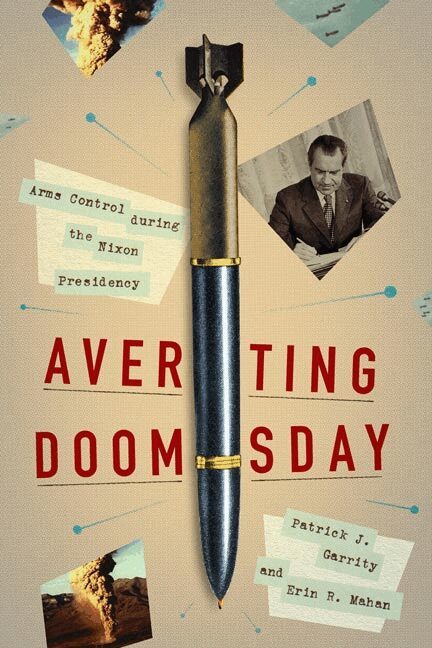
In the controversial legacy of the Nixon presidency, the administration’s effort to curb and control the spread of the world’s weapons of mass destruction is often overlooked. And yet by the time President Nixon left office under the cloud of the Watergate scandal, his actions on this front had surpassed those of all his predecessors combined and laid the foundations of WMD arms control and nonproliferation policies that persist to this day.In Averting Doomsday, Patrick Garrity and Erin Mahan explore and assess Nixon’s record, addressing not only nuclear but also biological and chemical weapons. Drawing substantially on presidential recordings and other primary sources not widely consulted, the authors shed new light on milestones such as the first SALT agreement on strategic nuclear weapons and the Anti-Ballistic Missile Treaty, as well as the renunciation of US offensive biological weapons and a Seabed treaty. The WMD-control landscape had accumulated many divergent visions and interests over time—technical, diplomatic, domestic political, and utopian. The Nixon administration had to adjust to and build on this eclectic foundation, creating a new layer of policies to deal with WMD that substantially set the course—and perhaps limited the options—for future administrations in ways that are still with us.