Ernest M Snowden – författare
Visar alla böcker från författaren Ernest M Snowden. Handla med fri frakt och snabb leverans.
4 produkter
4 produkter
Häftad, Engelska, 2025
177 kr
Skickas inom 5-8 vardagar
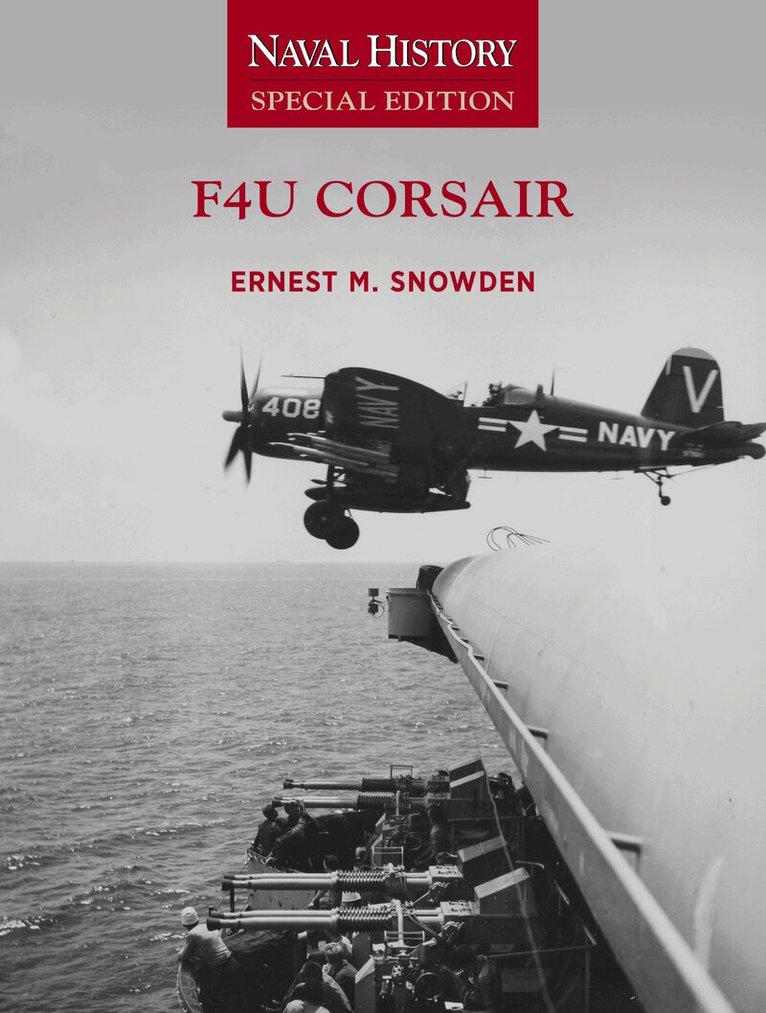
Building upon the expertise of the authors and historians of the Naval Institute Press, the Naval History Special Editions are designed to offer studies of the key vessels, battles, and events of armed conflict. Using an image-heavy, magazine-style format, these special editions should appeal to scholars, enthusiasts, and general readers alike. Rarely is an aircraft design so inspired that it brings forth near-universal recognition and acclaim. In more than 110 years of naval aviation history and more than 50 years of Vought Corsairs in active-duty squadrons, one Corsair model, the F4U, stands alone. In that time, only a few naval aircraft have been acknowledged as game changers that singularly tipped the balance in air combat. The Vought F4U Corsair heads a short list of such aircraft by dint of its supremely efficient lines—a melding of the highly developed Double Wasp powerplant, the outsized Hydromatic propeller that it drove, and the finely tuned airframe that wrapped it. Navy and Marine Corps aviators held the Corsair in high esteem for its ruggedness, speed, and adaptability as a fighter and a bomber, long after its first appearance in the South Pacific during World War II, through the closing weeks of the Korean War. The Corsair’s potency made it sought after by allied air forces long after its final days in U.S. inventory, rendering vital service in French livery at Dien Bien Phu and, finally, with South American air forces in the so-called “Soccer War” of the late 1960s. Here is the complete history of this storied aircraft, from early design through the legendary dogfights of Maj. Gregory “Pappy” Boyington’s Black Sheep Squadron over the Pacific, and in operations in Korea.
Häftad, Engelska, 2026
210 kr
Skickas inom 5-8 vardagar
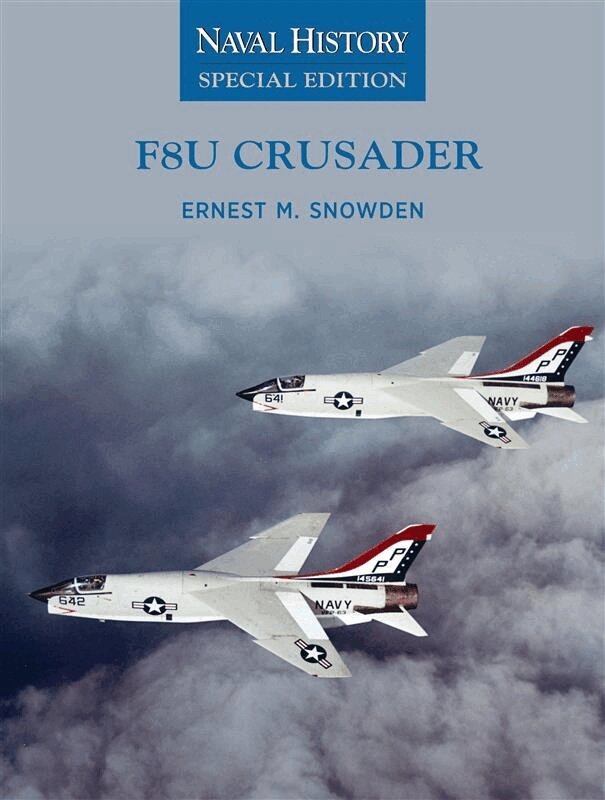
This richly illustrated volume explores the F8U Crusader’s storied role in Cold War and Vietnam-era naval aviation, from setting speed records to earning its reputation as the “Last of the Gunfighters.” With unmatched dogfighting performance and a legacy spanning over four decades, the Crusader remains a standout in the history of carrier-based aircraft.Building upon the expertise of the authors and historians of the Naval Institute Press, the Naval History Special Editions are designed to offer studies of the key vessels, battles, and events of armed conflict. Using an image-heavy format, these Special Editions should appeal to scholars, enthusiasts, and general readers alike.From its first flight in 1955, the F8U Crusader proved to be an extraordinary aircraft, establishing a renowned fighter legacy for naval aviation. Building on its success with the F4U Corsair, aviator pioneer Chance Vought brought the Navy into the supersonic age with the Crusader, the first carrier-based fighter to exceed 1,000 mph in level flight. The Crusader earned the Navy its first Thompson Trophy for military aircraft speed and won the Collier Trophy for its innovative carrier suitability features. In 1957 future astronaut John Glenn set a new intercontinental speed record in an F8U-1P, flying from California to New York in just 3 hours and 23 minutes. At a time when guns were being replaced by missiles, Vought designers retained an integrated aircraft cannon, solidifying the Crusader’s reputation as the “Last of the Gunfighters” and earning the loyalty of its pilots.The contribution of the Crusader to U.S. Cold War operations was substantial. The F8U-1P photoreconnaissance variant, the longest-serving Crusader model, debuted operationally during the Cuban Missile Crisis, providing irrefutable low-level imagery of Soviet activity. During the Vietnam War, Crusader pilots achieved an enviable 6-to-1 kill ratio, outperforming both Air Force and Navy F-4 Phantom pilots—a testament to the aircraft’s maneuverability and the dogfighting ethos of the Crusader’s pilot community.The Crusader retired from U.S. Navy service in 1987, but its legacy endured as it continued to serve with the Philippine Air Force and the French Navy until 1999, forty-four years after its first flight. Author Ernest Snowden, a former naval aviator, provides an in-depth look at the design and operational history of this iconic aircraft, making this book a must-read for air combat history enthusiasts.
Häftad, Engelska, 2025
239 kr
Skickas inom 5-8 vardagar
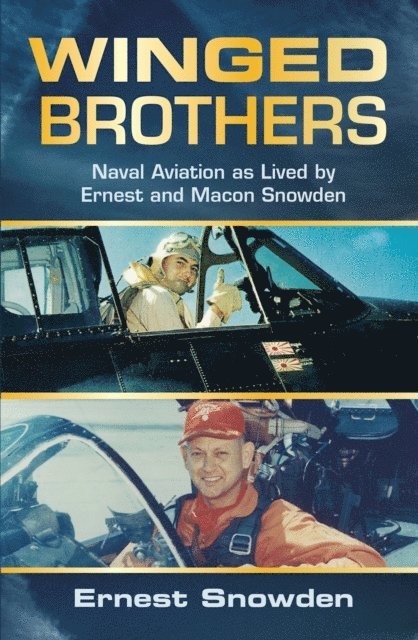
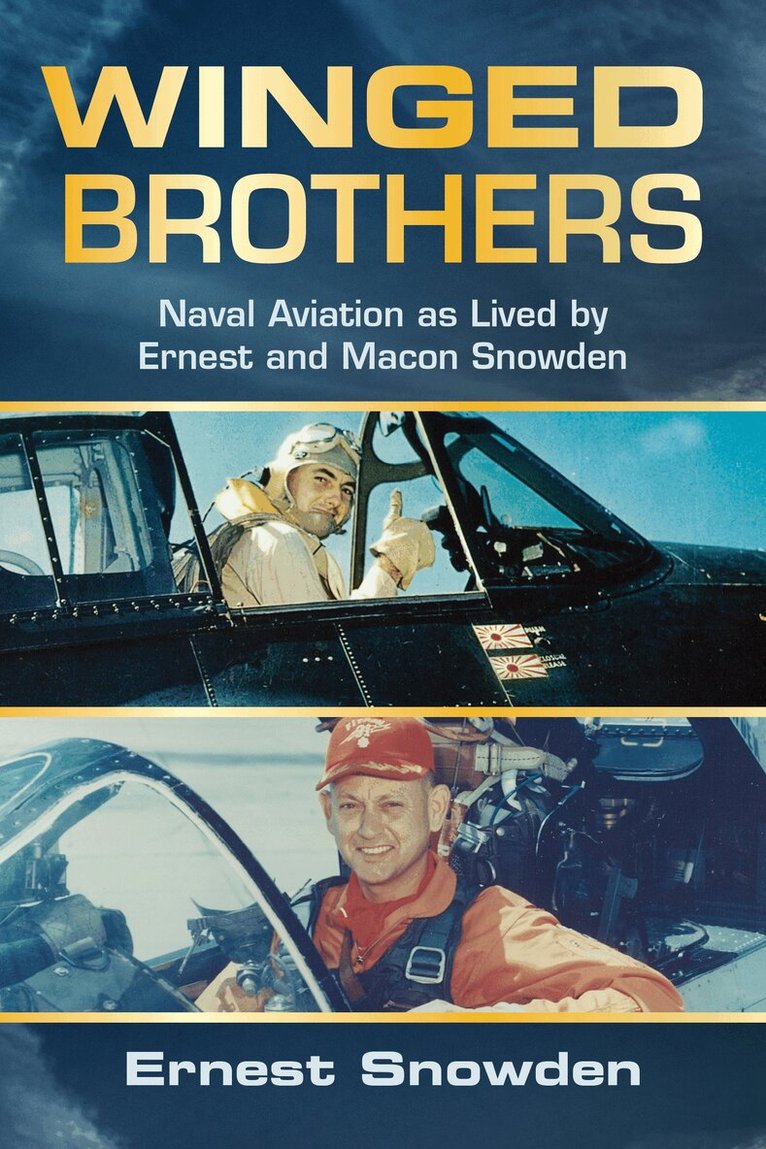
Winged Brothers recounts the service exploits of two brothers over more than forty years of naval aviation history in both peace and war. They were deeply committed to each other and to advancing their chosen profession, but due to the vast difference in their ages and the fourteen years between their respective graduations from the U.S. Naval Academy, they experienced carrier aviation from very different perspectives. The older brother, Ernest, entered naval aviation in an era of open-cockpit biplanes when the Navy's operations from aircraft carriers were still taking form when Fleet Problems were still the primary means of determining aviation's warfighting utility and proving its merits to the fleet. Macon's story guides the reader through the Navy's transition from piston-engine aircraft to jets. For the entirety of their time in uniform, the one constant was a close fraternal bond that saw Ernest as mentor and Macon as devoted admirer and protégé, only to see those roles recede as the younger brother's achievements transcended those of the older brother. Through personal letters, official reports, first-hand accounts, and first-person interviews, their symbiotic relationship is revealed to the reader.
Häftad, Engelska, 2026
208 kr
Kommande
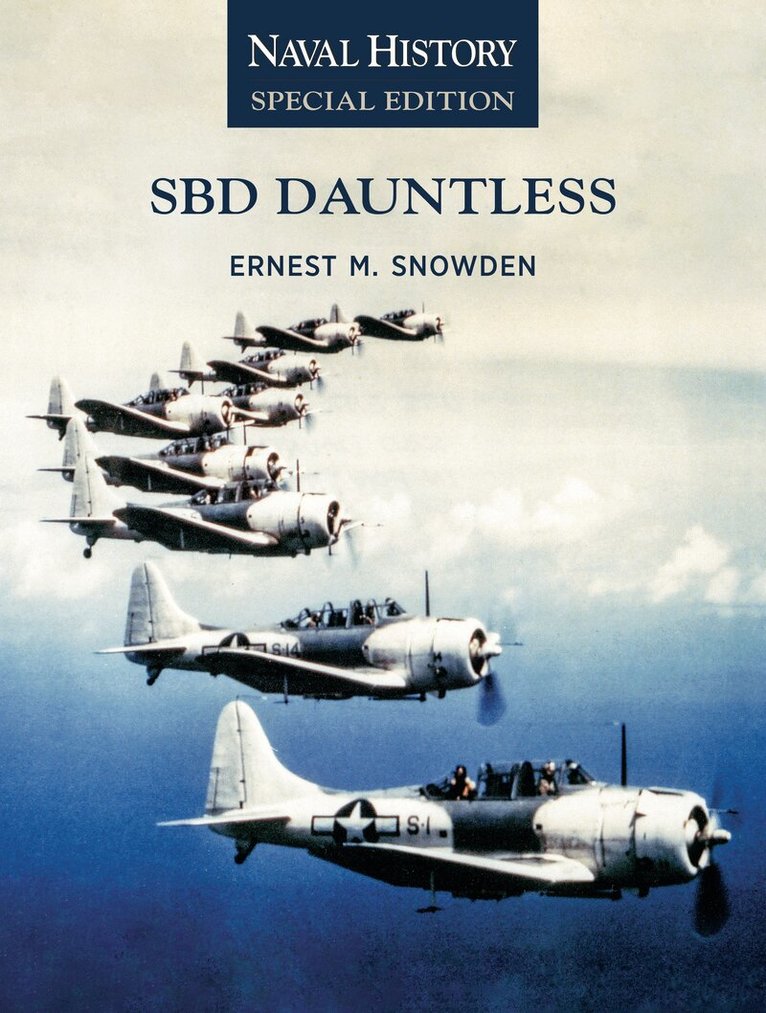
Building on the expertise of the authors and historians of the Naval Institute Press, the Naval History Special Editions are designed to offer studies of the key vessels, battles, and events of armed conflict.In 1942, half the aircraft spotted on an American carrier were SBD Dauntless dive bombers. From Coral Sea to Midway, they tipped over into near-vertical dives and released 1,000-pound bombs at close range against Japanese flight decks. Within minutes at Midway, three enemy carriers were burning, and by day’s end a fourth carrier was rendered a burning hulk. Across five carrier battles, SBD squadrons helped sink six Japanese flattops and more than 300,000 tons of shipping.“The naval dive-bomber was to prove the hammerhead of the naval war,” wrote Naval Academy historian E. B. Potter. The tactic required an airplane built to dive steeply, hold steady as perforated brakes tore at the air, and survive the violent pullout. Ed Heinemann’s Douglas design did exactly that. Armor plates, self-sealing tanks, and more powerful Wright engines followed as combat exposed weaknesses and range limits.Dauntless crews searched hundreds of miles of open ocean with little margin for error. Navy squadrons flew in every major carrier engagement of the Pacific War. Marine SBDs launched at Midway, then operated from Henderson Field during the struggle for Guadalcanal, striking ships and troop concentrations around the Solomons. The Army Air Forces’ A-24 Banshee saw combat in Java, New Guinea, and the Gilberts.From its Gamma ancestry in the mid-1930s to its final carrier missions in 1944, the SBD stood at the center of the Navy’s early offensive—an aircraft built to dive hard, hit precisely, and change the course of an entire battle with a single attack.