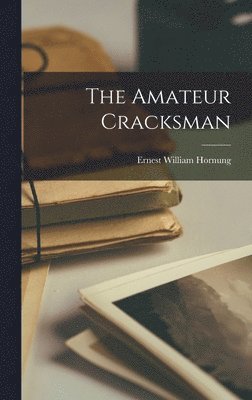
Ernest William Hornung – författare
404 kr
Skickas inom 5-8 vardagar
231 kr
Skickas inom 5-8 vardagar
400 kr
Skickas inom 5-8 vardagar
231 kr
Skickas inom 5-8 vardagar
404 kr
Skickas inom 5-8 vardagar
231 kr
Skickas inom 5-8 vardagar
481 kr
Skickas inom 5-8 vardagar
339 kr
Skickas inom 5-8 vardagar
446 kr
Skickas inom 5-8 vardagar
446 kr
Tillfälligt slut
446 kr
Skickas inom 5-8 vardagar
435 kr
Skickas inom 5-8 vardagar
326 kr
Skickas inom 5-8 vardagar
323 kr
Skickas inom 5-8 vardagar
311 kr
Skickas inom 5-8 vardagar
326 kr
Tillfälligt slut
293 kr
Skickas inom 3-6 vardagar
196 kr
Skickas inom 5-8 vardagar
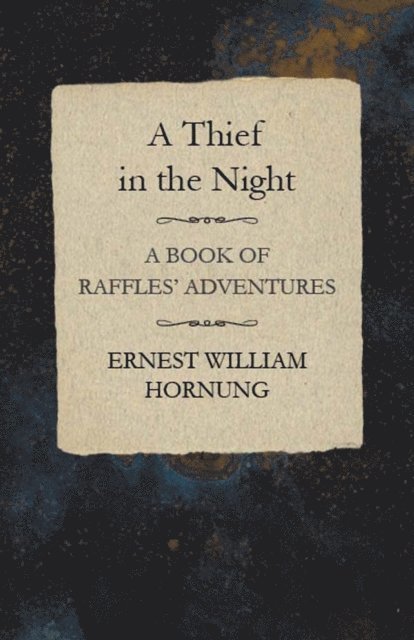
"These latest adventures of ''Raffles'' and ''Bunny'' are their most thrilling and exciting ones. The sentimental side of their story has never before been shown so dramatically and romantically, and the suggestion in this book of the final conclusion of their careers cannot but make these stories of the greatest interest to all readers." Boston Herald.
Hornung was the brother-in-law of Arthur Conan Doyle the creator of Sherlock Holmes. Hornung has created Raffles as an inverted representation of Sherlock Holmes. A J Raffles was a thief. He was a gentleman thief who lived in a good neighborhood in London and played cricket. Raffles'' plots to steal are ingenious and of a higher quality than the "common thieves".
Outof Paradise (excerpt)If I must tell more tales of Raffles, I can butback to our earliest days together, and fill in the blanks left bydiscretion in existing annals. In so doing I may indeed fill somesmall part of an infinitely greater blank, across which you mayconceive me to have stretched my canvas for the first frank portraitof my friend. The whole truth cannot harm him now. I shall paint inevery wart. Raffles was a villain, when all is written; it is noservice to his memory to glaze the fact; yet I have done so myselfbefore to-day. I have omitted whole heinous episodes. I have dweltunduly on the redeeming side. And this I may do again, blinded evenas I write by the gallant glamour that made my villain more to methan any hero. But at least there shall be no more reservations, andas an earnest I shall make no further secret of the greatest wrongthat even Raffles ever did me.
I pick my words with care and pain, loyal as Istill would be to my friend, and yet remembering as I must those Idesof March when he led me blindfold into temptation and crime. That wasan ugly office, if you will. It was a moral bagatelle to thetreacherous trick he was to play me a few weeks later. The secondoffence, on the other hand, was to prove the less serious of the twoagainst society, and might in itself have been published to the worldyears ago. There have been private reasons for my reticence. Theaffair was not only too intimately mine, and too discreditable toRaffles. One other was involved in it, one dearer to me than Raffleshimself, one whose name shall not even now be sullied by associationwith ours.
Suffice it that I had been engaged to her beforethat mad March deed. True, her people called it "anunderstanding," and frowned even upon that, as well they might.But their authority was not direct; we bowed to it as an act ofpolitic grace; between us, all was well but my unworthiness. That maybe gauged when I confess that this was how the matter stood on thenight I gave a worthless check for my losses at baccarat, andafterward turned to Raffles in my need. Even after that I saw hersometimes. But I let her guess that there was more upon my soul thanshe must ever share, and at last I had written to end it all. Iremember that week so well! It was the close of such a May as we hadnever had since, and I was too miserable even to follow the heavyscoring in the papers. Raffles was the only man who could get awicket up at Lord''s, and I never once went to see him play. AgainstYorkshire, however, he helped himself to a hundred runs as well; andthat brought Raffles round to me, on his way home to the Albany...
Ernest William Hornung (7 June 1866 – 22 March 1921) was an English author and poet known for writing the A. J. Raffles series of stories about a gentleman thief in late 19th-century London. Hornung was educated atUppingham School; as a result of poor health he left the school in December 1883 to travel to Sydney, where he stayed for two years. He drew on his Australian experiences as a background when he began writing, initially short stories and later novels.
In 1898 he wrote "In the Chains of Crime", which introduced Raffles and his sidekick, Bunny Manders; the characters were based partly on his friendsOscar Wilde and his lover, Lord Alfred Douglas, and also on the characters of Sherlock Holmes and Dr. Watson, created by his brother-in-law, Arthur Conan Doyle. The series of Raffles short stories were collected for sale in book form in 1899, and two further books of Raffles short stories followed, as well as a poorly received novel. Aside from his Raffles stories, Hornung was a prodigious writer of fiction, publishing numerous books from 1890, with A Bride from the Bush to his 1914 novel The Crime Doctor.
The First World War brought an end to Hornung''s fictional output. His son, Oscar, was killed at the Second Battle of Ypres in July 1915. Hornung joined the YMCA, initially in England, then in France, where he helped run a canteen and library. He published two collections of poetry during the war, and then, afterwards, one further volume of verse and an account of his time spent in France, Notes of a Camp-Follower on the Western Front. Hornung''s fragile constitution was further weakened by the stress of his war work. To aid his recuperation, he and his wife visited the south of France in 1921. He fell ill from influenza on the journey, and died on 22 March 1921, aged 54.
Although much of Hornung''s work has fallen into obscurity, his Raffles stories continued to be popular, and have formed numerous film and television adaptations. Hornung''s stories dealt with a wider range of themes than crime: he examined scientific and medical developments, guilt, class and the unequal role played by women in society. Two threads that run through a sizeable proportion of his books are Australia and cricket; the latter was also a lifelong passion.
144 kr
Skickas inom 5-8 vardagar
Arthur Raffles is a prominent member of London society, and a national sporting hero. As a cricketer he regularly represents England in Test matches. He uses this as a chance to commit a number of burglaries, primarily stealing valuable jewellry from his hosts. In this he is assisted by his friend, the younger, idealistic Bunny Manders. Both men are constantly under the surveillance of Inspector Mackenzie of Scotland Yard who is always thwarted in his attempts to pin the crimes on Raffles.
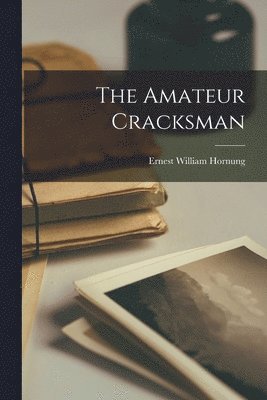
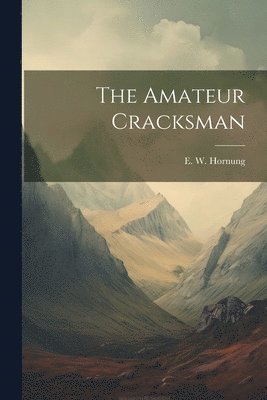
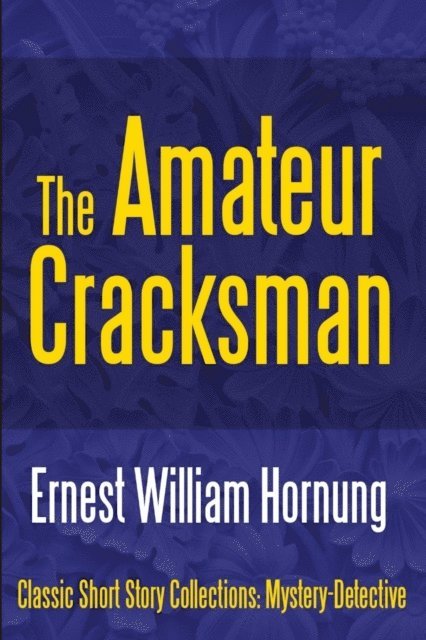
Arthur J. Raffles is a character created in the 1890s by E. W. Hornung, brother-in-law to Sir Arthur Conan Doyle, the creator of Sherlock Holmes. Raffles is, in many ways, a deliberate inversion of Holmes – he is a "gentleman thief", living at the Albany, a prestigious address in London, playing cricket for the Gentlemen of England and supporting himself by carrying out ingenious burglaries. He is called the "Amateur Cracksman", and often, at first, differentiates between himself and the "professors" – professional criminals from the lower classes.
As Holmes has Dr. Watson to chronicle his adventures, Raffles has Harry "Bunny" Manders – a former schoolmate saved from disgrace and suicide by Raffles, whom Raffles persuaded to accompany him on a burglary. While Raffles often takes advantage of Manders'' relative innocence, and sometimes treats him with a certain amount of contempt, he knows that Manders'' bravery and loyalty are to be relied on utterly. In several stories, Manders saves the day for the two of them after Raffles gets into situations he cannot get out of on his own.
One of the things that Raffles has in common with Holmes is a mastery of disguise – during his days as an ostensible man-about-town, he maintains a studio apartment in another name in which he keeps the components of various disguises. He can imitate the regional speech of many parts of Britain flawlessly, and is fluent in Italian.
Ernest William Hornung (7 June 1866 – 22 March 1921) was an English author and poet known for writing the A. J. Raffles series of stories about agentleman thief in late 19th-century London. Hornung was educated atUppingham School; as a result of poor health he left the school in December 1883 to travel to Sydney, where he stayed for two years. He drew on his Australian experiences as a background when he began writing, initially short stories and later novels.
In 1898 he wrote "In the Chains of Crime", which introduced Raffles and his sidekick, Bunny Manders; the characters were based partly on his friendsOscar Wilde and his lover, Lord Alfred Douglas, and also on the characters of Sherlock Holmes and Dr. Watson, created by his brother-in-law, Arthur Conan Doyle. The series of Raffles short stories were collected for sale in book form in 1899, and two further books of Raffles short stories followed, as well as a poorly received novel. Aside from his Raffles stories, Hornung was a prodigious writer of fiction, publishing numerous books from 1890, with A Bride from the Bush to his 1914 novel The Crime Doctor.
The First World War brought an end to Hornung''s fictional output. His son, Oscar, was killed at the Second Battle of Ypres in July 1915. Hornung joined the YMCA, initially in England, then in France, where he helped run a canteen and library. He published two collections of poetry during the war, and then, afterwards, one further volume of verse and an account of his time spent in France, Notes of a Camp-Follower on the Western Front. Hornung''s fragile constitution was further weakened by the stress of his war work. To aid his recuperation, he and his wife visited the south of France in 1921. He fell ill from influenza on the journey, and died on 22 March 1921, aged 54.
Although much of Hornung''s work has fallen into obscurity, his Raffles stories continued to be popular, and have formed numerous film and television adaptations. Hornung''s stories dealt with a wider range of themes than crime: he examined scientific and medical developments, guilt, class and the unequal role played by women in society. Two threads that run through a sizeable proportion of his books are Australia and cricket; the latter was also a lifelong passion.
196 kr
Skickas inom 5-8 vardagar
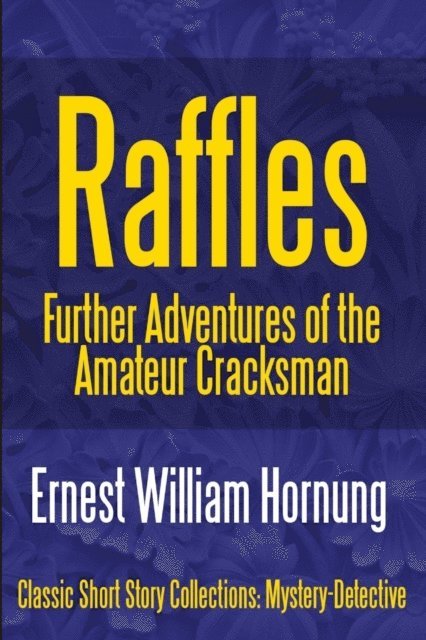
These "Further Adventures" is a collection of stories about the ever-popular amateur thief Raffles, following the success of "The Amateur Cracksman."
Arthur J. Raffles is a character created in the 1890s by E. W. Hornung, brother-in-law to Sir Arthur Conan Doyle, the creator of Sherlock Holmes. Raffles is, in many ways, a deliberate inversion of Holmes – he is a "gentleman thief", living at the Albany, a prestigious address in London, playing cricket for the Gentlemen of England and supporting himself by carrying out ingenious burglaries. He is called the "Amateur Cracksman", and often, at first, differentiates between himself and the "professors" – professional criminals from the lower classes.
As Holmes has Dr. Watson to chronicle his adventures, Raffles has Harry "Bunny" Manders – a former schoolmate saved from disgrace and suicide by Raffles, whom Raffles persuaded to accompany him on a burglary. While Raffles often takes advantage of Manders'' relative innocence, and sometimes treats him with a certain amount of contempt, he knows that Manders'' bravery and loyalty are to be relied on utterly. In several stories, Manders saves the day for the two of them after Raffles gets into situations he cannot get out of on his own.
One of the things that Raffles has in common with Holmes is a mastery of disguise – during his days as an ostensible man-about-town, he maintains a studio apartment in another name in which he keeps the components of various disguises. He can imitate the regional speech of many parts of Britain flawlessly, and is fluent in Italian.
NOSINECURE (Excerpt)
I am still uncertain which surprised me more, thetelegram calling my attention to the advertisement, or theadvertisement itself. The telegram is before me as I write. It wouldappear to have been handed in at Vere Street at eight o''clock in themorning of May 11, 1897, and received before half-past at HollowayB.O. And in that drab region it duly found me, unwashen but at workbefore the day grew hot and my attic insupportable.
"See Mr. Maturin''s advertisement Daily Mailmight suit you earnestly beg try will speak if necessary —— ——"
I transcribe the thing as I see it before me, allin one breath that took away mine; but I leave out the initials atthe end, which completed the surprise. They stood very obviously forthe knighted specialist whose consulting-room is within a cab-whistleof Vere Street, and who once called me kinsman for his sins. Morerecently he had called me other names. I was a disgrace, qualified byan adjective which seemed to me another. I had made my bed, and Icould go and lie and die in it. If I ever again had the insolence toshow my nose in that house, I should go out quicker than I came in.All this, and more, my least distant relative could tell a poor devilto his face; could ring for his man, and give him his brutalinstructions on the spot; and then relent to the tune of thistelegram! I have no phrase for my amazement. I literally could notbelieve my eyes. Yet their evidence was more and more conclusive: avery epistle could not have been more characteristic of its sender.Meanly elliptical, ludicrously precise, saving half-pence at theexpense of sense, yet paying like a man for "Mr." Maturin,that was my distinguished relative from his bald patch to his corns.Nor was all the rest unlike him, upon second thoughts. He had areputation for charity; he was going to live up to it after all.Either that, or it was the sudden impulse of which the mostcalculating are capable at times; the morning papers with the earlycup of tea, this advertisement seen by chance, and the rest upon thespur of a guilty conscience...
Ernest William Hornung (7 June 1866 – 22 March 1921) was an English author and poet known for writing the A. J. Raffles series of stories about a gentleman thief in late 19th-century London. Hornung was educated at Uppingham School; as a result of poor health he left the school in December 1883 to travel to Sydney, where he stayed for two years. He drew on his Australian experiences as a background when he began writing, initially short stories and later novels.
In 1898 he wrote "In the Chains of Crime", which introduced Raffles and his sidekick, Bunny Manders; the characters were based partly on his friends Oscar Wilde and his lover, Lord Alfred Douglas, and also on the characters of Sherlock Holmes and Dr. Watson, created by his brother-in-law, Arthur Conan Doyle. The series of Raffles short stories were collected for sale in book form in 1899, and two further books of Raffles short stories followed, as well as a poorly received novel. Aside from his Raffles stories, Hornung was a prodigious writer of fiction, publishing numerous books from 1890, with A Bride from the Bush to his 1914 novel The Crime Doctor.
The First World War brought an end to Hornung''s fictional output. His son, Oscar, was killed at the Second Battle of Ypres in July 1915. Hornung joined the YMCA, initially in England, then in France, where he helped run a canteen and library. He published two collections of poetry during the war, and then, afterwards, one further volume of verse and an account of his time spent in France, Notes of a Camp-Follower on the Western Front. Hornung''s fragile constitution was further weakened by the stress of his war work. To aid his recuperation, he and his wife visited the south of France in 1921. He fell ill from influenza on the journey, and died on 22 March 1921, aged 54.
Although much of Hornung''s work has fallen into obscurity, his Raffles stories continued to be popular, and have formed numerous film and television adaptations. Hornung''s stories dealt with a wider range of themes than crime: he examined scientific and medical developments, guilt, class and the unequal role played by women in society. Two threads that run through a sizeable proportion of his books are Australia and cricket; the latter was also a lifelong passion.
339 kr
Skickas inom 3-6 vardagar
399 kr
Skickas inom 3-6 vardagar
477 kr
Skickas inom 3-6 vardagar
353 kr
Skickas inom 5-8 vardagar
466 kr
Skickas inom 5-8 vardagar
422 kr
Skickas inom 5-8 vardagar
454 kr
Skickas inom 5-8 vardagar
454 kr
Skickas inom 5-8 vardagar
753 kr
Skickas inom 5-8 vardagar
458 kr
Skickas inom 5-8 vardagar