Ernesto Calvo – författare
Visar alla böcker från författaren Ernesto Calvo. Handla med fri frakt och snabb leverans.
10 produkter
10 produkter
Inbunden, Engelska, 2014
1 292 kr
Skickas inom 7-10 vardagar
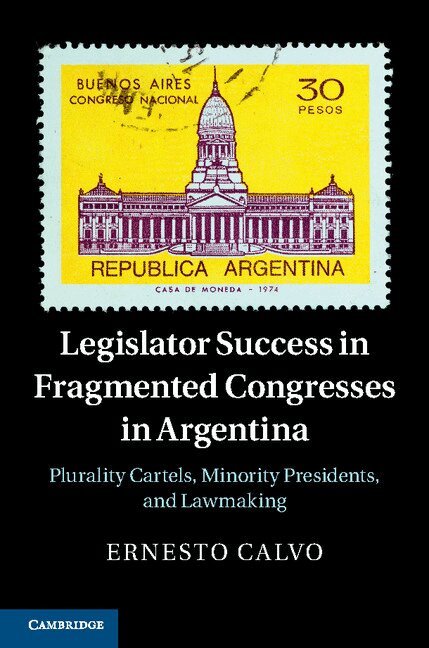
Plurality-led congresses are among the most pervasive and least studied phenomena in presidential systems around the world. Often conflated with divided government, where an organized opposition controls a majority of seats in congress, plurality-led congresses are characterized by a party with fewer than fifty percent of the seats still in control of the legislative gates. Extensive gatekeeping authority without plenary majorities, this book shows, leads to policy outcomes that are substantially different from those observed in majority-led congresses. Through detailed analyses of legislative success in Argentina and Uruguay, this book explores the determinants of law enactment in fragmented congresses. It describes in detail how the lack of majority support explains legislative success in standing committees, the chamber directorate, and on the plenary floor.
Häftad, Engelska, 2017
448 kr
Skickas inom 7-10 vardagar
Plurality-led congresses are among the most pervasive and least studied phenomena in presidential systems around the world. Often conflated with divided government, where an organized opposition controls a majority of seats in congress, plurality-led congresses are characterized by a party with fewer than fifty percent of the seats still in control of the legislative gates. Extensive gatekeeping authority without plenary majorities, this book shows, leads to policy outcomes that are substantially different from those observed in majority-led congresses. Through detailed analyses of legislative success in Argentina and Uruguay, this book explores the determinants of law enactment in fragmented congresses. It describes in detail how the lack of majority support explains legislative success in standing committees, the chamber directorate, and on the plenary floor.
Inbunden, Engelska, 2019
1 201 kr
Skickas inom 7-10 vardagar
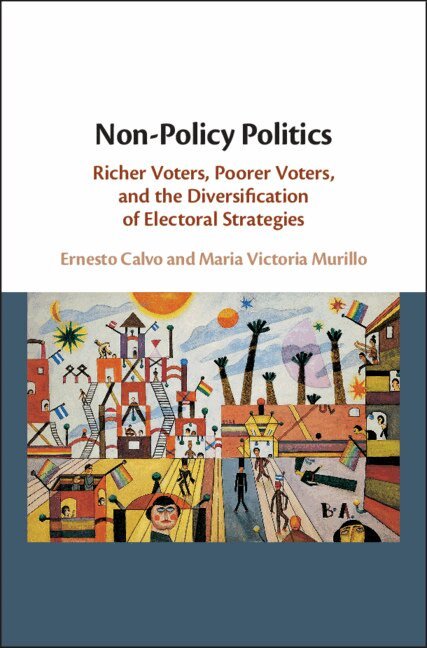
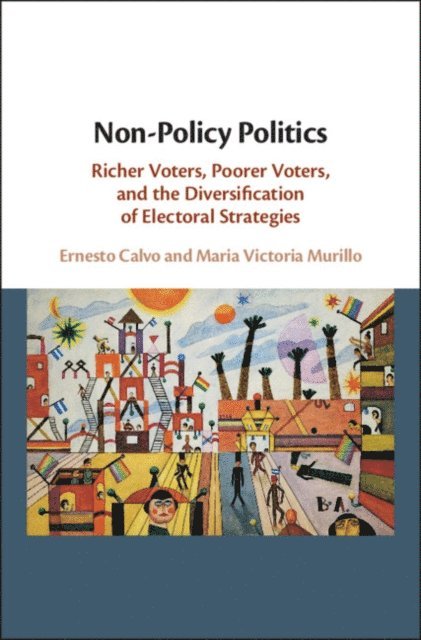
Calvo and Murillo consider the non-policy benefits that voters consider when deciding their vote. While parties advertise policies, they also deliver non-policy benefits in the form of competent economic management, constituency service, and patronage jobs. Different from much of the existing research, which focuses on the implementation of policy or on the delivery of clientelistic benefits, this book provides a unified view of how politicians deliver broad portfolios of policy and non-policy benefits to their constituency. The authors' theory shows how these non-policy resources also shape parties' ideological positions and which type of electoral offers they target to poorer or richer voters. With exhaustive empirical work, both qualitative and quantitative, the research documents how linkages between parties and voters shape the delivery of non-policy benefits in Argentina and Chile.
Häftad, Engelska, 2019
429 kr
Skickas inom 7-10 vardagar
Calvo and Murillo consider the non-policy benefits that voters consider when deciding their vote. While parties advertise policies, they also deliver non-policy benefits in the form of competent economic management, constituency service, and patronage jobs. Different from much of the existing research, which focuses on the implementation of policy or on the delivery of clientelistic benefits, this book provides a unified view of how politicians deliver broad portfolios of policy and non-policy benefits to their constituency. The authors' theory shows how these non-policy resources also shape parties' ideological positions and which type of electoral offers they target to poorer or richer voters. With exhaustive empirical work, both qualitative and quantitative, the research documents how linkages between parties and voters shape the delivery of non-policy benefits in Argentina and Chile.
E-bok
Engelska, 2019520 kr
Läs direkt efter köp
Calvo and Murillo consider the non-policy benefits that voters consider when deciding their vote. While parties advertise policies, they also deliver non-policy benefits in the form of competent economic management, constituency service, and patronage jobs. Different from much of the existing research, which focuses on the implementation of policy or on the delivery of clientelistic benefits, this book provides a unified view of how politicians deliver broad portfolios of policy and non-policy benefits to their constituency. The authors'' theory shows how these non-policy resources also shape parties'' ideological positions and which type of electoral offers they target to poorer or richer voters. With exhaustive empirical work, both qualitative and quantitative, the research documents how linkages between parties and voters shape the delivery of non-policy benefits in Argentina and Chile.
E-bok
PDF, Engelska, 2019520 kr
Läs direkt efter köp
Calvo and Murillo consider the non-policy benefits that voters consider when deciding their vote. While parties advertise policies, they also deliver non-policy benefits in the form of competent economic management, constituency service, and patronage jobs. Different from much of the existing research, which focuses on the implementation of policy or on the delivery of clientelistic benefits, this book provides a unified view of how politicians deliver broad portfolios of policy and non-policy benefits to their constituency. The authors'' theory shows how these non-policy resources also shape parties'' ideological positions and which type of electoral offers they target to poorer or richer voters. With exhaustive empirical work, both qualitative and quantitative, the research documents how linkages between parties and voters shape the delivery of non-policy benefits in Argentina and Chile.
Häftad, Engelska, 2025
451 kr
Skickas inom 10-15 vardagar
Since 2012, scoring algorithms created to manage risks in the United States penal system have been adopted by Immigration and Customs Enforcement (ICE) agencies across the United States.
E-bok
Engelska, 2025616 kr
Läs direkt efter köp
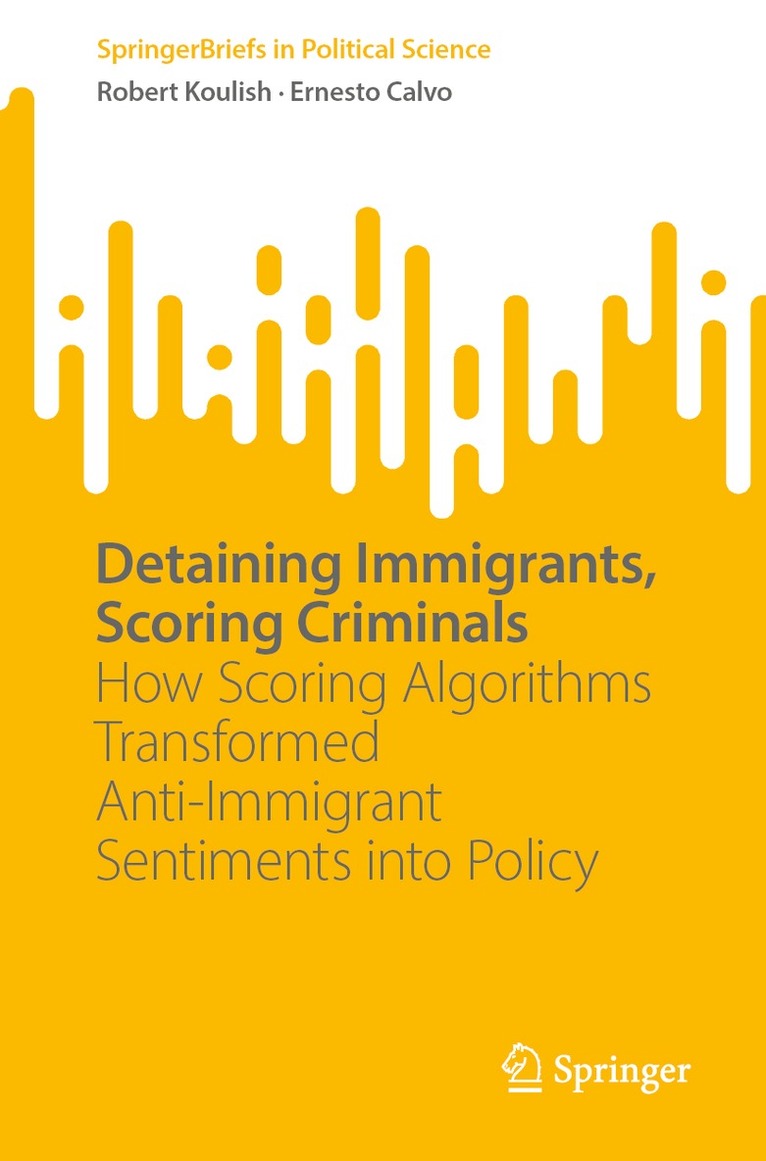
Since 2012, scoring algorithms created to manage risks in the United States penal system have been adopted by Immigration and Customs Enforcement (ICE) agencies across the United States. First developed as a mechanism to reduce anti-immigrant biases and to ensure the humane treatment of detainees, scoring algorithms suffered constant revisions to accommodate DHS enforcement priorities as well as the preferences and punitive biases of ICE agents. With the arrival of the Trump administration, a technology created to ensure the humane treatment of undocumented immigrants became central to the policy of criminalization of the immigration process. This book provides historical, qualitative, and quantitative evidence of the process that placed risk assessment technologies at the forefront of the anti-immigration battle.Using very large data sets on immigration and detention proceedings obtained from DHS through multiple FOIA requests, this Brief reveals the inner workings of the risk classification algorithms (RCA) used to process tens of thousands of immigrants each day. Chapters examine the tension between risk algorithms and end users and explain how ICE officers preferences shape the scoring properties of RCA used in immigration enforcement. Illustrating how scoring algorithms oppress immigrants of color, this book is interest policymakers, immigration scholars, lawyers, criminologists, political scientists, and university professors, graduate students, and undergraduate students in the behavioral sciences.
E-bok
Spanska, 2020113 kr
Läs direkt efter köp
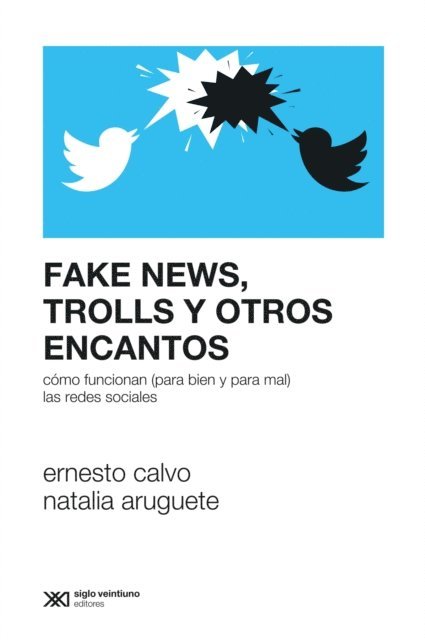
Si pudiéramos retrotraernos al origen de las redes sociales, ese momento en el cual por primera vez dos usuarios compartieron la foto de un gato dormido en el regazo de un perro, nos resultaría difícil imaginar el mundo político-mediático que habitamos hoy. ¿Por qué abandonamos la promesa de una comunicación irrestricta, horizontal y democrática para entrar en este páramo de operaciones políticas, fake news, narcisismo y conflicto? Este libro explora y describe en profundidad cómo funcionan las redes sociales. Mediante el cruce entre ciencia política, comunicación y las más avanzadas metodologías de análisis de redes explica, por ejemplo, cómo se propagan contenidos y por qué fluye (o no) la información, cómo se provoca la polarización, cómo se crean (y se pueden desarmar) las burbujas informativas en las que vivimos, en qué medida un posteo en Facebook logra hacernos cambiar nuestras preferencias y por qué retuitear un mensaje puede convertirnos en trolls sin saberlo. A través del análisis de casos, de intercambios y estrategias en redes, y usando experimentos de laboratorio, los autores hacen transparente una lógica que de tan ubicua se nos ha vuelto invisible, esa que nos hace vivir juntos y polarizados. Ofrecen, también, un hallazgo empírico nada menor: los mismos mecanismos que favorecen la propagación de conflicto y polarización en las redes pueden facilitar dinámicas de organización colectiva, activismo social y comunión política. Al iniciar una tradición de estudios aún incipiente en lengua española, este libro será sin duda de interés para lectores de distintos ámbitos de las ciencias sociales. Pero está destinado a convertirse, además, en una suerte de manual de alfabetización digital para los ciudadanos del siglo XXI. Al menos, para los que nos preguntamos por qué no podemos dejar de odiar las redes, pero tampoco estamos dispuestos a abandonarlas.
E-bok
Spanska, 202368 kr
Läs direkt efter köp
Hay una polarización "clásica" que ya conocemos bien: la que separa entre quienes adhieren a ciertas ideas y políticas concretas y quienes las rechazan. Pero hay una nueva forma de polarización que es cada vez más influyente y quizá más poderosa: se basa en la intensidad de nuestros apegos y nuestros odios, involucra nuestros afectos más profundos y nos separa visceralmente de aquellos que percibimos en la otra vereda. Con esos, con los otros, no solo disentimos en temas puntuales; sentimos que literalmente vivimos en mundos distintos.¿Cómo inciden el estado de ánimo y los preconceptos sobre una persona, un medio de comunicación o un tema a la hora de interpretar un mensaje que circula en las redes? ¿Cómo influye el modo en que ese mensaje está escrito y presentado para incentivar el enojo o la calma? ¿Qué sucede cuando alguien nos dice que tenemos razón o, por el contrario, refuta nuestras creencias?Basado en decenas de experimentos de vanguardia en el uso de redes sociales realizados en la Argentina, Brasil, Chile, Colombia, los Estados Unidos y México, este libro es un aporte esencial para entender hacia dónde van hoy las redes sociales, el gigantesco laboratorio social en el que todos participamos –lo sepamos o no, lo queramos o no– todo el tiempo.La contribución es clave: los contenidos de las redes pueden, por ejemplo, convencer de que hay un enemigo en cada persona que se ve o piensa diferente, de que no es seguro ni necesario vacunarse contra el covid o de que apoyar con el voto a una opción de derecha radicalizada es la única salida. Pero también hay margen para intervenir –este libro muestra cómo– y hacer más amable nuestro mundo digital. Como escriben los autores, "odiar el ágora, odiar ese espacio en el cual debatimos públicamente, es una de las principales formas de debilitamiento de las instituciones democráticas".