Ernesto de Martino - Böcker
Visar alla böcker från författaren Ernesto de Martino. Handla med fri frakt och snabb leverans.
6 produkter
6 produkter
992 kr
Skickas inom 7-10 vardagar
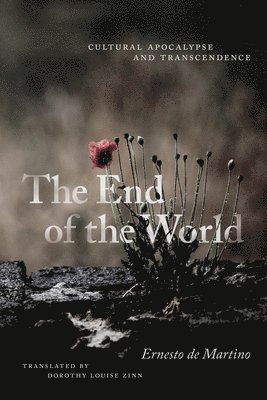
The first English translation of a classic work of twentieth-century anthropology and philosophy. A philosopher, historian of religions, and anthropologist, Ernesto de Martino (1908–1965) produced a body of work that prefigured many ideas and concerns that would later come to animate anthropology. In his writing, we can see the roots of ethnopsychiatry and medical anthropology, discussions of reflexivity and the role of the ethnographer, considerations of social inequality and hegemony from a Gramscian perspective, and an anticipation of the discipline’s “existential turn.” We also find an attentiveness to hope and possibility, despite the gloomy title of his posthumously published book La fine del mondo, or The End of the World. Examining apocalypse as an individual as well as a cultural phenomenon, treating subjects both classic and contemporary and both European and non-Western, ranging across ethnography, history, literature, psychiatry, and philosophy, de Martino probes how we relate to our world and how we might be better subjects and thinkers within it. This new translation offers English-language readers their first chance to engage with de Martino’s masterwork, which continues to appear prescient in the face of the frictions of globalization and environmental devastation.
283 kr
Skickas inom 7-10 vardagar
The first English translation of a classic work of twentieth-century anthropology and philosophy. A philosopher, historian of religions, and anthropologist, Ernesto de Martino (1908–1965) produced a body of work that prefigured many ideas and concerns that would later come to animate anthropology. In his writing, we can see the roots of ethnopsychiatry and medical anthropology, discussions of reflexivity and the role of the ethnographer, considerations of social inequality and hegemony from a Gramscian perspective, and an anticipation of the discipline’s “existential turn.” We also find an attentiveness to hope and possibility, despite the gloomy title of his posthumously published book La fine del mondo, or The End of the World. Examining apocalypse as an individual as well as a cultural phenomenon, treating subjects both classic and contemporary and both European and non-Western, ranging across ethnography, history, literature, psychiatry, and philosophy, de Martino probes how we relate to our world and how we might be better subjects and thinkers within it. This new translation offers English-language readers their first chance to engage with de Martino’s masterwork, which continues to appear prescient in the face of the frictions of globalization and environmental devastation.
392 kr
Skickas
Though his work was little known outside Italian intellectual circles for most of the twentieth century, anthropologist and historian of religions Ernesto de Martino is now recognized as one of the most original thinkers in the field. This book is a testament to de Martino's innovation and engagement with Hegelian historicism and phenomenology - a work of ethnographic theory way ahead of its time. This new translation of his 1959 study of ceremonial magic and witchcraft in southern Italy shows how de Martino is not interested in the question of whether magic is rational or irrational but rather in why it came to be perceived as a problem of knowledge in the first place. Setting his exploration within his wider, pathbreaking theorization of ritual, as well as in the context of his politically sensitive analysis of the global south's historical encounters with Western science, he presents the development of magic and ritual in Enlightenment Naples as a paradigmatic example of the complex dynamics between dominant and subaltern cultures. Far ahead of its time, Magic is still relevant today as anthropologists continue to wrestle with modernity's relationship with magical thinking.
370 kr
Skickas inom 7-10 vardagar
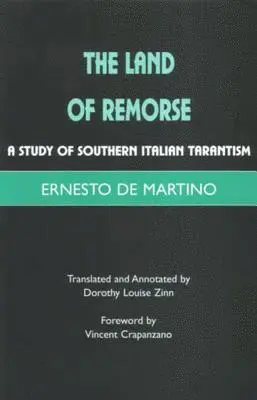
The Land of Remorse (La Terra del Rimorso, first Italian edition 1961) is a classic work by Ernesto De Martino, the founding figure of Italian cultural anthropology and ethnopsychiatry. Based on fieldwork conducted in the Salentine peninsula of Southern Italy in 1959, the study deals with the phenomenon of Apulian tarantism, a form of possession related to the belief in the bite of a mythical tarantula and its ritual cure in the tarantella dance. De Martino draws together the contributions of various specialists who participated in the fieldwork, including a psychologist, a psychiatrist, an ethnomusicologist and a social anthropologist. As both an ethnologist and classically-trained religious historian, the author reviews the fieldwork data through the lens of tarantism's historical analysis. Never losing sight of his own relationship to the subjects of his study, he is able to restore the connection between the "history-less" peasants of the Salentine and the elites who wrote about tarantism in learned treatises from the Middle Ages on.The result is a compassionate and compelling account of tarantism, which no longer appears as mere mental illness or as a "survival" of shamanistic irrationality, but as a product of a cultural history defined from above, endowed with its own forms of rationality. The Land of Remorse offers an excellent introduction to Ernesto De Martino's theoretical and methodological perspective. It will be of interest to a wide range of academic fields, including cultural anthropology, folklore, medical anthropology, ethnopsychiatry, ethnomusicology, semiotics, classics, religious studies and the history of philosophy and science. Along with appendices featuring essays on tarantism by specialist members of De Martino's research team, this annotated edition includes the fieldwork photographs of those afflicted by tarantism as they perform the ritual exorcism, an example of the author's early use of visual methods in ethnographic research.
412 kr
Skickas inom 3-6 vardagar
235 kr
Skickas inom 5-8 vardagar