Eugene Ostashevsky - Böcker
Visar alla böcker från författaren Eugene Ostashevsky. Handla med fri frakt och snabb leverans.
5 produkter
5 produkter
223 kr
Skickas inom 3-6 vardagar
266 kr
Skickas inom 7-10 vardagar
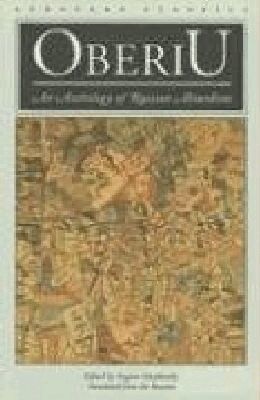
It was a movement so artfully anarchic, and so quickly suppressed, that readers only began to discover its strange and singular brilliance three decades after it was extinguished-and then only in somizdat and emigre publications. Some called it the last of the Russian avant-garde, and others called it the first (and last) instance of Absurdism in Russia: however difficult to classify, it was OBERIU (from an acronym standing for The Union of Real Art), and the pleasures of its poetry and prose are, with this volume, at long last fully open to English-speaking readers. This anthology includes the work of three writers, Alexander Vvedensky, Daniil Kharms, and Nikolai Zabolotsky, who, between 1927 and 1930, made up the core of OBERIU, and of three others, Nikolai Oleinikov, Leonid Lipavsky, and Yakov Druskin, who, although not members of OBERIU, worked in the same vein. Skillfully translated to preserve the weird charm of the originals, these poems and prose pieces display all the hilarity and tragedy, the illogical action and puppetlike violence and eroticism, and the hallucinatory intensity that brought down the wrath of the Soviet censors. Today they offer an uncanny reflection of the distorted reality they reject.
181 kr
Skickas
225 kr
Tillfälligt slut
147 kr
Skickas
The Feeling Sonnets are written in an English that is translingual not only because it engages other languages but also because it reflects upon itself in uncertainty as if it were the work of a language learner. Words, idioms, sentences, poetic conventions are made strange, dislocated, recontextualised to convey some of the linguistic effects of the migration experience, the experience of non-nativeness. The book includes four cycles of fourteen unrhymed, unmetered, logically Petrarchan sonnets. The first cycle asks about the relationship between interpretation and emotion: whether ‘we feel the feelings that we call ours’. The second, mainly composed of ‘daughter sonnets’, describes bringing up children in a foreign language. The third, ‘Die Schreibblockade’, German for writer’s block, talks about foreign-language processing of inherited historical trauma. The fourth cycle is about translation. A libretto commissioned by Italian composer Lucia Ronchetti follows, about Ravel’s interaction with Paul Wittgenstein over the Piano Concerto for the Left Hand.Gwyneth Lewis writes, 'Eugene Ostashevsky is a multilingual language explorer. His The Feeling Sonnets are an exhilarating and witty enquiry into the designs that language has on us as intellectual, domestic and historical beings. This is poetry as punning philosophy, both entertaining and deeply serious. This book is a tour de force, turning languages' spotlights onto speech itself. Yet again, Carcanet is publishing important poetry.'Born in Leningrad, Ostashevsky grew up in Brooklyn. He is now based in Berlin and New York. In his last full book of poetry, The Pirate Who Does Not Know the Value of Pi, published by NYRB Poets, discusses migration, translation, and second-language writing as practiced by pirates and parrots. His previous book, The Life and Opinions of DJ Spinoza, published by Ugly Duckling Presse in Brooklyn, examines the defects of natural and artificial languages.