Evgenii I. Romenskii – författare
Visar alla böcker från författaren Evgenii I. Romenskii. Handla med fri frakt och snabb leverans.
3 produkter
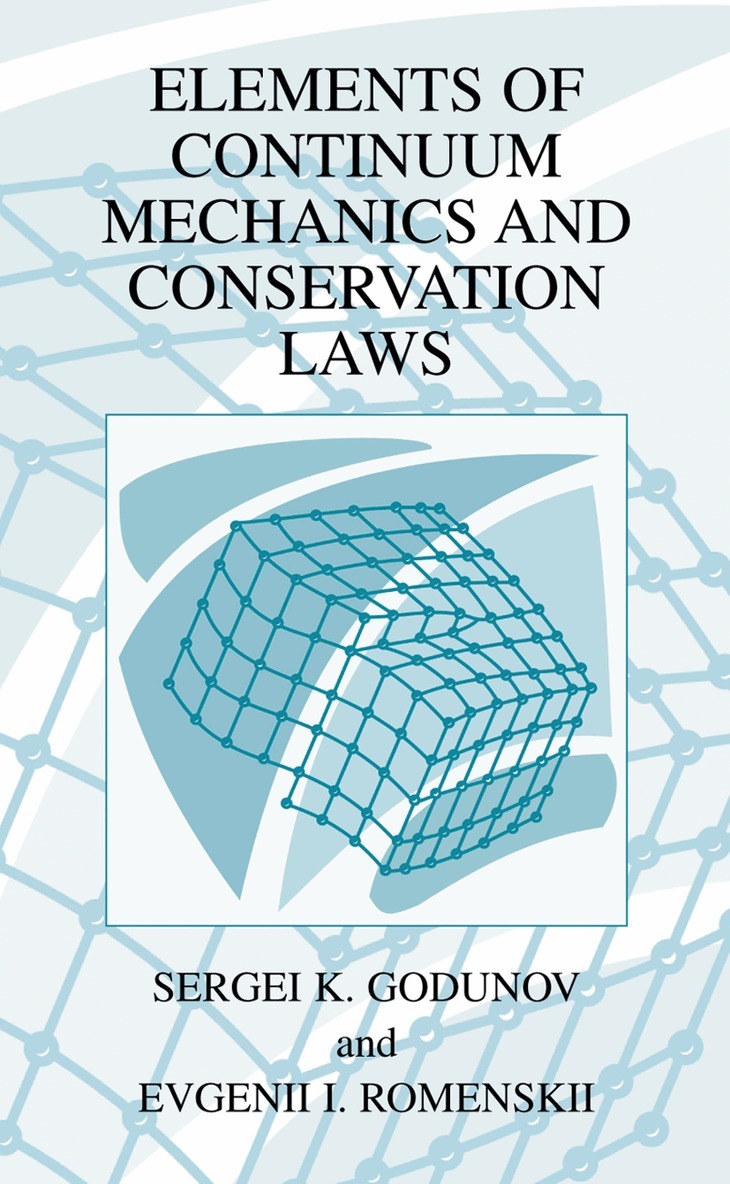
Elements of Continuum Mechanics and Conservation Laws
Av S.K. Godunov, Evgenii I. Romenskii
Inbunden, 2003
1641 kr
Lägg i varukorg
Elements of Continuum Mechanics and Conservation Laws presents a systematization of different models in mathematical physics, a study of the structure of conservation laws, thermodynamical identities, and connection with criteria for well-posedness of the corresponding mathematical problems. The …
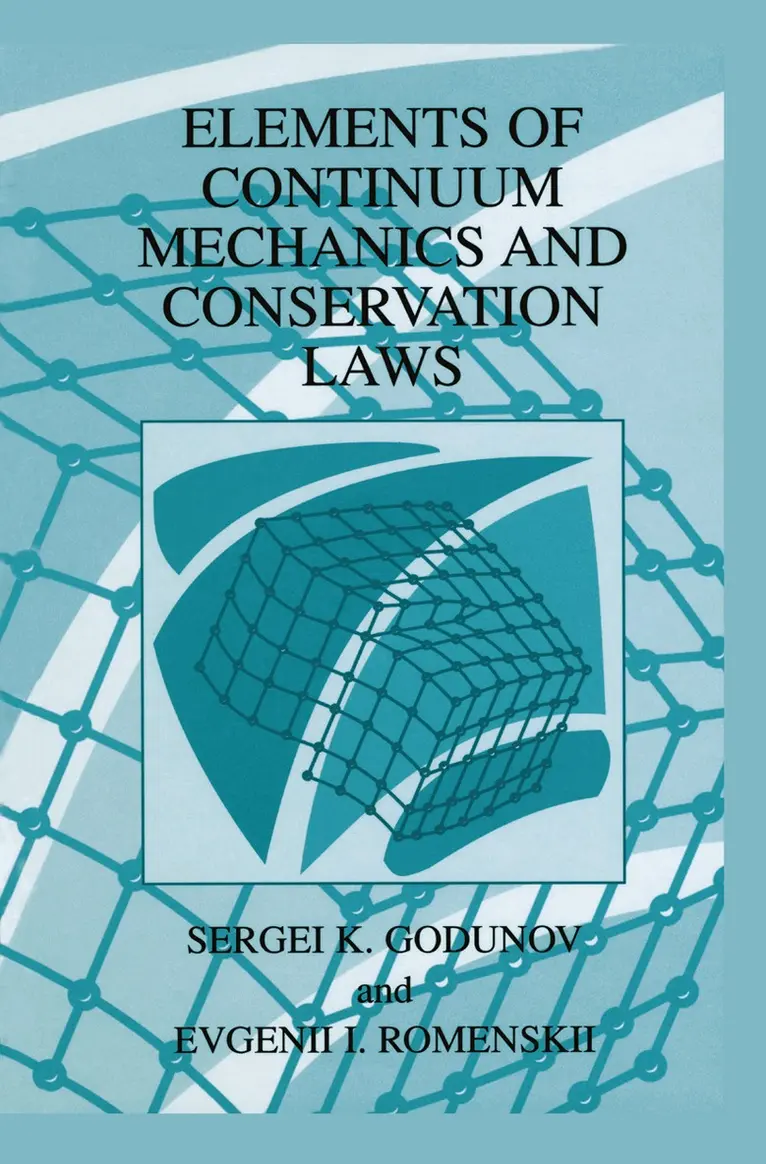
Elements of Continuum Mechanics and Conservation Laws
Av S.K. Godunov, Evgenii I. Romenskii
Häftad, 2010
1641 kr
Lägg i varukorg
Elements of Continuum Mechanics and Conservation Laws presents a systematization of different models in mathematical physics, a study of the structure of conservation laws, thermodynamical identities, and connection with criteria for well-posedness of the corresponding mathematical problems. The …
Elements of Continuum Mechanics and Conservation Laws
Av Evgenii I. Romenskii, S.K. Godunov
E-bok, 2013
2111 kr
Lägg i varukorg
Elements of Continuum Mechanics and Conservation Laws presents a systematization of different models in mathematical physics, a study of the structure of conservation laws, thermodynamical identities, and connection with criteria for well-posedness of the corresponding mathematical problems. The …