Farah Kobaissy – författare
Visar alla böcker från författaren Farah Kobaissy. Handla med fri frakt och snabb leverans.
3 produkter
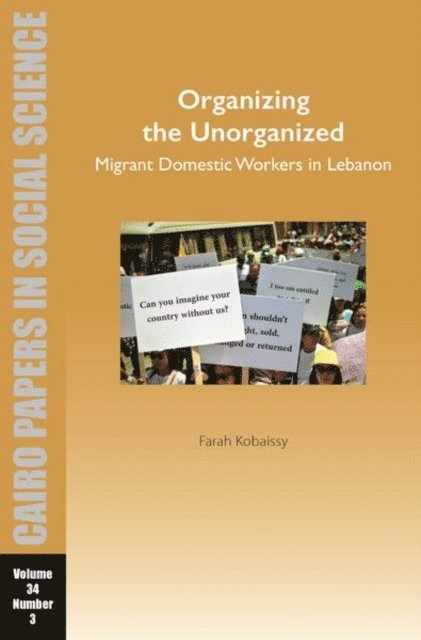
Organizing the Unorganized: Migrant Domestic Workers in Lebanon
Cairo Papers in Social Science Vol. 34, No. 3
E-bok, 2017
384 kr
Lägg i varukorg
This study examines the process of unionizing domestic workers in Lebanon, highlighting the potentialities as well as the obstacles confronting it, and looks at the multiple power relations involved through axes of class, gender, race, and nationality. The author situates this struggle within the …
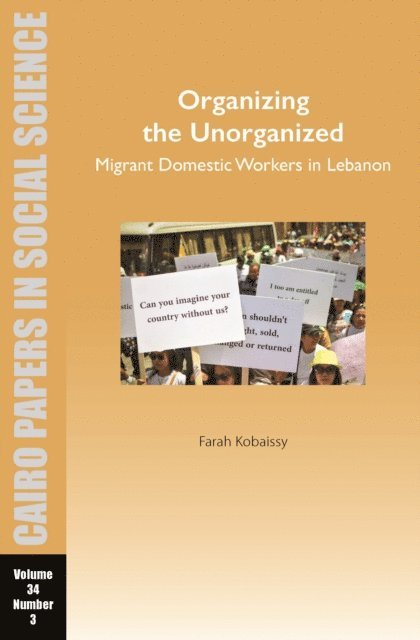
Organizing the Unorganized: Migrant Domestic Workers in Lebanon
Cairo Papers in Social Science Vol. 34, No. 3
E-bok, 2017
384 kr
Lägg i varukorg
This study examines the process of unionizing domestic workers in Lebanon, highlighting the potentialities as well as the obstacles confronting it, and looks at the multiple power relations involved through axes of class, gender, race, and nationality. The author situates this struggle within the …
Organizing the Unorganized: Migrant Domestic Workers in Lebanon
Cairo Papers in Social Science Vol. 34, No. 3
Häftad, 2023
422 kr
Lägg i varukorg
A study of workers' rights in a non-unionized field in Lebanon This study examines the process of unionizing domestic workers in Lebanon, highlighting the potentialities as well as the obstacles confronting it, and looks at the multiple power relations involved through axes of class, gender, race, …