
Farid Shafiyev – författare
Visar alla böcker från författaren . Handla med fri frakt och snabb leverans.
5 produkter
5 produkter
Häftad, Engelska, 2018
507 kr
Skickas inom 10-15 vardagar
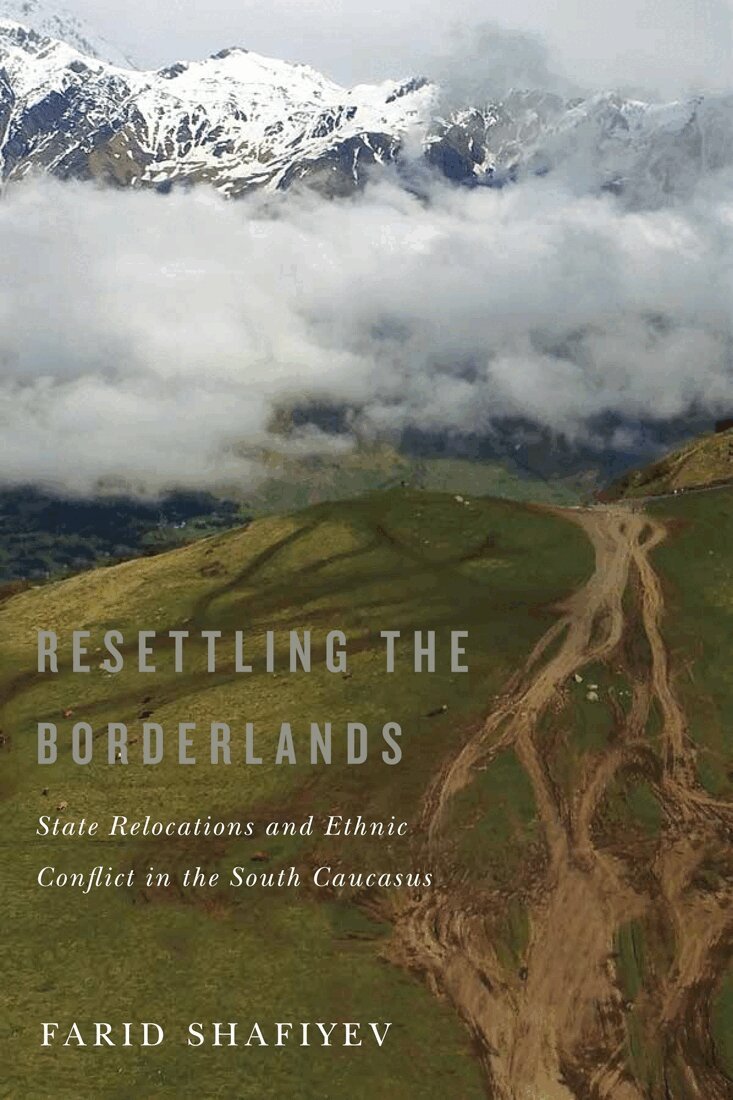
Until the arrival of the Russian Empire in the early nineteenth century, the South Caucasus was traditionally contested by two Muslim empires, the Ottomans and the Persians. Over the following two centuries, Orthodox Christian Russia – and later the officially atheist Soviet Union – expanded into the densely populated Muslim towns and villages and began a long process of resettlement, deportation, and interventionist population management in an attempt to incorporate the region into its own lands and culture. Exploring the policies and implementations of the Russian Empire and the Soviet Union, Resettling the Borderlands investigates the nexus between imperial practices, foreign policy, religion, and ethnic conflicts. Taking a comparative approach, Farid Shafiyev looks at the most active phases of resettlement, when the state imported and relocated waves of German, Russian sectarian, and Armenian settlers into the South Caucasus and deported thousands of others. He also offers insights on the complexities of empire-building and managing space and people in the Muslim borderlands to reveal the impact of demographic changes on the Armenian–Azerbaijani conflict. Combining in-depth and original analysis of archival material with a clear and accessible narrative, Resettling the Borderlands provides a new interpretation of the colonial policies, ideologies, and strategic visions in the Russian Empire and the Soviet Union.
E-bok
PDF, Engelska, 2018471 kr
Läs direkt efter köp
Until the arrival of the Russian Empire in the early nineteenth century, the South Caucasus was traditionally contested by two Muslim empires, the Ottomans and the Persians. Over the following two centuries, Orthodox Christian Russia – and later the officially atheist Soviet Union – expanded into the densely populated Muslim towns and villages and began a long process of resettlement, deportation, and interventionist population management in an attempt to incorporate the region into its own lands and culture. Exploring the policies and implementations of the Russian Empire and the Soviet Union, Resettling the Borderlands investigates the nexus between imperial practices, foreign policy, religion, and ethnic conflicts. Taking a comparative approach, Farid Shafiyev looks at the most active phases of resettlement, when the state imported and relocated waves of German, Russian sectarian, and Armenian settlers into the South Caucasus and deported thousands of others. He also offers insights on the complexities of empire-building and managing space and people in the Muslim borderlands to reveal the impact of demographic changes on the Armenian–Azerbaijani conflict. Combining in-depth and original analysis of archival material with a clear and accessible narrative, Resettling the Borderlands provides a new interpretation of the colonial policies, ideologies, and strategic visions in the Russian Empire and the Soviet Union.
E-bok
Engelska, 2018471 kr
Läs direkt efter köp
Until the arrival of the Russian Empire in the early nineteenth century, the South Caucasus was traditionally contested by two Muslim empires, the Ottomans and the Persians. Over the following two centuries, Orthodox Christian Russia – and later the officially atheist Soviet Union – expanded into the densely populated Muslim towns and villages and began a long process of resettlement, deportation, and interventionist population management in an attempt to incorporate the region into its own lands and culture. Exploring the policies and implementations of the Russian Empire and the Soviet Union, Resettling the Borderlands investigates the nexus between imperial practices, foreign policy, religion, and ethnic conflicts. Taking a comparative approach, Farid Shafiyev looks at the most active phases of resettlement, when the state imported and relocated waves of German, Russian sectarian, and Armenian settlers into the South Caucasus and deported thousands of others. He also offers insights on the complexities of empire-building and managing space and people in the Muslim borderlands to reveal the impact of demographic changes on the Armenian–Azerbaijani conflict. Combining in-depth and original analysis of archival material with a clear and accessible narrative, Resettling the Borderlands provides a new interpretation of the colonial policies, ideologies, and strategic visions in the Russian Empire and the Soviet Union.
E-bok
PDF, Engelska, 2020179 kr
Läs direkt efter köp
Essay from the year 2020 in the subject Politics - Topic: International relations, , language: English, abstract: The essay discusses the emergence of new right wing movements in the context of international relations as evolved after the end of Cold War. The author attempts to link IR, history and political science theories to explain the phenomenon of Brexit, the last US elections and development in the Middle East. As a professionally trained historian I am inclined to permit some time to pass before writing about contemporary events. A historian is better able to analyze what has actually happened and in what direction the world is moving with a more reasoned perspective than that available immediately following an event. In 2016, the election of Donald Trump as the US president generated a plethora of analytical articles explaining the outcome. The overwhelming majority of mainstream media was not only surprised by his unexpected victory in the presidential campaign, but was equally appalled that populist rhetoric pregnant with ethnic and religious bias, accompanied with bald sexist comments, found such support in a country which for the last hundred years purported to lead the democratic world and exhibit exceptional moral superiority.
Häftad, Engelska, 2021
160 kr
Skickas inom 5-8 vardagar
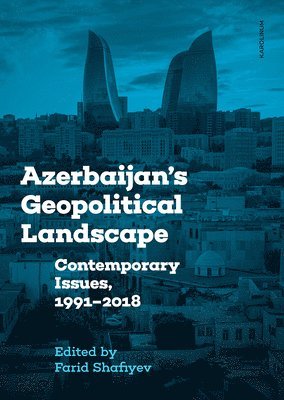
Being located between the Black and Caspian seas, Azerbaijan has always been the juncture of Eurasia—with a traditional reputation as a crossroads between the north-south and east-west transport corridors—and the traditional ground for competition between numerous regional and global players, using both soft and hard power. With its vast hydrocarbon energy reserves, Azerbaijan is a country of particular importance in the South Caucasus. The region’s complex geopolitics have immensely influenced Azerbaijan’s foreign policy strategy. With the dissolution of the USSR, Azerbaijan, as a new state with fragile security, found itself in a complicated situation surrounded by regional powers like Iran, Russia, and Turkey. This book focuses on several major foreign policy issues faced by the Republic of Azerbaijan since it regained its independence in 1991. These major issues include the conflict with Armenia and related matters, the relationship with the West, as well as the complexities arising from its relationship with Russia and its ties to Muslim countries, such as Iran and Saudi Arabia.