Faure Elie Faure – författare
Visar alla böcker från författaren Faure Elie Faure. Handla med fri frakt och snabb leverans.
5 produkter
5 produkter
E-bok
Engelska, 2022175 kr
Läs direkt efter köp
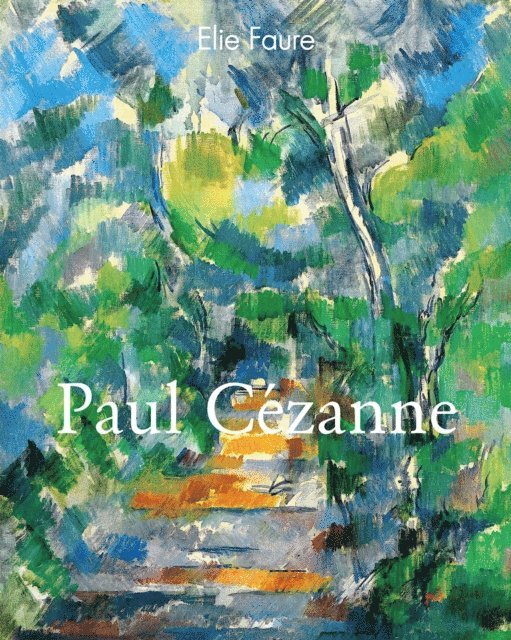
Cézanne was perhaps the most complex artist of the 19th century. One of the greatest of the Postimpressionists, his works and ideas were crucial to the aesthetic development of many 20th-century artists and art movements, especially Cubism. Cézanne’s ambition, in his own words, was "to make out of Impressionism something as solid and durable as the paintings of the museums". He aimed to achieve the monumental in a modern language of glowing, vibrating tones. Cézanne wanted to retain the natural colour of an object and to harmonize it with the various influences of light and shade trying to destroy it; to work out a scale of tones expressing the mass and character of the form.
Memory of Empires: Ancient Egypt - Ancient Greece - Persian Empire - Roman Empire - Byzantine Empire
E-bok
Engelska, 2020207 kr
Läs direkt efter köp
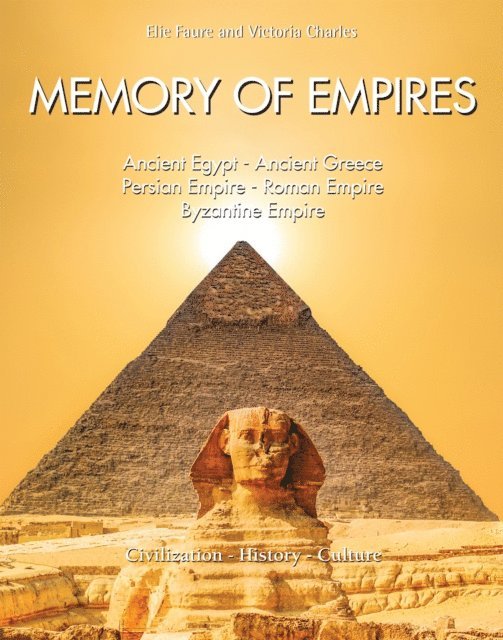
Empires are born. Empires reach their peak. Empires die, but leave their mark through their architecture and artistic achievements. From these specks of dust of memory, 40 centuries of history shape our world of the 21st century. The power of ancient Egypt was followed by the influence of Greece, which brought the Persian East together in the conquests of Alexander the Great. After Cleopatra, the last queen of Egypt, Rome became the power that ruled part of the world, finally dying out in the fall of the Byzantine Empire on 29 May 1453. The authors take the reader on a journey through time and space and highlight the succession of these civilisations that rubbed shoulders, even fought against each other and led us towards a more enlightened humanity.
E-bok
Engelska, 2019115 kr
Läs direkt efter köp
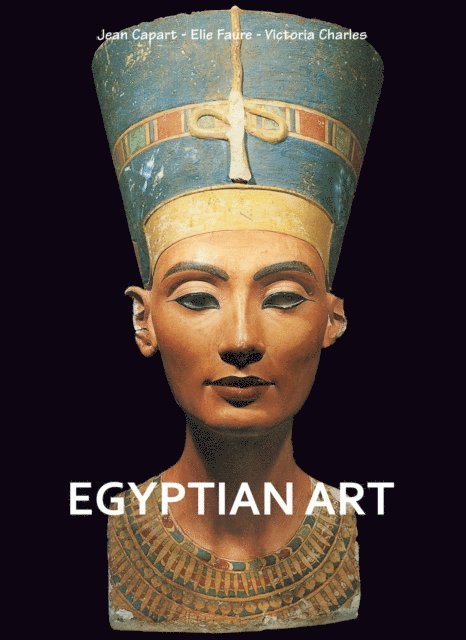
Egyptian art is perhaps the most impersonal that exists. The artist effaces himself. But he has such an innate sense of life, a sense so directly moved and so limpid that everything of life which he describes seems defi ned by that sense, to issue from the natural gesture, from the exact attitude, in which one no longer sees stiffness. His impersonality resembles that of the trees bowing in the wind with a single movement and without resistance, or that of the water which wrinkles into equal circles all moving in the same direction. From afar, Egyptian art seems changeless and forever like itself. From nearby, it offers, like that of all the other peoples, the spectacle of great evolutions, of progress toward freedom of expression, of researches in imposed hieratism. Egypt is so far from us that it all seems on the same plane. One forgets that there are fi fteen or twenty centuries, the age of Christianity — between the “Seated Scribe” and the great classic period, twentyfive or thirty centuries, fi fty, perhaps — twice the time that separates us from Pericles and Phidias — between the pyramids and the Saite school, the last living manifestation of the Egyptian ideal. Egypt died of her need of eternity.
E-bok
Engelska, 2019115 kr
Läs direkt efter köp
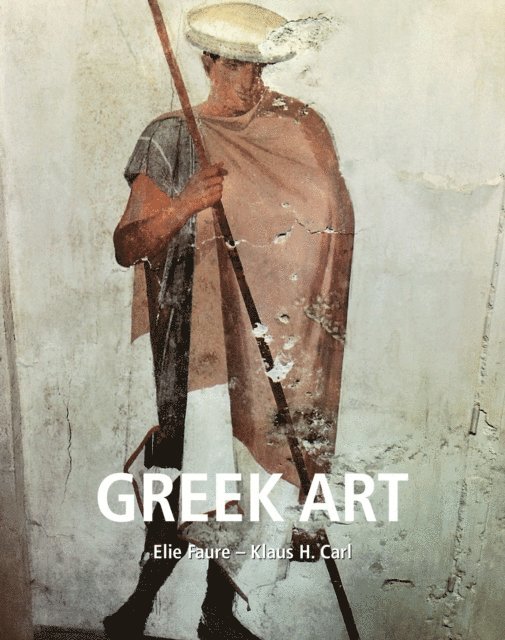
Greek art, at the very moment that it was breaking up in depth, was scattering over the whole material surface of Hellenic antiquity. After the movement of concentration that had brought to Athens all the forces of Hellenism, a movement of dispersal began, which was to carry from Athens to southern Italy, to Sicily, to Cyrenaica, Egypt, the Islands, and Asia Minor the passion and, unfortunately, the mania, for beautiful things—in default of creative genius. Dilettantism and the diffusion of taste multiply and at the same time weaken talent. It is the Hellenistic period, perhaps the richest in artists and in works of art that history has to show, but possibly, also, one of the poorest in power of emotion.The ideal of the Greek is wisdom. He also has a strong feeling for what is just, but what is beautiful and what is true is to the same degree the object of his passion. He finds in each of these ideas the echoes of the other two, and completes, tempers, and broadens each one through the others. Phidias is in Pythagoras, and Socrates is in Phidias.The “Greek miracle” was necessary. The whole ancient world had prepared, had willed its coming. During the fruitful silence when the Dorians were “accumulating within themselves the strength of their soil, Egypt and Assyria kept their lead. But they were discouraged and stricken by the cold of age. They were to become the initiators of the Hellenic Renaissance, as they had been the guides for the childhood of the peoples of the Archipelago. Greek Art, the perfume of the Greek soul, is preserved until our time, through Pompeii.

E-bok
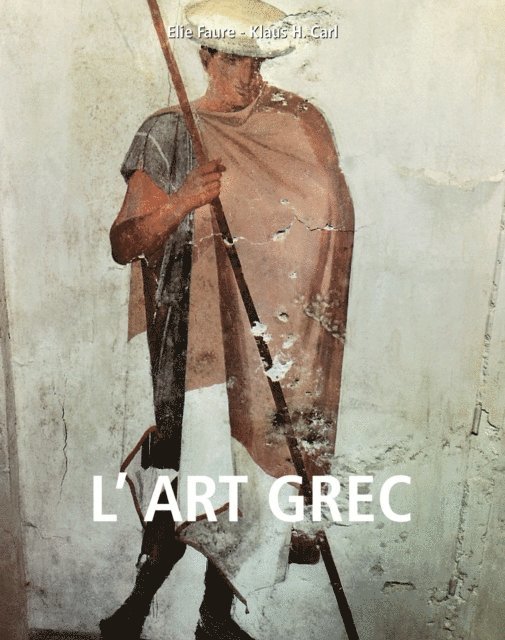
Franska, 2019117 kr
Läs direkt efter köp
L’art grecque qu’on situe traditionnellement entre le Xe et le Ier siècle av. J.C., est naturaliste - tout symbolisme lui est étranger. Et si dans son désir d’absolu réalisable, il fait la nature plus belle, c’est dans le sens étroit qu’elle lui a enseigné. Il ne transpose pas, il ne stylise pas, il ne schématise pas, il ne résume même pas. Il exprime avec perfection. Il pousse la splendeur physique de la vie, et rien que physique, jusqu’à l’extrémité des indications formelles que la vie lui a révélées. Il dit tout, comme on ne saura jamais mieux, ni sans doute aussi bien le dire, mais ne suggère à peu près rien. C’est ce qui le fait incomparable et arrêté. Il est anthropomorphiste, à coup sûr, puisqu’il ne voit rien au-delà de la forme humaine conduite au point le plus rigoureux d’adaptation à sa fonction et d’harmonie. En limitant à la représentation de l’objet, perfectionné par une étude attentive, l’expression qu’il donne du monde, il s’intérdit de rechercher en l’homme même les moyens d’élargir le monde et d’en spiritualiser infiniment et inépuisablement les aspects. L’art grec a profondément influencé l’art du monde occidental.