
Federico Garca Lorca – författare
Visar alla böcker från författaren . Handla med fri frakt och snabb leverans.
3 produkter
3 produkter
Häftad, Engelska, 1988
185 kr
Skickas inom 5-8 vardagar
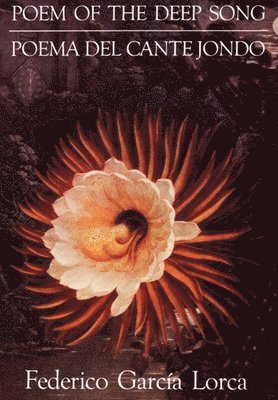
The magic of Andalusia is crystallized in Federico Garcia Lorca's first major work, Poem of the Deep Song, written in 1921 when the poet was twenty-three years old, and published a decade later. In this group of poems, based on saetas, soleares, and siguiriyas, Lorca captures the passionate flamenco cosmos of Andalusia's Gypsies, "those mysterious wandering folk who gave deep song its definitive form." Cante jondo, deep song, comes from a musical tradition that developed among peoples who fled into the mountains in the 15th century to escape the Spanish Inquisition. With roots in Arabic instruments, Sephardic ritual, Byzantine liturgy, native folk songs, and, above all, the rhythms of Gypsy life, deep song is characterized by intense and profound emotion. Fearing that the priceless heritage of deep song might vanish from Spain, Lorca, along with Manuel de Falla and other young artists, hoped to preserve "the artistic treasure of an entire race." In Poem of the Deep Song, the poet's own lyric genius gives cante jondo a special kind of immortality. "Lorca was a minstrel, and he understood poetry as an oral expression...In Poem of the Deep Song, Lorca did not try to imitate the lyrics or music of cante jondo, but he did, I think, rely on its compas in order to craft poems that would enact the experience of the solitary anguish that is cante jondo." -Ralph Angel, Words Without Borders "[Garcia Lorca's] real impact, however, surely comes from the stark vividness of his imagery, his ability to conjure up primal subjective realms of love and death: The guitar makes dreams weep. The sobbing of lost souls escapes through its round mouth. And like the tarantula it spins a large star to trap the sighs floating in its black, wooden water tank." - David H. Rosenthal, New York Times Federico Garcia Lorca (1898-1936) was a poet, playwright, and theater director. He was well-known as a member of the Generation of '27 who introduced symbolism, futurism, and surrealism to Spanish literature. City Lights Publishers also published another book of poetry by Federico Garcia Lorca titled Ode to Walt Whitman. Carlos Baur is the translator of Garcia Lorca's The Public and Play Without a Title: Two Posthumous Plays, and of Cries from a Wounded Madrid: Poetry of the Spanish Civil War. He has also translated the work of Henry Miller and other contemporary American writers into Spanish.
Inbunden, Engelska, 2019
747 kr
Skickas inom 11-20 vardagar
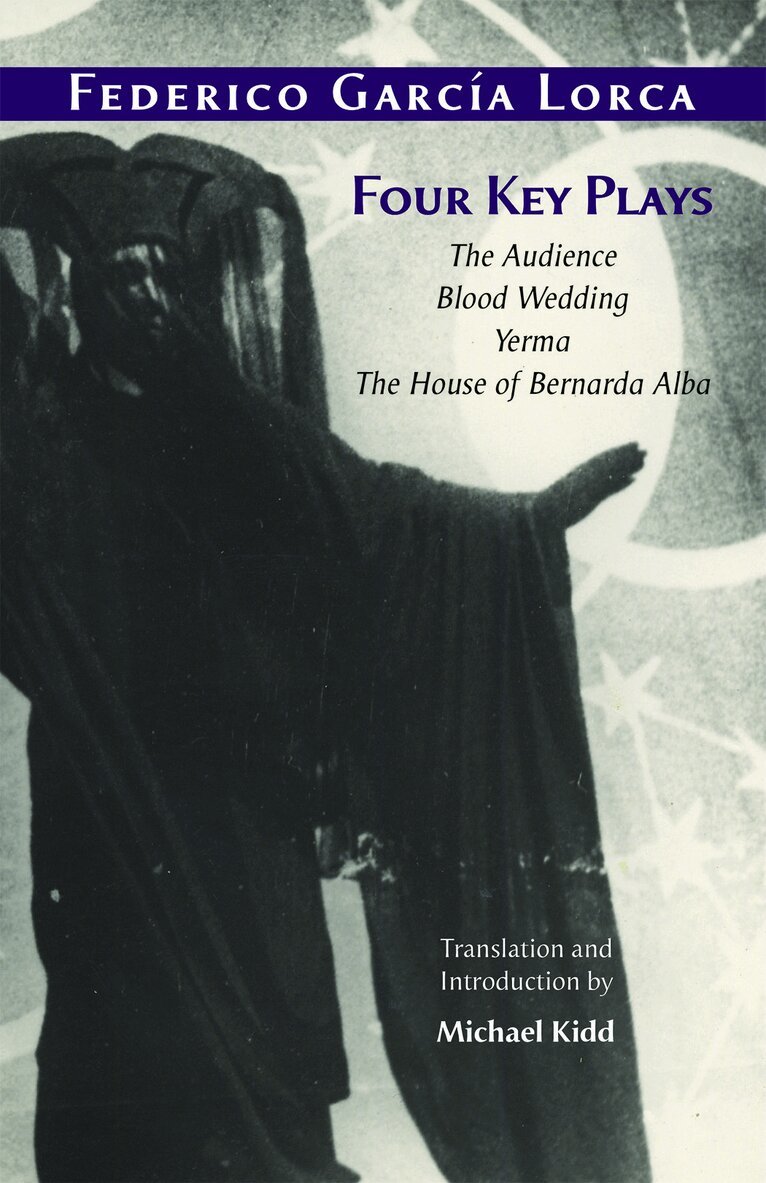
In addition to a substantial introduction to the life and works of Federico García Lorca—avant-garde poet, playwright, and soul of Spain's "Generation of '27"—this collection features vibrant new English translations of four of his plays. The legacy of a dramatic, religious, and social iconoclast whose death made him a martyr of the left in Civil-War Spain and who today is embraced as a gay icon shines through in Michael Kidd's stage-worthy renderings of Yerma, Blood Wedding, The House of Bernarda Alba, and a more experimental play, The Audience, a kaleidoscopic exploration of sexual identity and theater.
Häftad, Engelska, 2006
142 kr
Tillfälligt slut
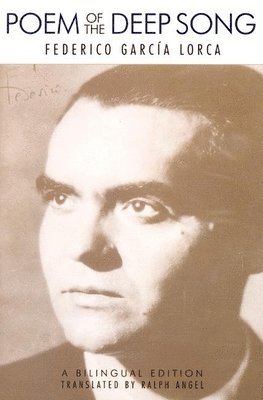
“Poema del cante jondo and Romancero Gitano, the books of poems that Lorca wrote first, out of his excited response to gypsy music, poetry, and dance all around him in Granada, contain some of his most powerful and trenchant lyrical work, original, inimitable, daring, and a clear expression of the duende, the Dionysian daemon in poetry, of which he wrote eloquently. A new, fresh, consistent translation—and Mr. Angel’s is all of these—is a welcome return to that wild dance, in this bilingual edition.”—W.S. Merwin Cante jondo. Deep Song. A poem meant to be sung, not with a pretty voice but with a cry, to break the silence and stillness of the body. A rustic form of flamenco. A poem written to remind Spain of its deep musical soul, the primitive song of the Andalusian Gypsies. A poem by Federico García Lorca written in 1921 when he was only twenty-three and had but fifteen years left to live before the Franco regime murdered him in the hills of Granada.Translator Ralph Angel returns to Lorca’s strange, unique rhythms and to the irrational, intuitive duende. This incantatory translation, every bit as revolutionary as the original was almost a century before, reconfirms what Lorca said of this work, that it is “a slammer, a wavering emission of the voice . . . [that] makes the tightly closed flowers of the semitones blossom into a thousand petals.”