Feifei Zhang – författare
Visar alla böcker från författaren Feifei Zhang. Handla med fri frakt och snabb leverans.
8 produkter
8 produkter
Häftad, Engelska, 2026
608 kr
Kommande
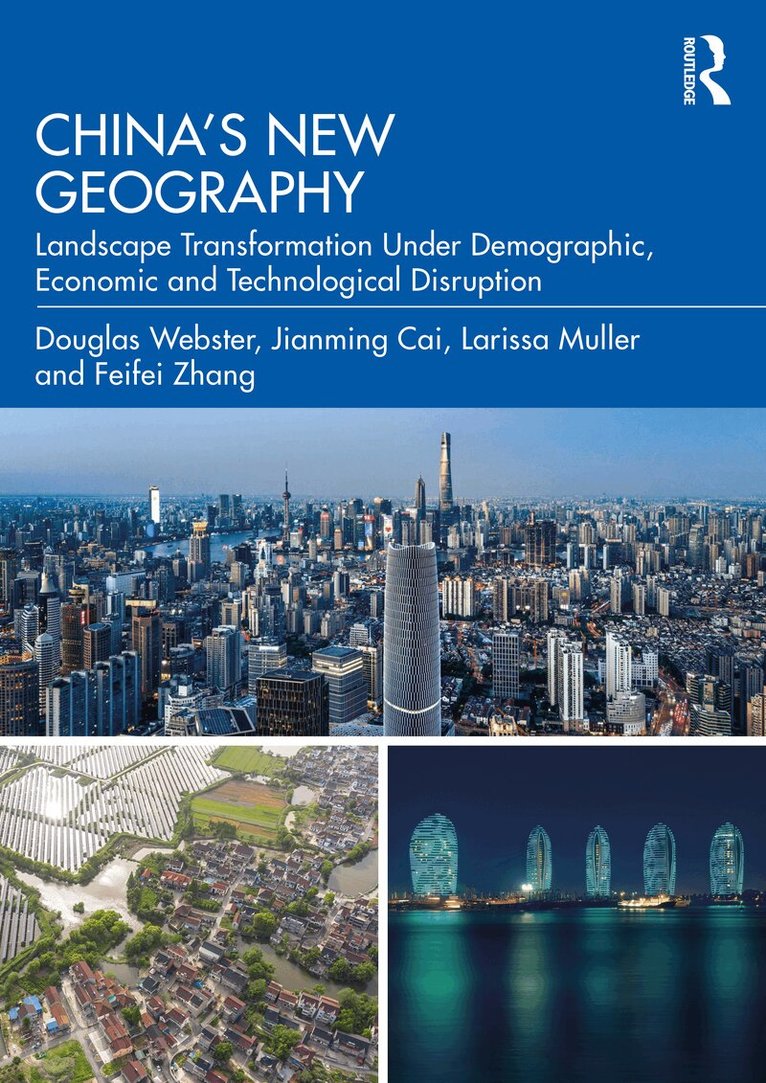
This book explores China’s spatial future through 2060, a future which will be dramatically different from both the Opening Up period starting in 1979, when the rules of landscape building were rewritten, and the Factory of the World era following China’s 2001 WTO accession. Drawing on decades of participation in China’s spatial transformation, the authors explore the country’s future landscape by analyzing the intersecting forces of demographic, societal, economic, policy, and technological change. They examine a rapidly changing context shaped by population decline, the pursuit of global technological leadership, and changing lifestyles and consumption patterns.The book addresses pressing questions: How will China’s hollowing out rural landscapes be transformed as new economic nodes emerge based on alternative energy production, digitally enabled agriculture, ecological restoration and amenity development? As urbanization peaks at 85% and China’s urban population declines by at least 125 million between 2030 and 2060, how will the national urban system be reshaped? Which urban clusters will emerge as new “Silicon Valleys”? Which will be caught in negative rust belt cycles? And as urban outward expansion and physical development slows dramatically, how will technological change, shifting social expectations, and new mobility and production systems reshape China’s built landscape? This will be a useful resource for designers, investors, developers and all those interested in better understanding China’s emerging new geography and landscape, as well as students and academics across a range of disciplines, including Urban and Regional Planning, Landscape Architecture, Geography and Asian Studies.
Inbunden, Engelska, 2026
2 225 kr
Kommande
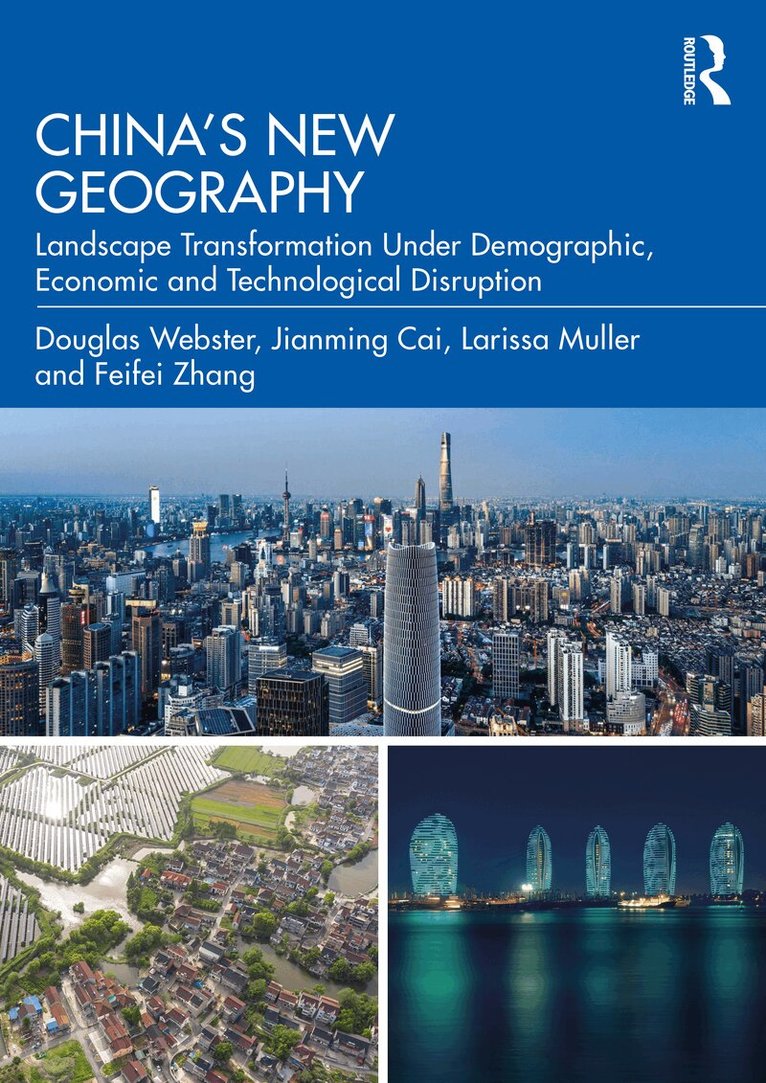
This book explores China’s spatial future through 2060, a future which will be dramatically different from both the Opening Up period starting in 1979, when the rules of landscape building were rewritten, and the Factory of the World era following China’s 2001 WTO accession. Drawing on decades of participation in China’s spatial transformation, the authors explore the country’s future landscape by analyzing the intersecting forces of demographic, societal, economic, policy, and technological change. They examine a rapidly changing context shaped by population decline, the pursuit of global technological leadership, and changing lifestyles and consumption patterns.The book addresses pressing questions: How will China’s hollowing out rural landscapes be transformed as new economic nodes emerge based on alternative energy production, digitally enabled agriculture, ecological restoration and amenity development? As urbanization peaks at 85% and China’s urban population declines by at least 125 million between 2030 and 2060, how will the national urban system be reshaped? Which urban clusters will emerge as new “Silicon Valleys”? Which will be caught in negative rust belt cycles? And as urban outward expansion and physical development slows dramatically, how will technological change, shifting social expectations, and new mobility and production systems reshape China’s built landscape? This will be a useful resource for designers, investors, developers and all those interested in better understanding China’s emerging new geography and landscape, as well as students and academics across a range of disciplines, including Urban and Regional Planning, Landscape Architecture, Geography and Asian Studies.
Inbunden, Engelska, 2025
1 901 kr
Skickas inom 10-15 vardagar
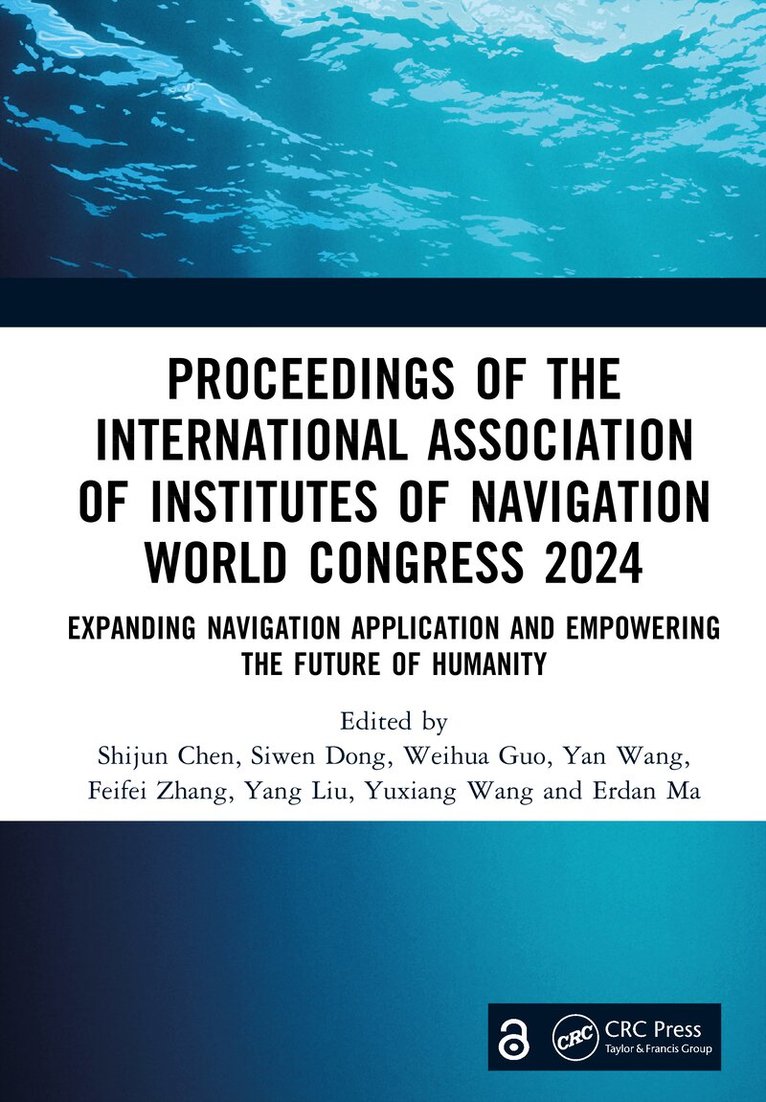
The 2024 IAIN World Congress, held from October 28th – 30th, at the Beijing International Convention Center, brought together over 350 participants and 31 delegates from all over the world to discuss cutting-edge advancements in navigation and maritime technology.Organized by the International Association of Institutes of Navigation (IAIN) and hosted by the China Institute of Navigation (CIN), the Congress delved into the latest technological trends, research, and industry developments in satellite navigation, autonomous shipping, maritime safety, and the integration of 5G, IoT, AI, and big data. This book provides an overview of key discussions, research findings, and milestones in the field, showcasing the collaborative efforts shaping the future of global maritime safety.This book is intended for professionals in navigation and maritime technology, academic researchers, maritime safety authorities, technology developers, industry enterprises, students, and enthusiasts interested in navigation systems, autonomous shipping, and maritime safety.The Open Access version of this book, available at www.taylorfrancis.com, has been made available under a Creative Commons [Attribution-Non Commercial-No Derivatives (CC-BY-NC-ND)] 4.0 license.
E-bok
Engelska, 2019275 kr
Läs direkt efter köp
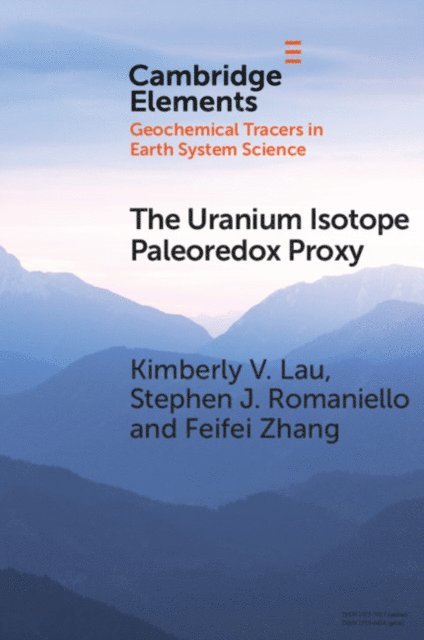
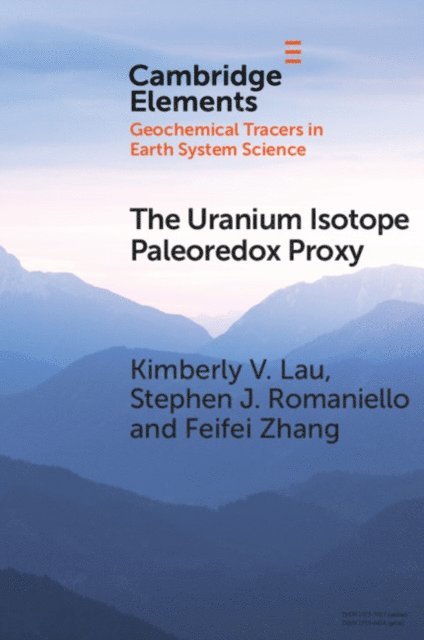
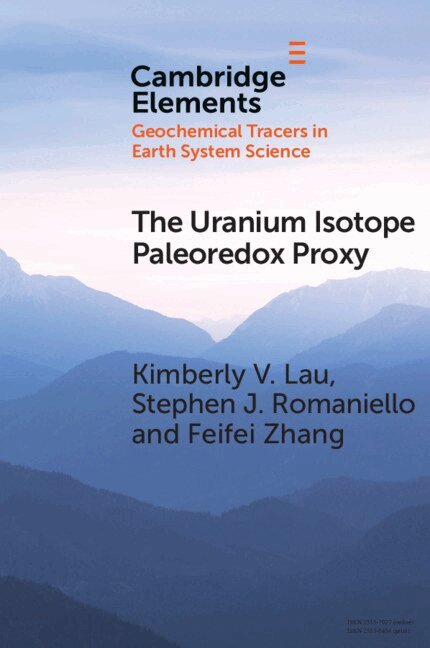
Uranium isotopes (238U/235U) have emerged as a proxy to reconstruct the redox conditions of the Earth''s oceans and atmosphere based upon the large isotopic fractionation between reduced U(IV) and oxidized U(VI). Variations in 238U/235U, particularly when recorded in carbonate sediments, can track global trends in marine oxygenation and de-oxygenation. It is unique from other proxies because reduction primarily occurs at the sediment-water interface, and this sensitivity makes U isotopes especially relevant for the habitability of benthic animals. This Element covers the background, methods, and case studies of this promising tool for understanding Earth''s environmental transitions, as rapid development continues to refine the accuracy of interpretations of 238U/235U records.
E-bok
PDF, Engelska, 2019275 kr
Läs direkt efter köp
Uranium isotopes (238U/235U) have emerged as a proxy to reconstruct the redox conditions of the Earth''s oceans and atmosphere based upon the large isotopic fractionation between reduced U(IV) and oxidized U(VI). Variations in 238U/235U, particularly when recorded in carbonate sediments, can track global trends in marine oxygenation and de-oxygenation. It is unique from other proxies because reduction primarily occurs at the sediment-water interface, and this sensitivity makes U isotopes especially relevant for the habitability of benthic animals. This Element covers the background, methods, and case studies of this promising tool for understanding Earth''s environmental transitions, as rapid development continues to refine the accuracy of interpretations of 238U/235U records.
Häftad, Engelska, 2019
230 kr
Skickas inom 7-10 vardagar
Uranium isotopes (238U/235U) have emerged as a proxy to reconstruct the redox conditions of the Earth's oceans and atmosphere based upon the large isotopic fractionation between reduced U(IV) and oxidized U(VI). Variations in 238U/235U, particularly when recorded in carbonate sediments, can track global trends in marine oxygenation and de-oxygenation. It is unique from other proxies because reduction primarily occurs at the sediment-water interface, and this sensitivity makes U isotopes especially relevant for the habitability of benthic animals. This Element covers the background, methods, and case studies of this promising tool for understanding Earth's environmental transitions, as rapid development continues to refine the accuracy of interpretations of 238U/235U records.
238 kr
Skickas inom 5-8 vardagar
49 kr
Läs direkt efter köp
This study presents a corpus-based analysis of the use of wh sentences by language learners, in language textbooks and in authentic written discourse. It focuses on the polysemeous nature of wh words, which can be used as interrogatives, declaratives and to introduce subordinate clauses.The analysis of wh sentences in EFL textbooks showed that there are more prototypical examples at low proficiency levels. When teaching the interrogative, textbooks focus almost exclusively on grammatical words, particularly at the beginners level.The analysis of wh sentences elicited from Chinese speaking learners of English and Expert users of English suggested that the prototypical structure is very strong in both sets of data, although native speakers tend to use more prefabricated chunks of language.The analysis of wh sentences from native speakers and non-native speakers written corpora suggested that subordinate clauses are strongly present in both corpora, except for the word why in non-native speakers data. The use of different words occurring immediately after wh words in the two corpora can be explained by (1) the relatively small vocabulary size of the L2 speakers; (2) non-native speakers lack of awareness of restricted collocations; (3) L1 transfer; (4) over/under-generalization of rules and (5) textbooks.