Ferdi De Ville – författare
546 kr
Skickas inom 10-15 vardagar
712 kr
Läs direkt efter köp
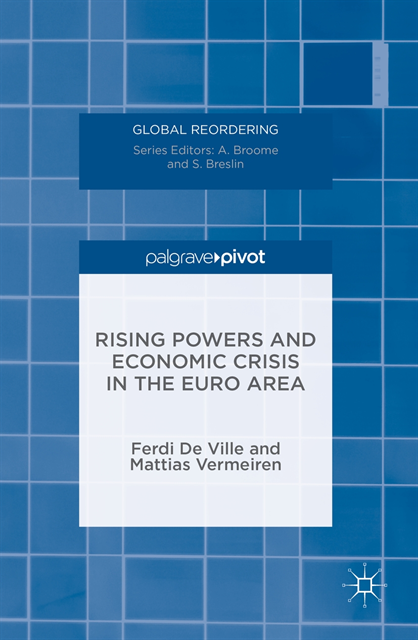
In this book, Ferdi De Ville and Mattias Vermeiren examine the linkages between the economic crisis in the euro area and the rise of Brazil, India and China (BICs) in the global monetary and trading system. Drawing on the insights of the comparative capitalism literature, the authors show that the latter development has been a key source of the escalation of trade imbalances in the euro area, which are widely seen as an important cause of the financial and economic crisis in the region. By pointing to the external source of these imbalances and the divergent institutional capacity of the euro area countries to deal with the intensified competition associated with the rise of the BICs, De Ville and Vermeiren go beyond the focus on the divergence in unit labor costs as the driving force of these imbalances. As such, this book provides a comprehensive policy critique of the EU’s export-led growth strategy based on declining unit labor costs.
574 kr
Skickas inom 5-8 vardagar
148 kr
Skickas inom 5-8 vardagar
199 kr
Läs direkt efter köp
The Transatlantic Trade and Investment Partnership (TTIP) has stirred passions like no other trade negotiation in recent history. Its supporters maintain that TTIP will produce spectacular growth and job creation; claims that are wholeheartedly rejected by its critics, who regard TTIP as a direct assault on workers'' rights, health and safety standards and public services.
In this incisive analysis, Gabriel Siles-Brugge and Ferdi de Ville scrutinize the claims made by TTIP''s cheerleaders and scaremongers to reveal a far more nuanced picture behind the headlines. TTIP will not provide an economic ''cure-all'', nor will it destroy the European welfare state in one fell swoop. Thanks to unprecedented levels of protest and debate around TTIP, however, neoliberal trade negotiations are well and truly back in the spotlight. In this respect, TTIP could well prove to be a ''game-changer'' - just not in the way imagined by its backers.