Ferdinando Sardella – författare
Visar alla böcker från författaren Ferdinando Sardella. Handla med fri frakt och snabb leverans.
5 produkter
5 produkter
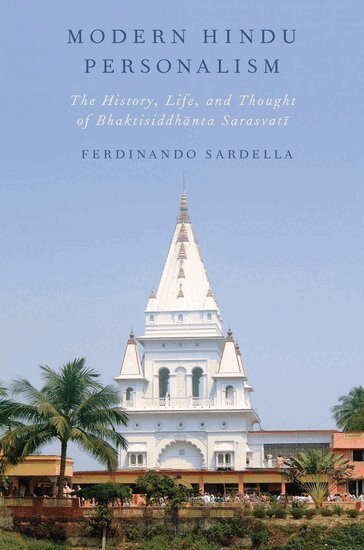
Modern Hindu Personalism
The History, Life, and Thought of Bhaktisiddhanta Sarasvati
Häftad, Engelska, 2013
608 kr
Skickas inom 5-8 vardagar
Modern Hindu Personalism explores the life and works of Bhaktisiddhanta Sarasvati (1874-1937), a Vaishnava guru of the Chaitanya school of Bengal. Ferdinando Sardella examines Bhaktisiddhanta's background, motivation and thought, especially as it relates to his forging of a modern traditionalist institution for the successful revival of Chaitanya Vaishnava bhakti. Originally known as the Gaudiya Math, that institution not only established centers in both London (1933) and Berlin (1934), but also has been indirectly responsible for the development of a number of contemporary global offshoots, including the International Society for Krishna Consciousness (Hare Krishna movement). Sardella provides the historical background as well as the contemporary context of the India in which Bhaktisiddhanta lived and functioned, in the process shedding light on such topics as colonial culture and sensibilities, the emergence of an educated middle-class, the rise of the Bengal Renaissance, and the challenge posed by Protestant missionaries. Bhaktisiddhanta's childhood, education and major influences are examined, as well as his involvement with Chaitanya Vaishnavism and the practice of bhakti. Sardella depicts Bhaktisiddhanta's attempt to propagate Chaitanya Vaishnavism internationally by sending disciples to London and Berlin, and offers a detailed description of their encounters with Imperial Britain and Nazi Germany. He goes on to consider Bhaktisiddhanta's philosophical perspective on religion and society as well as on Chaitanya Vaishnavism, exploring the interaction between philosophical and social concerns and showing how they formed the basis for the restructuring of his movement in terms of bhakti. Sardella places Bhaktisiddhanta's life and work within a taxonomy of modern Hinduism and compares the significance of his work to the contributions of other major figures such as Swami Vivekananda. Finally, Bhaktisiddhanta's work is linked to the development of a worldwide movement that today involves thousands of American and European practitioners, many of whom have become respected representatives of Chaitanya bhakti in India itself.
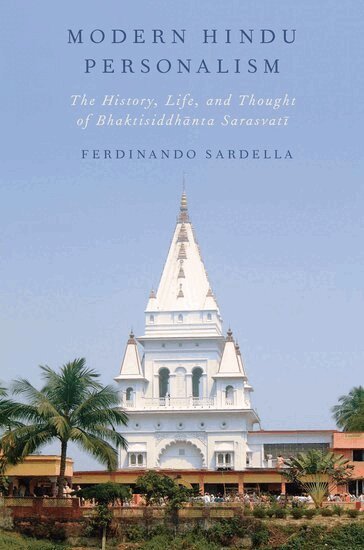
Modern Hindu Personalism
The History, Life, and Thought of Bhaktisiddhanta Sarasvati
Inbunden, Engelska, 2013
872 kr
Skickas inom 5-8 vardagar
Modern Hindu Personalism explores the life and works of Bhaktisiddhanta Sarasvati (1874-1937), a Vaishnava guru of the Chaitanya school of Bengal. Ferdinando Sardella examines Bhaktisiddhanta's background, motivation and thought, especially as it relates to his forging of a modern traditionalist institution for the successful revival of Chaitanya Vaishnava bhakti. Originally known as the Gaudiya Math, that institution not only established centers in both London (1933) and Berlin (1934), but also has been indirectly responsible for the development of a number of contemporary global offshoots, including the International Society for Krishna Consciousness (Hare Krishna movement). Sardella provides the historical background as well as the contemporary context of the India in which Bhaktisiddhanta lived and functioned, in the process shedding light on such topics as colonial culture and sensibilities, the emergence of an educated middle-class, the rise of the Bengal Renaissance, and the challenge posed by Protestant missionaries. Bhaktisiddhanta's childhood, education and major influences are examined, as well as his involvement with Chaitanya Vaishnavism and the practice of bhakti. Sardella depicts Bhaktisiddhanta's attempt to propagate Chaitanya Vaishnavism internationally by sending disciples to London and Berlin, and offers a detailed description of their encounters with Imperial Britain and Nazi Germany. He goes on to consider Bhaktisiddhanta's philosophical perspective on religion and society as well as on Chaitanya Vaishnavism, exploring the interaction between philosophical and social concerns and showing how they formed the basis for the restructuring of his movement in terms of bhakti. Sardella places Bhaktisiddhanta's life and work within a taxonomy of modern Hinduism and compares the significance of his work to the contributions of other major figures such as Swami Vivekananda. Finally, Bhaktisiddhanta's work is linked to the development of a worldwide movement that today involves thousands of American and European practitioners, many of whom have become respected representatives of Chaitanya bhakti in India itself.
625 kr
Skickas inom 10-15 vardagar
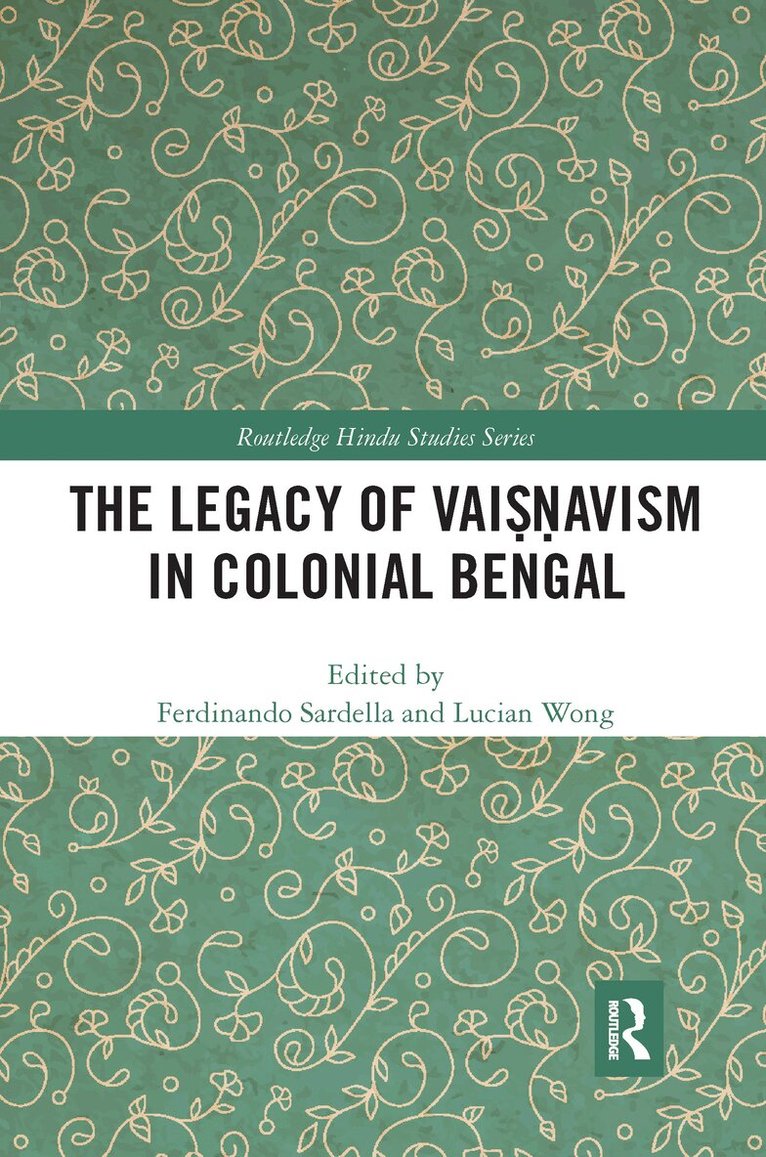
This book offers a focused examination of the Bengali Vaiṣṇava tradition in its manifold forms in the pivotal context of British colonialism in South Asia. Bringing together scholars from across the disciplines of social and intellectual history, philology, theology, and anthropology to systematically investigate Vaiṣṇavism in colonial Bengal, this book highlights the significant roles—religious, social, and cultural—that a prominent Hindu devotional current played in the lives of wide and diverse sections of colonial Bengali society. Not only does the book thereby enrich our understanding of the history and development of Bengali Vaiṣṇavism, but it also sheds valuable new light on the texture and dynamics of colonial Hinduism beyond the discursive and social-historical parameters of an entrenched Hindu "Renaissance" paradigm. A landmark in the burgeoning field of Bengali Vaiṣṇava studies, this book will be of interest to scholars of modern Hinduism, religion, and colonial South Asian social and intellectual history.
2 136 kr
Skickas inom 10-15 vardagar
This book offers a focused examination of the Bengali Vaiṣṇava tradition in its manifold forms in the pivotal context of British colonialism in South Asia. Bringing together scholars from across the disciplines of social and intellectual history, philology, theology, and anthropology to systematically investigate Vaiṣṇavism in colonial Bengal, this book highlights the significant roles—religious, social, and cultural—that a prominent Hindu devotional current played in the lives of wide and diverse sections of colonial Bengali society. Not only does the book thereby enrich our understanding of the history and development of Bengali Vaiṣṇavism, but it also sheds valuable new light on the texture and dynamics of colonial Hinduism beyond the discursive and social-historical parameters of an entrenched Hindu "Renaissance" paradigm. A landmark in the burgeoning field of Bengali Vaiṣṇava studies, this book will be of interest to scholars of modern Hinduism, religion, and colonial South Asian social and intellectual history.
329 kr
Skickas inom 5-8 vardagar
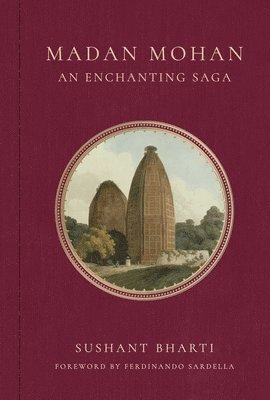
The establishment of Gaudiya Vaishnavas in the Braj region catalysed a novel movement centered around the devotion to Radha and Krishna. This movement, in turn, spurred construction of the Madan Mohan, one of the most significant and prominent temples in the area during the Mughal reign. In the late 16th and early 17th centuries, each temple emerged as a distinct exemple of Mughal artistry, showcasing a seamless integration of diverse architectural components and novel experimentation.The Madan Mohan temple stands as a remarkable testament to the confluence of social, economic, and political forces that transcended regional boundaries during the zenith of Mughal dominance.