Filippo de Vivo – författare
Visar alla böcker från författaren Filippo de Vivo. Handla med fri frakt och snabb leverans.
7 produkter
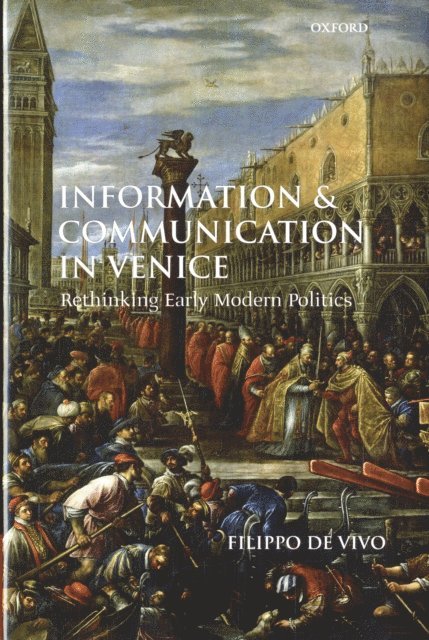
Information and Communication in Venice
Rethinking Early Modern Politics
E-bok, 2007
705 kr
Lägg i varukorg
A unique investigation of the political uses of different forms of communication - oral, manuscript, and printed - in sixteenth- and seventeenth-century Venice. Today we take it for granted that communication and politics influence each other through spin-doctoring and media power. What, however, …
Information and Communication in Venice
Rethinking Early Modern Politics
Inbunden, 2007
1582 kr
Lägg i varukorg
This is a unique investigation of the political uses of different forms of communication - oral, manuscript, and printed - in sixteenth and seventeenth century Venice. De Vivo uses a rich and diverse range of sources - from council debates to leaks and spies' reports, from printed pamphlets to …
Information and Communication in Venice
Rethinking Early Modern Politics
Häftad, 2009
1280 kr
Lägg i varukorg
A unique investigation of the political uses of different forms of communication - oral, manuscript, and printed - in sixteenth- and seventeenth-century Venice. Today we take it for granted that communication and politics influence each other through spin-doctoring and media power. What, however, …
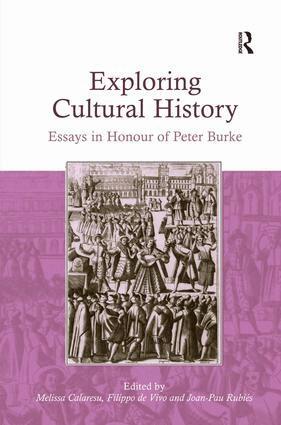
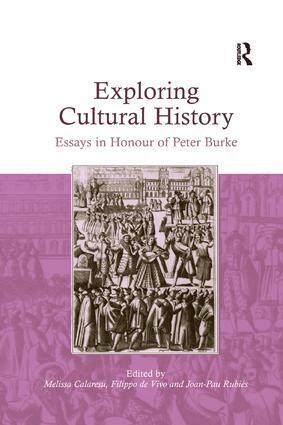
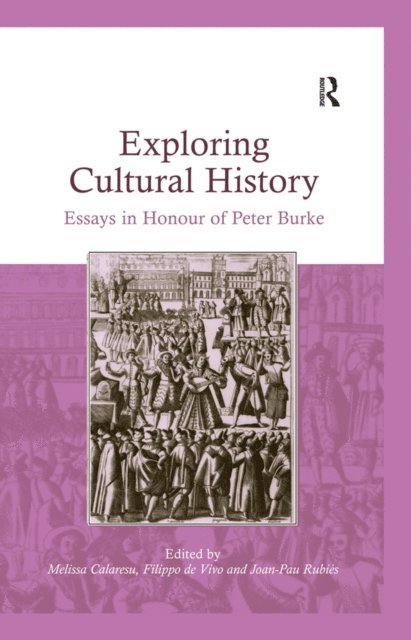
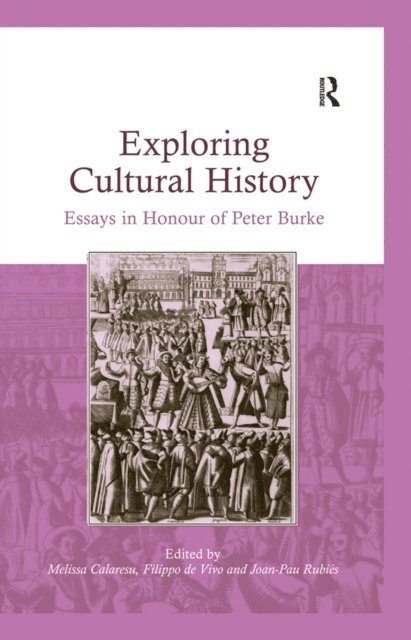
Exploring Cultural History
Essays in Honour of Peter Burke
Av Melissa Calaresu, Joan-Pau Rubies m. fl.
Inbunden, 2010
2578 kr
Lägg i varukorg
Over the past 30 years, cultural history has moved from the periphery to the centre of historical studies, profoundly influencing the way we look at and analyze all aspects of the past. In this volume, a distinguished group of international historians has come together to consider the rise of …
Exploring Cultural History
Essays in Honour of Peter Burke
Av Melissa Calaresu, Joan-Pau Rubies m. fl.
Häftad, 2017
993 kr
Lägg i varukorg
Over the past 30 years, cultural history has moved from the periphery to the centre of historical studies, profoundly influencing the way we look at and analyze all aspects of the past. In this volume, a distinguished group of international historians has come together to consider the rise of …
Exploring Cultural History
Essays in Honour of Peter Burke
Av Filippo de Vivo, Joan-Pau Rubies m. fl.
E-bok, 2016
1052 kr
Lägg i varukorg
Over the past 30 years, cultural history has moved from the periphery to the centre of historical studies, profoundly influencing the way we look at and analyze all aspects of the past. In this volume, a distinguished group of international historians has come together to consider the rise of …
Exploring Cultural History
Essays in Honour of Peter Burke
Av Filippo de Vivo, Joan-Pau Rubies m. fl.
E-bok, 2016
1052 kr
Lägg i varukorg
Over the past 30 years, cultural history has moved from the periphery to the centre of historical studies, profoundly influencing the way we look at and analyze all aspects of the past. In this volume, a distinguished group of international historians has come together to consider the rise of …