Florence Sutcliffe-Braithwaite - Böcker
Visar alla böcker från författaren Florence Sutcliffe-Braithwaite. Handla med fri frakt och snabb leverans.
4 produkter
4 produkter
553 kr
Skickas
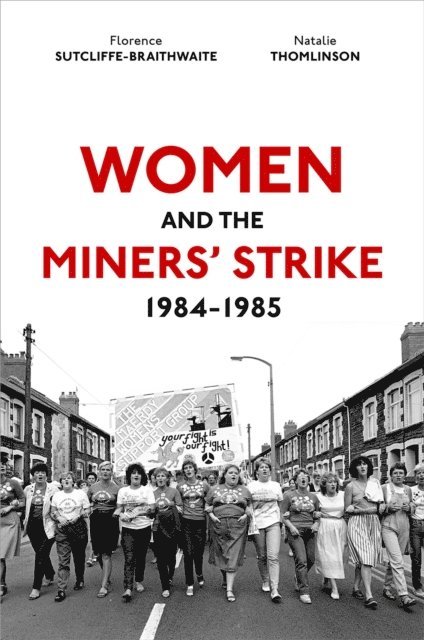
Just days into the miners' strike of 1984-1985, a few women in coalfield communities around Britain began to meet to consider how they could support the strike, a clash with the Thatcher government over the future of the coal industry. Women ultimately formed a national network of groups that some observers saw as an 'alternative welfare state', helping to keep the strike going for just under a year. This book is the first study of this national movement, illuminating its achievements, but also telling the less well-known story of arguments and divisions with men in the National Union of Mineworkers and feminists in the women's liberation movement. Many women in the movement, despite their activism, resolutely denied that they were 'political' at all, defining themselves as 'ordinary' women, housewives, mothers, and workers; and, despite some claims that women activists had been transformed for ever by their experiences, most of those involved felt they had been changed only in more subtle ways. Women and the Miners' Strike is also the first to look beyond the activists to study the experiences of the majority of women in mining families who did not get involved in activism. Some of these women supported the strike by going out to work themselves to keep their families going; others supported their menfolk with practical and emotional support in the home. A large number were ambivalent about the dispute, even though the experiences of women whose husbands or fathers worked through the strike, or returned to work early, have generally been almost entirely obscured within popular memory. This book therefore also demonstrates how some women whose husbands broke the strike refashioned concepts like democracy and community to justify their actions, and how some even formed their own support groups to aid other women in their communities who found themselves under fire for opposing the strike. Through examining the stories of more than 100 women and their varied experiences during the strike, the book sheds new light on working-class women's relationship to the 'political' and the 'ordinary', and demonstrates the ways in which gender roles, working-class lifestyles, and coalfield communities changed in Britain over the post-war period.
1 648 kr
Skickas inom 5-8 vardagar
In late twentieth-century England, inequality was rocketing, yet some have suggested that the politics of class was declining in significance, while others argue that class identities lost little power. Neither interpretation is satisfactory: class remained important to 'ordinary' people's narratives about social change and their own identities throughout the period 1968-2000, but in changing ways. Using self-narratives drawn from a wide range of sources - the raw materials of sociological studies, transcripts from oral history projects, Mass Observation, and autobiography - the book examines class identities and narratives of social change between 1968 and 2000, showing that by the end of the period, class was often seen as an historical identity, related to background and heritage, and that many felt strict class boundaries had blurred quite profoundly since 1945. Class snobberies 'went underground', as many people from all backgrounds began to assert that what was important was authenticity, individuality, and ordinariness. In fact, Sutcliffe-Braithwaite argues that it is more useful to understand the cultural changes of these years through the lens of the decline of deference, which transformed people's attitudes towards class, and towards politics.The study also examines the claim that Thatcher and New Labour wrote class out of politics, arguing that this simple - and highly political - narrative misses important points. Thatcher was driven by political ideology and necessity to try to dismiss the importance of class, while the New Labour project was good at listening to voters - particularly swing voters in marginal seats - and echoing back what they were increasingly saying about the blurring of class lines and the importance of ordinariness. But this did not add up to an abandonment of a majoritarian project, as New Labour reoriented their political project to emphasize using the state to empower the individual.
276 kr
Skickas inom 7-10 vardagar
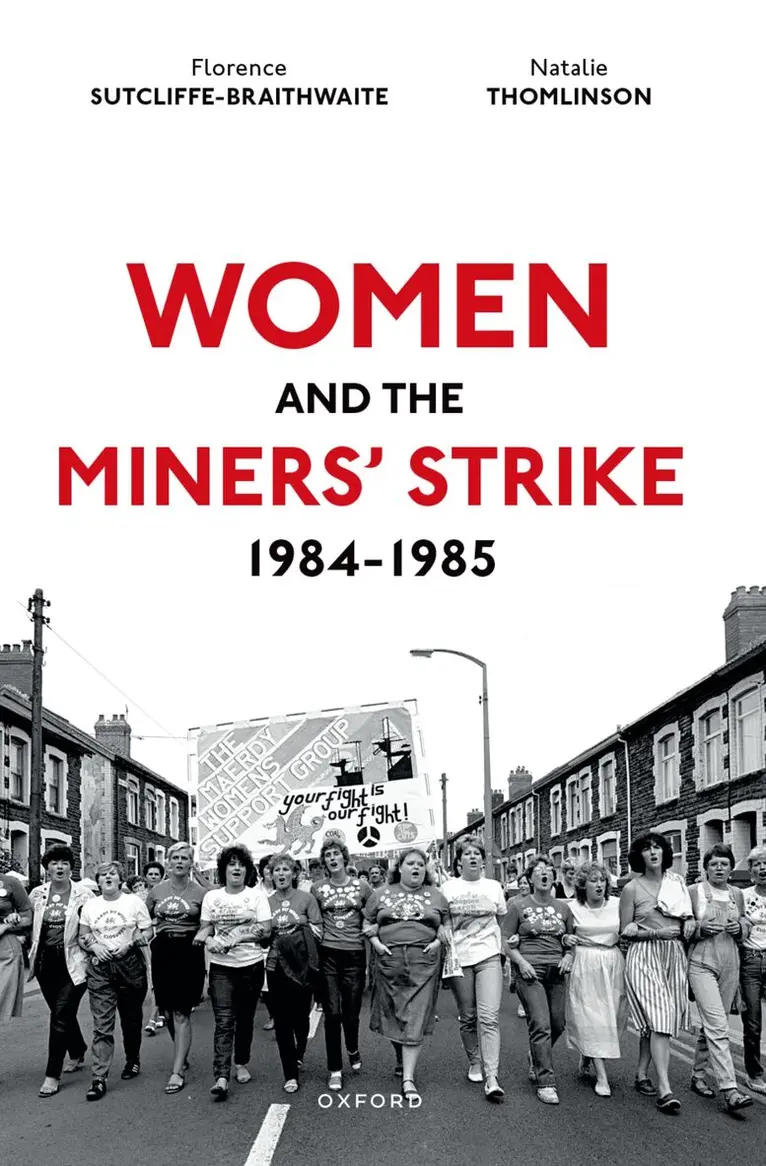
Just days into the miners' strike of 1984-1985, a few women in coalfield communities around Britain began to meet to consider how they could support the dispute, a clash with the Thatcher government over the future of the coal industry. Women ultimately formed a national network of groups that some observers saw as an 'alternative welfare state', helping to keep the strike going for just under a year. This book is the first study of this national movement, illuminating its achievements, but also telling the less well-known story of arguments and divisions with men in the National Union of Mineworkers and feminists in the women's liberation movement. Many women in the strike support movement, despite their activism, resolutely denied that they were 'political' at all, defining themselves as 'ordinary' women, housewives, mothers, and workers; and, despite some claims that women activists had been transformed for ever by their experiences, most of those involved felt they had been changed only in more subtle ways.Women and the Miners' Strike is also the first book to look beyond the activists to study the experiences of the majority of women in mining families who did not get involved in activism. Some of these women supported the strike by going out to work themselves to keep their families going; others supported their menfolk with practical and emotional support in the home. A large number were ambivalent about the dispute. The experiences of women whose husbands or fathers worked through the strike, or returned to work early, have generally been almost entirely obscured within popular memory. This book therefore also demonstrates how some women whose husbands broke the strike refashioned concepts like democracy and community to justify their actions, and how some even formed their own support groups to aid other women in their communities who found themselves under fire for opposing the strike.Through examining the stories of women and their varied experiences during the strike, the book sheds new light on working-class women's relationship to the 'political' and the 'ordinary', and demonstrates the ways in which gender roles, working-class lifestyles, and coalfield communities changed in Britain during the postwar period.
481 kr
Skickas inom 10-15 vardagar
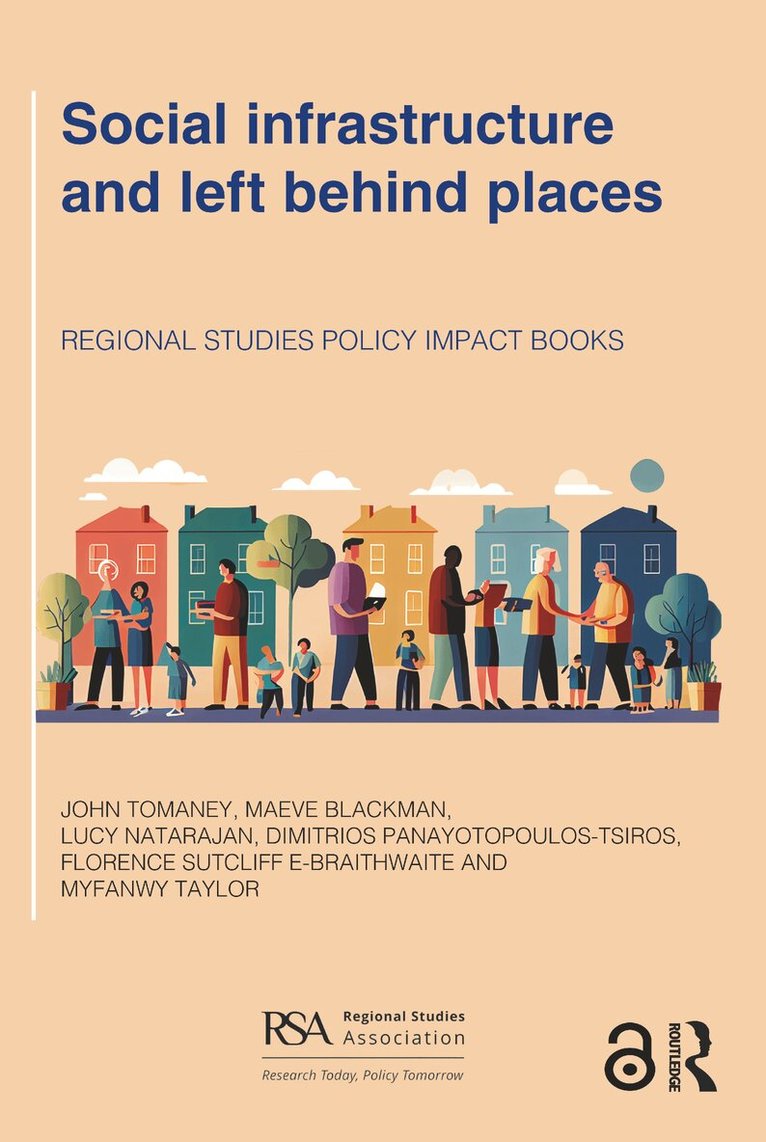
This book explores the making, unmaking and remaking of social infrastructure in ‘left-behind places’. Such places, typically once flourishing industrial communities that have been excluded from recent economic growth, now attract academic and policy attention as sites of a political backlash against globalisation and liberal democracy. The book focuses on the role of social infrastructure as a key component of this story.Seeking to move beyond a narrowly economistic of reading ‘left behind places’, the book addresses the understudied affective dimensions of ‘left-behindness’. It develops an analytical framework that emphasises the importance of place attachments and the consequences of their disruption; considers ‘left behind places’ as ‘moral communities’ and the making of social infrastructure as an expression of this; views the unmaking of social infrastructure through the lens of ‘root shock’; and explains efforts at remaking it in terms of the articulation of ‘radical hope’.The analysis builds upon a case study of a former mining community in County Durham, North East England. Using mixed methods, it offers a ‘deep place study’ of a single village to understand more fully the making, unmaking and remaking of social infrastructure. It shows how a place once richly endowed with social infrastructure, saw this endowment wither and the effects this had on the community. However, it also records efforts of the local people to rebuild social infrastructure, typically drawing the lessons of the past. Although the story of one village, the methods, results and policy recommendation have much wider applicability.The book will be of interest to researchers, policy makers and others concerned with the fate of ‘left behind places’.The Open Access version of this book, available at http://www.taylorfrancis.com, has been made available under a Creative Commons Attribution-Non Commercial (CC-BY-NC) 4.0 license.