Florian Alt – författare
Visar alla böcker från författaren Florian Alt. Handla med fri frakt och snabb leverans.
6 produkter
6 produkter
Inbunden, Engelska, 2011
1 116 kr
Skickas inom 10-15 vardagar
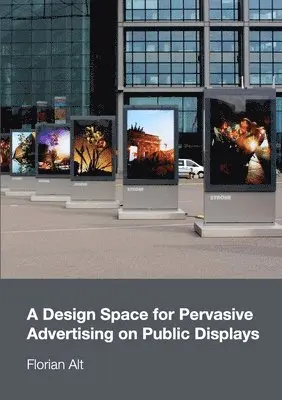
This book looks at the future of advertising from the perspective of pervasive computing. Pervasive computing encompasses the integration of computers into everyday devices, like the covering of surfaces with interactive displays and networked mobile phones. Advertising is the communication of sponsored messages to inform, convince, and persuade to buy. We believe that our future cities will be digital, giving us instant access to any information we need everywhere, like at bus stops, on the sidewalk, inside the subway and in shopping malls. We will be able to play with and change the appearance of our cities effortlessly, like making flowers grow along a building wall or changing the colour of the street we are in. Like the internet as we know it, this digitalization will be paid for by adverts, which unobtrusively provide us suggestions for nearby restaurants or cafés. If any content annoys us, we will be able to effortlessly say so and change it with simple gestures, and content providers and advertisers will know what we like and be able to act accordingly. This book presents the technological foundations to make this vision a reality.
E-bok
PDF, Engelska, 20111 416 kr
Läs direkt efter köp
This book looks at the future of advertising from the perspective of pervasive computing. Pervasive computing encompasses the integration of computers into everyday devices, like the covering of surfaces with interactive displays and networked mobile phones. Advertising is the communication of sponsored messages to inform, convince, and persuade to buy. We believe that our future cities will be digital, giving us instant access to any information we need everywhere, like at bus stops, on the sidewalk, inside the subway and in shopping malls. We will be able to play with and change the appearance of our cities effortlessly, like making flowers grow along a building wall or changing the colour of the street we are in. Like the internet as we know it, this digitalization will be paid for by adverts, which unobtrusively provide us suggestions for nearby restaurants or cafés. If any content annoys us, we will be able to effortlessly say so and change it with simple gestures, and content providers and advertisers will know what we like and be able to act accordingly. This book presents the technological foundations to make this vision a reality.
Häftad, Engelska, 2013
366 kr
Skickas inom 5-8 vardagar
Häftad, Engelska, 2013
1 405 kr
Skickas inom 10-15 vardagar
This book looks at the future of advertising from the perspective of pervasive computing. Pervasive computing encompasses the integration of computers into everyday devices, like the covering of surfaces with interactive displays and networked mobile phones. Advertising is the communication of sponsored messages to inform, convince, and persuade to buy. We believe that our future cities will be digital, giving us instant access to any information we need everywhere, like at bus stops, on the sidewalk, inside the subway and in shopping malls. We will be able to play with and change the appearance of our cities effortlessly, like making flowers grow along a building wall or changing the colour of the street we are in. Like the internet as we know it, this digitalization will be paid for by adverts, which unobtrusively provide us suggestions for nearby restaurants or cafés. If any content annoys us, we will be able to effortlessly say so and change it with simple gestures, and content providers and advertisers will know what we like and be able to act accordingly. This book presents the technological foundations to make this vision a reality.
Häftad, Engelska, 2014
362 kr
Skickas inom 10-15 vardagar
Fueled by falling display hardware costs and rising demand, digital signage and pervasive displays are becoming ever more ubiquitous. Such systems have traditionally been used for advertising and information dissemination, with digital signage commonplace in shopping malls, airports and public spaces. While advertising and broadcasting announcements remain important applications, developments in sensing and interaction technologies are enabling entirely new classes of display applications that tailor content to the situation and audience of the display. As a result, signage systems are beginning to transition from simple broadcast systems to rich platforms for communication and interaction.In this lecture, we provide an introduction to this emerging field for researchers and practitioners interested in creating state-of-the-art pervasive display systems. We begin by describing the history of pervasive display research, providing illustrations of key systems, from pioneering work on supporting collaboration to contemporary systems designed for personalized information delivery. We then consider what the near future might hold for display networks -- describing a series of compelling applications that are being postulated for future display networks. Creating such systems raises a wide range of challenges and requires designers to make a series of important trade-offs. We dedicate four chapters to key aspects of pervasive display design: audience engagement, display interaction, system software, and system evaluation. These chapters provide an overview of current thinking in each area. Finally, we present a series of case studies of display systems and our concluding remarks.
E-bok
PDF, Engelska, 2022443 kr
Läs direkt efter köp
Fueled by falling display hardware costs and rising demand, digital signage and pervasive displays are becoming ever more ubiquitous. Such systems have traditionally been used for advertising and information dissemination, with digital signage commonplace in shopping malls, airports and public spaces. While advertising and broadcasting announcements remain important applications, developments in sensing and interaction technologies are enabling entirely new classes of display applications that tailor content to the situation and audience of the display. As a result, signage systems are beginning to transition from simple broadcast systems to rich platforms for communication and interaction.In this lecture, we provide an introduction to this emerging field for researchers and practitioners interested in creating state-of-the-art pervasive display systems. We begin by describing the history of pervasive display research, providing illustrations of key systems, from pioneering work on supporting collaboration to contemporary systems designed for personalized information delivery. We then consider what the near future might hold for display networks -- describing a series of compelling applications that are being postulated for future display networks. Creating such systems raises a wide range of challenges and requires designers to make a series of important trade-offs. We dedicate four chapters to key aspects of pervasive display design: audience engagement, display interaction, system software, and system evaluation. These chapters provide an overview of current thinking in each area. Finally, we present a series of case studies of display systems and our concluding remarks.