
Florian KlA¤ger – författare
1 006 kr
Läs direkt efter köp
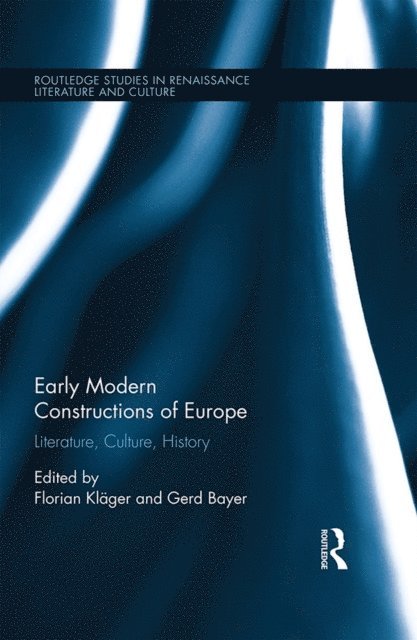
Between the medieval conception of Christendom and the political visions of modernity, ideas of Europe underwent a transformative and catalytic period that saw a cultural process of renewed self-definition or self-Europeanization. The contributors to this volume address this process, analyzing how Europe was imagined between 1450 and 1750. By whom, in which contexts, and for what purposes was Europe made into a subject of discourse? Which forms did early modern ‘Europes’ take, and what functions did they serve? Essays examine the role of factors such as religion, history, space and geography, ethnicity and alterity, patronage and dynasty, migration and education, language, translation, and narration for the ways in which Europe turned into an ‘imagined community.’ The thematic range of the volume comprises early modern texts in Arabic, English, French, German, Greek, Italian, Latin, and Spanish, including plays, poems, and narrative fiction, as well as cartography, historiography, iconography, travelogues, periodicals, and political polemics. Literary negotiations in particular foreground the creative potential, versatility, and agency that inhere in the process of Europeanization, as well as a specifically early modern attitude towards the past and tradition emblematized in the poetics of the period. There is a clear continuity between the collection’s approach to European identities and the focus of cultural and postcolonial studies on the constructed nature of collective identities at large: the chapters build on the insights produced by these fields over the past decades and apply them, from various angles, to a subject that has so far largely eluded critical attention. This volume examines what existing and well-established work on identity and alterity, hybridity and margins has to contribute to an understanding of the largely un-examined and under-theorized ‘pre-formative’ period of European identity.
858 kr
Läs direkt efter köp
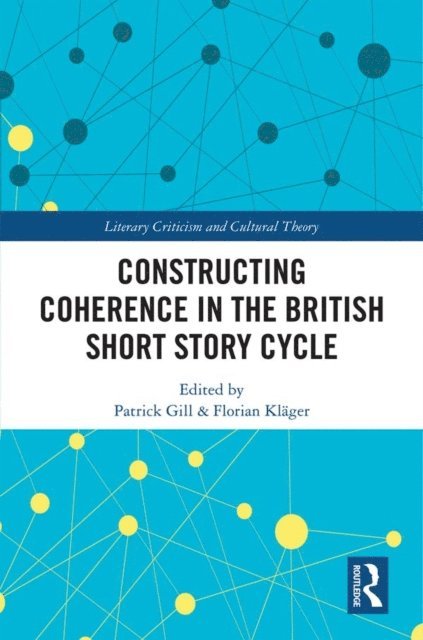
The first major collection of essays on the contemporary British short story cycle, this volume offers in-depth explorations of the genre by comparing its strategies for creating coherence with those of the novel and the short story collection, inquiring after the ties that bind individual short stories into a cycle. A section on theory approaches the form from the point of view of genre theory, cognitive literary studies, and book studies. It is followed by investigations of hitherto neglected aspects of the generic tradition of the British short story cycle and how they relate to the contemporary outlook of the form. Readings of individual contemporary cycles, illustrating the form’s multifaceted uses from the presentation of sexual identities to politics and trauma, make up the third and most substantial part of the volume, placing its focus squarely on the past decades. Unique in its combination of a focus on the literary traditions, politics and markets of the UK with a thorough examination of the genre’s manifold formal and thematic potentials, the volume explores what is at the heart of the short story cycle as a literary form: the constant negotiation between unity and separateness, collective and individual, of coherence and autonomy.
890 kr
Läs direkt efter köp
The first major collection of essays on the contemporary British short story cycle, this volume offers in-depth explorations of the genre by comparing its strategies for creating coherence with those of the novel and the short story collection, inquiring after the ties that bind individual short stories into a cycle. A section on theory approaches the form from the point of view of genre theory, cognitive literary studies, and book studies. It is followed by investigations of hitherto neglected aspects of the generic tradition of the British short story cycle and how they relate to the contemporary outlook of the form. Readings of individual contemporary cycles, illustrating the form’s multifaceted uses from the presentation of sexual identities to politics and trauma, make up the third and most substantial part of the volume, placing its focus squarely on the past decades. Unique in its combination of a focus on the literary traditions, politics and markets of the UK with a thorough examination of the genre’s manifold formal and thematic potentials, the volume explores what is at the heart of the short story cycle as a literary form: the constant negotiation between unity and separateness, collective and individual, of coherence and autonomy.