
Flottum Kjersti Flottum – författare
Visar alla böcker från författaren . Handla med fri frakt och snabb leverans.
2 produkter
2 produkter
E-bok
PDF, Engelska, 20131 203 kr
Läs direkt efter köp
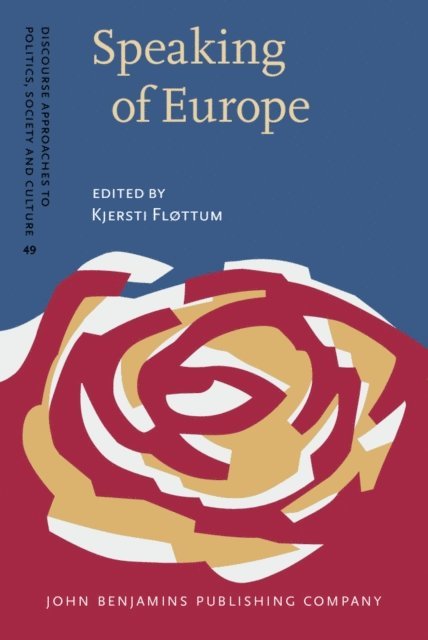
Recent years have witnessed the European Union struggling to keep Europe together in increasingly difficult economic and political circumstances. Communication within and about European institutions has become more challenging in this perplexing political environment, demonstrating the complex nature of EU political discourse. In order to highlight these complexities, the contributors to this volume present different theoretical and methodological approaches to the analysis of diverse facets of EU discourse, realized through a variety of linguistic and discursive phenomena. The approaches represent rhetorical theory, metaphor and conceptual theory, cognitive and corpus linguistics, lexical statistics, polyphony, logical semantics, pragmatic and philosophical perspectives. Through this multitude of perspectives the book complements existing approaches and suggests new approaches in the study of political discourse.
E-bok
PDF, Engelska, 20061 581 kr
Läs direkt efter köp
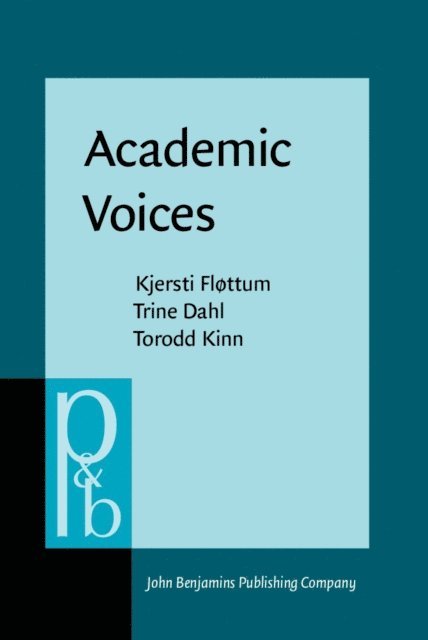
This book explores how the voices of authors and other researchers are manifested in academic discourse, and how the author handles the polyphonic interaction between these various parties. It represents a unique study of academic discourse in that it takes a doubly contrastive approach, focusing on the two factors of discipline and language at the same time. It is based on a large electronic corpus of 450 research articles from three disciplines (economics, linguistics and medicine) in three languages (English, French and Norwegian). The book investigates whether disciplines and languages may be said to represent different cultures with regard to person manifestation in the texts. What is being studied is thus cultural identities as tendencies in linguistic practices. For the majority of the features focused on (e.g. metatext and bibliographical references), the discipline factor turns out to contribute more strongly to the variation observed than the language factor. However, for some of the features (e.g. pronouns and negation), the language factor is also quite strong.Additional background information on the investigations reported in this book can be found at www.uib.no/kiap/.