Fotios Moustakis - Böcker
Visar alla böcker från författaren Fotios Moustakis. Handla med fri frakt och snabb leverans.
4 produkter
4 produkter
2 098 kr
Skickas inom 10-15 vardagar
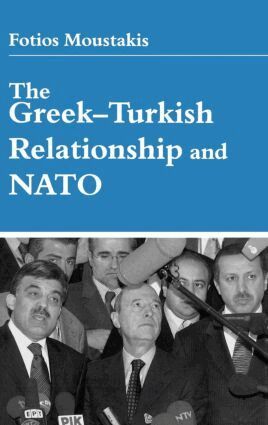
This publication shows that the Eastern Mediterranean, having been transformed from a region of secondary importance during the Cold War to one of greater importance for the western interests in the post-Cold War era, is in a state of flux. Despite sporadic periods of rapprochement, tensions between Greece and Turkey still exist. Therefore, one must question the grounds behind the lack of normal relations that exist between these two NATO members and its effects on the NATO organisation as a whole. Hence, this volume has two purposes first, to examine Greek and Turkish foreign, security and defence policies during and after the post-Cold War period and second, to investigate why these policies have been formulated.
547 kr
Tillfälligt slut
This publication shows that the Eastern Mediterranean, having been transformed from a region of secondary importance during the Cold War to one of greater importance for the western interests in the post-Cold War era, is in a state of flux. Despite sporadic periods of rapprochement, tensions between Greece and Turkey still exist. Therefore, one must question the grounds behind the lack of normal relations that exist between these two NATO members and its effects on the NATO organisation as a whole. Hence, this volume has two purposes first, to examine Greek and Turkish foreign, security and defence policies during and after the post-Cold War period and second, to investigate why these policies have been formulated.
2 088 kr
Skickas inom 10-15 vardagar
This book explores the relationship between technology and warfare, by examining how recent technological advancements have revolutionized the conduct of war.The work analyses contemporary conflicts, including the Syrian civil war, the Taliban takeover in Afghanistan, and the ongoing war in Ukraine, but also by exploring future war scenarios and assessing the military capabilities of major powers. In doing so, the book highlights the dynamic and evolving nature of modern warfare. It goes beyond a simple examination of technological advancements, addressing the complexities of modern warfare, scrutinizing the strategies employed by states to adopt and develop military technologies, while emphasizing the importance of technology in shaping military planning, training, research, and innovation. The book provides a collection of timely contributions by leading scholars and practitioners in the military and security field. Furthermore, the contributors identify potential challenges and risks associated with the widespread adoption of technologies in warfare and propose recommendations for policymakers to address issues that relate to military planning and training, research and development, and resilience building.This book will be of much interest to students of security studies, technology studies, defence studies and International Relations.The Open Access version of this book, available at http://www.taylorfrancis.com, has been made available under a Creative Commons Attribution-Non Commercial-No Derivatives (CC-BY-NC-ND) 4.0 license.
1 703 kr
Skickas inom 10-15 vardagar
The new model of intervention that emerged from Bosnia and Kosovo signalled a revolution in International Affairs. The crises in the Balkans revealed a new division of labour amongst Western states: US forces are primarily responsible for military action while European partners are more committed to Peace Support Operations and the subsequent building of 'security communities' via integration into the NATO and EU. This model has been evidenced in the post-9/11 'war on terror'. Here Moustakis and German examine the emergence and practice of this new Western model of intervention, which combines 'hard'/military and 'soft'/peace approaches, and assess its success and failures in the light of recent operations in Bosnia, Kosovo, Chechnya, Georgia, and Nagorno-Karabakh. The fragile democratisation processes unfolding in the Balkans and the Caucasus offer important insights into the challenges of securing volatile regions and peripheries.