
FrA(c)dA(c)ric VallA(c)e-Tourangeau – författare
654 kr
Läs direkt efter köp
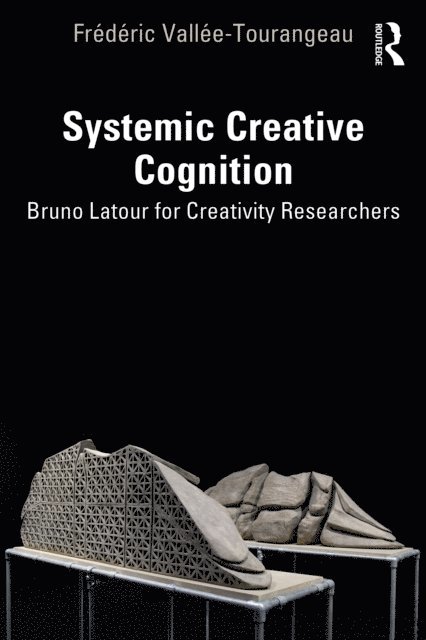
This unique book explores how the conceptual framework of science and technology studies can be applied to creativity and problem-solving research, drawing from and building on the work of Bruno Latour.
Using an interdisciplinary approach, the book outlines new research practices to capture the origin of ideas. Latour enjoins researchers to adopt a resolutely ethnographic methodology to trace the process by which a creative product, be it a technological innovation or a work of art, is constructed, or instaured. Creativity is explained in terms of the microprocesses that guide and constrain the development of a new idea. These microprocesses operate on and are triggered by material objects, be they maquettes, models, drafts or data representations. The resulting perspective is systemic, casting creativity as emerging from the interaction among heterogenous elements and actants. The book provides critical reflections on problem-solving research and stresses the importance of William James’s radical empiricism and the primary role of experience. The book redefines the concept of insight as an outcome rather than the cause of a new idea.
The book uses the work of Latour to cast a new light on the field of creative cognition and will be an essential read for researchers and students of creativity and cognition. It will also be relevant for anyone interested in understanding the origin of creativity, ideas and thoughts.
654 kr
Läs direkt efter köp
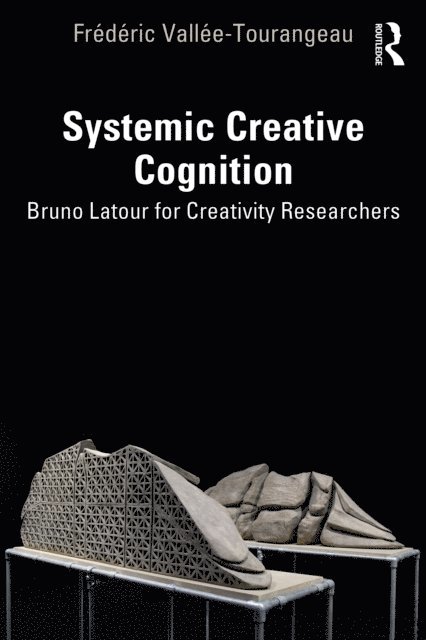
This unique book explores how the conceptual framework of science and technology studies can be applied to creativity and problem-solving research, drawing from and building on the work of Bruno Latour.
Using an interdisciplinary approach, the book outlines new research practices to capture the origin of ideas. Latour enjoins researchers to adopt a resolutely ethnographic methodology to trace the process by which a creative product, be it a technological innovation or a work of art, is constructed, or instaured. Creativity is explained in terms of the microprocesses that guide and constrain the development of a new idea. These microprocesses operate on and are triggered by material objects, be they maquettes, models, drafts or data representations. The resulting perspective is systemic, casting creativity as emerging from the interaction among heterogenous elements and actants. The book provides critical reflections on problem-solving research and stresses the importance of William James’s radical empiricism and the primary role of experience. The book redefines the concept of insight as an outcome rather than the cause of a new idea.
The book uses the work of Latour to cast a new light on the field of creative cognition and will be an essential read for researchers and students of creativity and cognition. It will also be relevant for anyone interested in understanding the origin of creativity, ideas and thoughts.
874 kr
Läs direkt efter köp
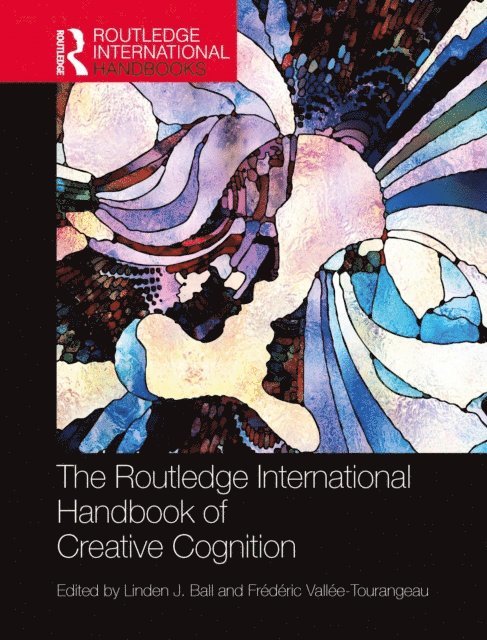
The Routledge International Handbook of Creative Cognition is an authoritative reference work that offers a well-balanced overview of current scholarship across the full breadth of the rapidly expanding field of creative cognition. It contains 43 chapters written by world-leading researchers, covering foundational issues and concepts as well as state-of-the-art research developments.
The handbook draws extensively on contemporary work exploring the cognitive representations and processes associated with creativity, whether studied in the laboratory or as it arises in real-world practice in domains such as education, art, science, entrepreneurship, design, and technological innovation. Chapters also examine the sociocognitive and cultural aspects of creativity in teams and organisations, while additionally capturing the latest research on the cognitive neuroscience of creativity.
Providing a compelling synopsis of emerging trends and debates in the field of creative cognition and positioning these in relation to established findings and theories, this text provides a clear sense of the way in which new research is challenging traditional viewpoints. It is an essential reading for researchers in the field of creative cognition as well as advanced students wishing to learn more about the latest developments in this important and rapidly growing area of enquiry.
850 kr
Läs direkt efter köp
The Routledge International Handbook of Creative Cognition is an authoritative reference work that offers a well-balanced overview of current scholarship across the full breadth of the rapidly expanding field of creative cognition. It contains 43 chapters written by world-leading researchers, covering foundational issues and concepts as well as state-of-the-art research developments.
The handbook draws extensively on contemporary work exploring the cognitive representations and processes associated with creativity, whether studied in the laboratory or as it arises in real-world practice in domains such as education, art, science, entrepreneurship, design, and technological innovation. Chapters also examine the sociocognitive and cultural aspects of creativity in teams and organisations, while additionally capturing the latest research on the cognitive neuroscience of creativity.
Providing a compelling synopsis of emerging trends and debates in the field of creative cognition and positioning these in relation to established findings and theories, this text provides a clear sense of the way in which new research is challenging traditional viewpoints. It is an essential reading for researchers in the field of creative cognition as well as advanced students wishing to learn more about the latest developments in this important and rapidly growing area of enquiry.
752 kr
Läs direkt efter köp
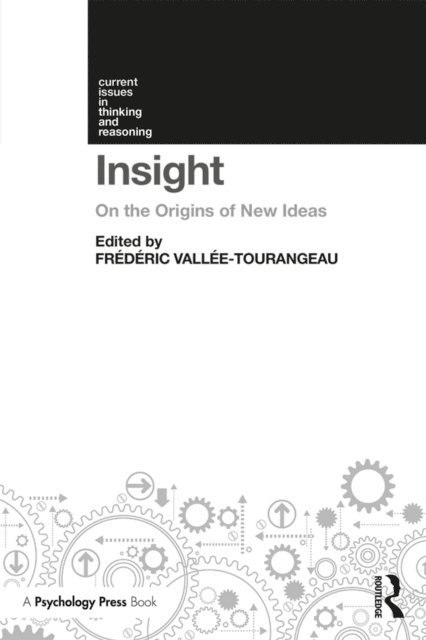
Research on insight problem solving examines how new ideas are generated to solve problems that initially resist the application of prior knowledge or analogue solutions. In the laboratory, insight problems are designed to create an impasse; overcoming the impasse is sometimes accompanied by a distinctive phenomenological experience, the so-called Aha! moment. Insight: On the Origins of New Ideas presents research that captures these episodes of insight under laboratory conditions and informs models that account for their emergence.
Descriptions and analyses of episodes of discovery both in and out of the laboratory are included to provide a general overview of insight. Featuring contributions from leading researchers, the volume debates the relative importance of intelligence and working memory, the development of an alternative interpretation of the problem based on deliberate analyses and heuristics, and unconscious inferences in the emergence of insight. These discussions generate new testable hypotheses to shed light on the cognitive processes underpinning insight, along with concrete methodological recommendations that, together, map a productive programme of future research.
This book will be of interest to students and researchers of thinking and reasoning - specifically those interested in insight and creative problem solving.
752 kr
Läs direkt efter köp
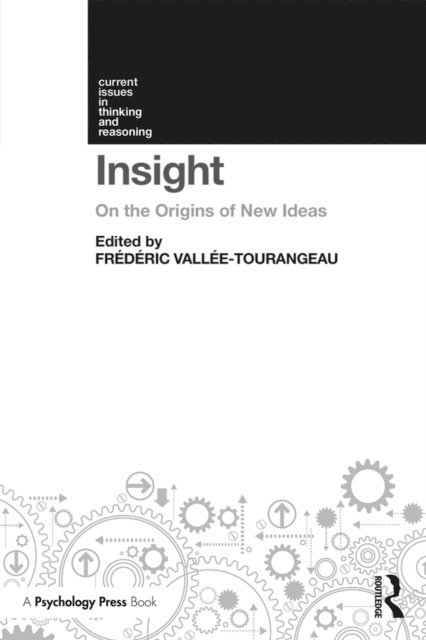
Research on insight problem solving examines how new ideas are generated to solve problems that initially resist the application of prior knowledge or analogue solutions. In the laboratory, insight problems are designed to create an impasse; overcoming the impasse is sometimes accompanied by a distinctive phenomenological experience, the so-called Aha! moment. Insight: On the Origins of New Ideas presents research that captures these episodes of insight under laboratory conditions and informs models that account for their emergence.
Descriptions and analyses of episodes of discovery both in and out of the laboratory are included to provide a general overview of insight. Featuring contributions from leading researchers, the volume debates the relative importance of intelligence and working memory, the development of an alternative interpretation of the problem based on deliberate analyses and heuristics, and unconscious inferences in the emergence of insight. These discussions generate new testable hypotheses to shed light on the cognitive processes underpinning insight, along with concrete methodological recommendations that, together, map a productive programme of future research.
This book will be of interest to students and researchers of thinking and reasoning - specifically those interested in insight and creative problem solving.