
FranAois Foret – författare
730 kr
Läs direkt efter köp
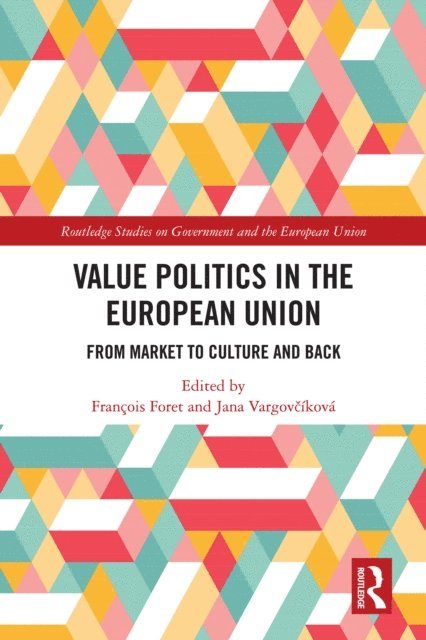
This book explores what drives value politics and the way in which it redraws political conflict at EU level.
Based on case studies and analyses of statistical data, the book shows what the uses and roles of values have been at EU level over the past decades in both market-related policies and in identity, cultural and morality policies. It challenges the common assumption that the latter is more driven by value conflicts. The research shows the intrinsic similarities between all policy areas regarding the agency and limits of values as drivers of change or continuity. It argues that European values are a broad and flexible symbolic repertoire instrumentalised to serve as a resource for mobilization, legitimation/delegitimation, the conquest and conservation of power.
This book will be of key interest to both scholars and students in European studies/politics, comparative politics, public policy, political theory, sociology and cultural studies, as well as appealing to professionals of European affairs within and around the EU institutions.
737 kr
Läs direkt efter köp
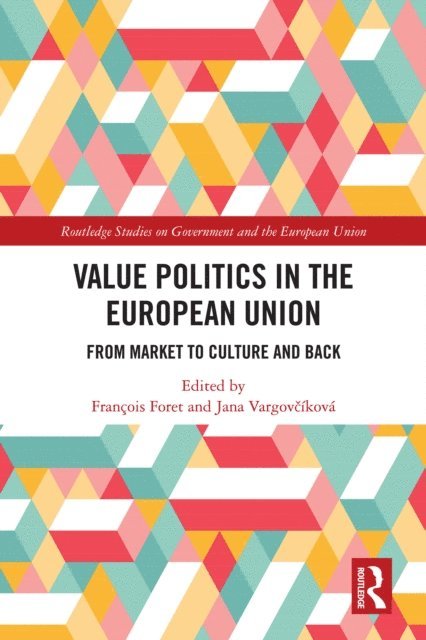
This book explores what drives value politics and the way in which it redraws political conflict at EU level.
Based on case studies and analyses of statistical data, the book shows what the uses and roles of values have been at EU level over the past decades in both market-related policies and in identity, cultural and morality policies. It challenges the common assumption that the latter is more driven by value conflicts. The research shows the intrinsic similarities between all policy areas regarding the agency and limits of values as drivers of change or continuity. It argues that European values are a broad and flexible symbolic repertoire instrumentalised to serve as a resource for mobilization, legitimation/delegitimation, the conquest and conservation of power.
This book will be of key interest to both scholars and students in European studies/politics, comparative politics, public policy, political theory, sociology and cultural studies, as well as appealing to professionals of European affairs within and around the EU institutions.
665 kr
Läs direkt efter köp
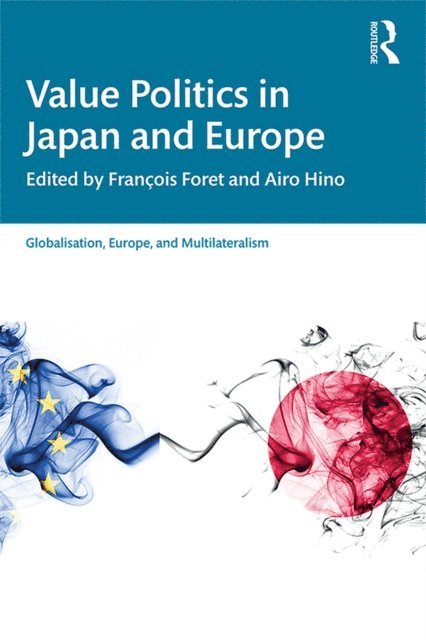
This book explains the increasing importance of value politics in Europe and Japan, shedding light on various arenas: social values; parties, elections and politics; public action, private sector and law; identity politics and religion; media and public spheres.
It analyses how, against different but commensurable backgrounds, the rise of value politics alters (or not) the political game, for which purposes and with which effects. Applying both qualitative and quantitative methods from a wide range of primary and secondary sources, the comparison is organized by joining skills from experts of Japan and Europe and by systematizing a common analytical framework for the two cases. As such, it presents a revealing and unique analysis of the changing relationship between values and political behaviour in the two polities. Beyond the comparison, it also documents the opportunities and challenges underlying the interactions between Europe, Japan and the rest of the world; and the competition/combination between different versions of modernity.
This book is of key interest to scholars and students of European studies and politics, Asian politics/studies, Japanese studies/politics and more broadly to comparative politics, sociology, cultural/media studies, and economics.
690 kr
Läs direkt efter köp
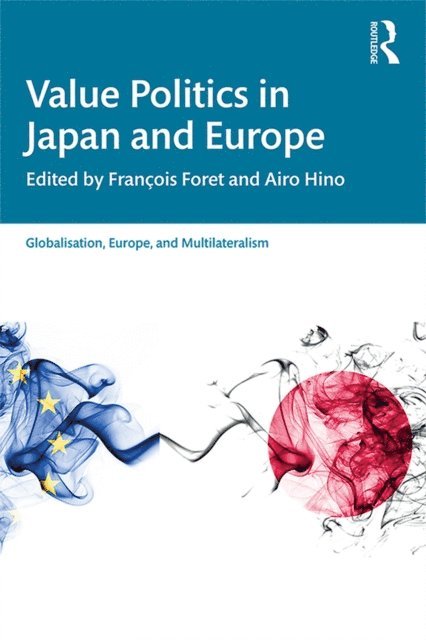
This book explains the increasing importance of value politics in Europe and Japan, shedding light on various arenas: social values; parties, elections and politics; public action, private sector and law; identity politics and religion; media and public spheres.
It analyses how, against different but commensurable backgrounds, the rise of value politics alters (or not) the political game, for which purposes and with which effects. Applying both qualitative and quantitative methods from a wide range of primary and secondary sources, the comparison is organized by joining skills from experts of Japan and Europe and by systematizing a common analytical framework for the two cases. As such, it presents a revealing and unique analysis of the changing relationship between values and political behaviour in the two polities. Beyond the comparison, it also documents the opportunities and challenges underlying the interactions between Europe, Japan and the rest of the world; and the competition/combination between different versions of modernity.
This book is of key interest to scholars and students of European studies and politics, Asian politics/studies, Japanese studies/politics and more broadly to comparative politics, sociology, cultural/media studies, and economics.
690 kr
Läs direkt efter köp
Religion is becoming increasingly important to the study of political science and to re-examine key concepts, such as democracy, securitization, foreign policy analysis, and international relations.
The secularization of Europe is often understood according to the concept of ‘multiple modernities’—the idea that there may be several roads to modernity, which do not all mean the eradication of religion. This framework provides support for the view that different traditions, societies and groups can come to terms with the components of modernity (capitalism, democracy, human rights, science and reason) while keeping in touch with their religious background, faith and practice.
Contributors examine the interaction between EU-integration processes and Western European countries, such as Belgium, France, Luxembourg, Austria, Scandinavia, Italy, and the UK, and shine fresh light on the economic and cultural contexts brought about by relationships between politics and religion, including immigrant religions and new religious movements. This volume combines theoretical perspectives from political sociology and international relations to consider the role of religion as a source of power, identity and ethics in institutions and societies.
Politics of Religion in Western Europe will be of interest to scholars of politics, religion, the European Union and political sociology.
690 kr
Läs direkt efter köp
Religion is becoming increasingly important to the study of political science and to re-examine key concepts, such as democracy, securitization, foreign policy analysis, and international relations.
The secularization of Europe is often understood according to the concept of ‘multiple modernities’—the idea that there may be several roads to modernity, which do not all mean the eradication of religion. This framework provides support for the view that different traditions, societies and groups can come to terms with the components of modernity (capitalism, democracy, human rights, science and reason) while keeping in touch with their religious background, faith and practice.
Contributors examine the interaction between EU-integration processes and Western European countries, such as Belgium, France, Luxembourg, Austria, Scandinavia, Italy, and the UK, and shine fresh light on the economic and cultural contexts brought about by relationships between politics and religion, including immigrant religions and new religious movements. This volume combines theoretical perspectives from political sociology and international relations to consider the role of religion as a source of power, identity and ethics in institutions and societies.
Politics of Religion in Western Europe will be of interest to scholars of politics, religion, the European Union and political sociology.
925 kr
Läs direkt efter köp
In recent years, the failure of the constitutional process, the difficult ratification and implementation of the Lisbon Treaty, as well as the several crises affecting Europe have revitalized the debate on the nature of the European polity and the balance of powers in Brussels. This book explains the redistribution of power in the post-Lisbon EU with a focus on the European Council.
Reform of institutions and the creation of new political functions at the top of the European Union have raised fresh questions about leadership and accountability. This book argues that the European Union exhibits a political order with hierarchies, mechanisms of domination and legitimating narratives. As such, it can be understood by analysing what happens at its summit. Taking the European Council as the nexus of European political governance, contributors consider council and rotating presidencies'' co-operation, rivalry and opposition. The book combines approaches through events, processes and political structures, issues and the biographical trajectories of actors and explores how the founding compromise of European integration between sovereignty and supranationality is affected by the evolving nature of this new European political model which aims to combine cooperation and integration.
The European Council and European Governance will be of strong interest to students and scholars of European studies, political science, political sociology, public policy and international relations.
925 kr
Läs direkt efter köp
In recent years, the failure of the constitutional process, the difficult ratification and implementation of the Lisbon Treaty, as well as the several crises affecting Europe have revitalized the debate on the nature of the European polity and the balance of powers in Brussels. This book explains the redistribution of power in the post-Lisbon EU with a focus on the European Council.
Reform of institutions and the creation of new political functions at the top of the European Union have raised fresh questions about leadership and accountability. This book argues that the European Union exhibits a political order with hierarchies, mechanisms of domination and legitimating narratives. As such, it can be understood by analysing what happens at its summit. Taking the European Council as the nexus of European political governance, contributors consider council and rotating presidencies'' co-operation, rivalry and opposition. The book combines approaches through events, processes and political structures, issues and the biographical trajectories of actors and explores how the founding compromise of European integration between sovereignty and supranationality is affected by the evolving nature of this new European political model which aims to combine cooperation and integration.
The European Council and European Governance will be of strong interest to students and scholars of European studies, political science, political sociology, public policy and international relations.
790 kr
Läs direkt efter köp
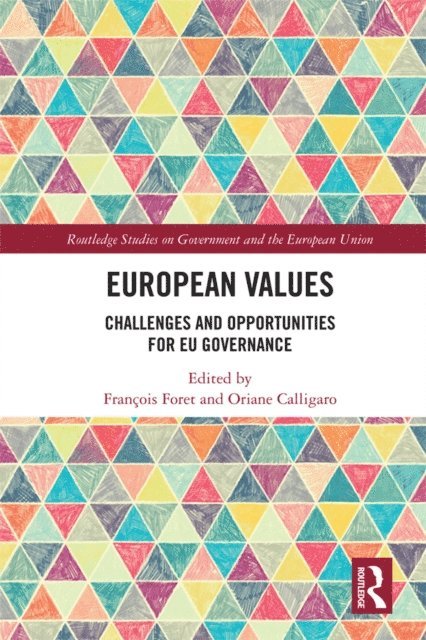
Redefinitions of EU borders (enlargements, Brexit), geopolitical challenges (conflicts, migrations, terrorism, environmental risks) and the economic and financial crises have triggered debates on the common values that hold European countries and citizens together, justify public action and ensure the sustainability of European governance.
This book discusses the genesis of and increasing references to "European values", their appropriation by diverse groups of actors and their impact on public action. It argues that European values are a broad and flexible symbolic repertoire, instrumental to serving diverging ends, and a resource for both negotiation and conflicts. Looking at the broader picture, the book reflects on the role of values in the institutionalization of the EU as a political order and paves the way to an assessment of its singularity in comparison with other polities across time and space.
This text will be of key interest to scholars, students and practitioners in EU politics, comparative politics, IR, public policy, sociology and cultural studies.
790 kr
Läs direkt efter köp
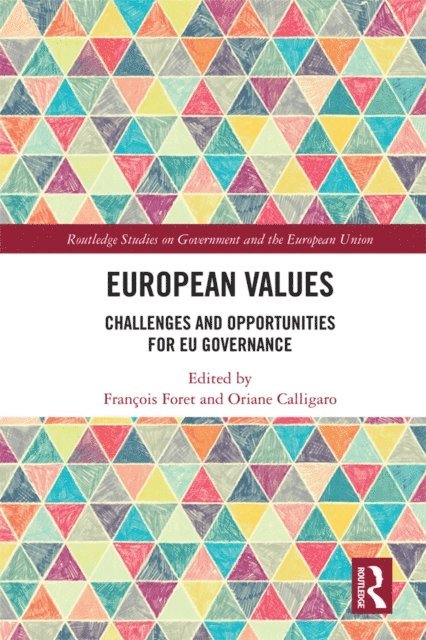
Redefinitions of EU borders (enlargements, Brexit), geopolitical challenges (conflicts, migrations, terrorism, environmental risks) and the economic and financial crises have triggered debates on the common values that hold European countries and citizens together, justify public action and ensure the sustainability of European governance.
This book discusses the genesis of and increasing references to "European values", their appropriation by diverse groups of actors and their impact on public action. It argues that European values are a broad and flexible symbolic repertoire, instrumental to serving diverging ends, and a resource for both negotiation and conflicts. Looking at the broader picture, the book reflects on the role of values in the institutionalization of the EU as a political order and paves the way to an assessment of its singularity in comparison with other polities across time and space.
This text will be of key interest to scholars, students and practitioners in EU politics, comparative politics, IR, public policy, sociology and cultural studies.