François M. Roure – författare
Visar alla böcker från författaren François M. Roure. Handla med fri frakt och snabb leverans.
8 produkter
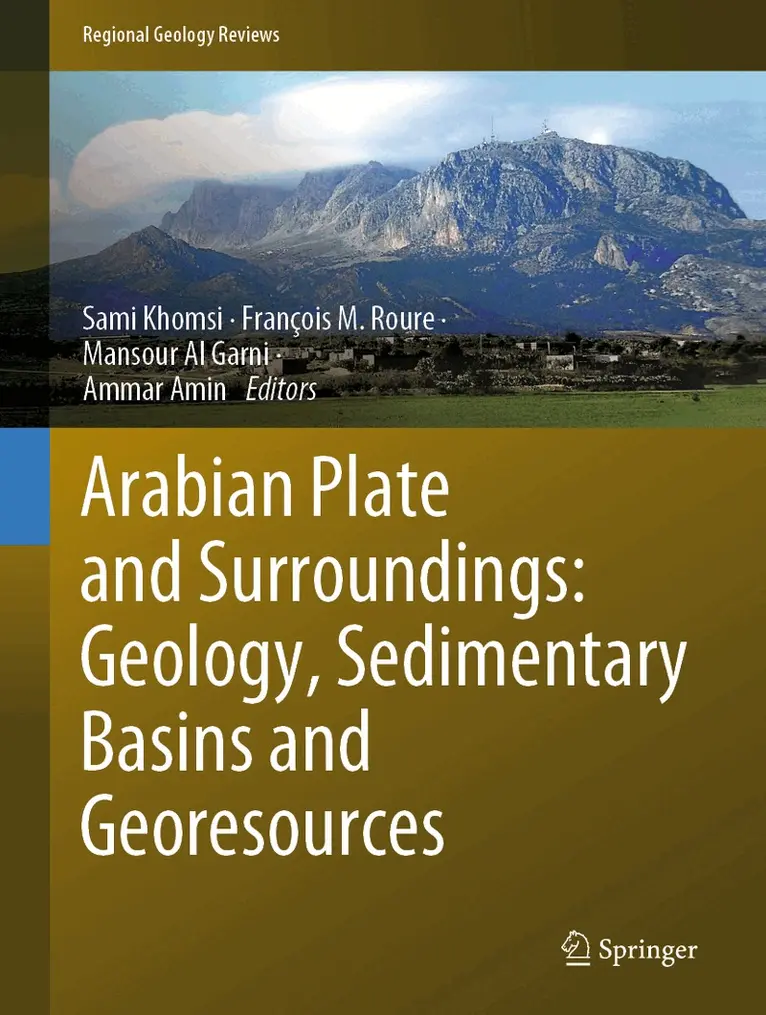
Arabian Plate and Surroundings: Geology, Sedimentary Basins and Georesources
Av Sami Khomsi, François M. Roure m. fl.
Inbunden, 2019
1532 kr
Lägg i varukorg
This book focuses on the evolution of sedimentary basins of the Arabian Plate and its surroundings. Because these sedimentary basins developed in various tectonic settings, from extensional or transtensional to flexural, transpressional or compressional, their sedimentary sequences provide unique …
Arabian Plate and Surroundings: Geology, Sedimentary Basins and Georesources
Av Ammar Amin, Mansour Al Garni m. fl.
E-bok, 2019
1459 kr
Lägg i varukorg
This book focuses on the evolution of sedimentary basins of the Arabian Plate and its surroundings. Because these sedimentary basins developed in various tectonic settings, from extensional or transtensional to flexural, transpressional or compressional, their sedimentary sequences provide unique …
Arabian Plate and Surroundings: Geology, Sedimentary Basins and Georesources
Av Sami Khomsi, François M. Roure m. fl.
Häftad, 2020
1096 kr
Lägg i varukorg
This book focuses on the evolution of sedimentary basins of the Arabian Plate and its surroundings. Because these sedimentary basins developed in various tectonic settings, from extensional or transtensional to flexural, transpressional or compressional, their sedimentary sequences provide unique …
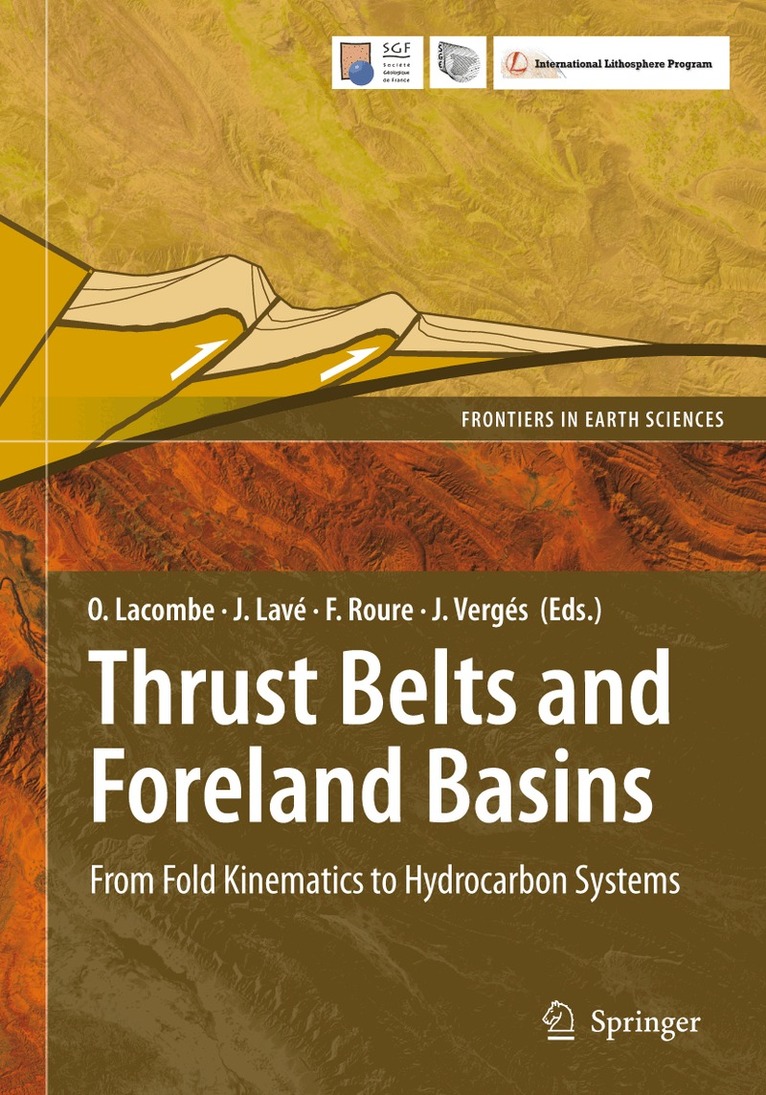
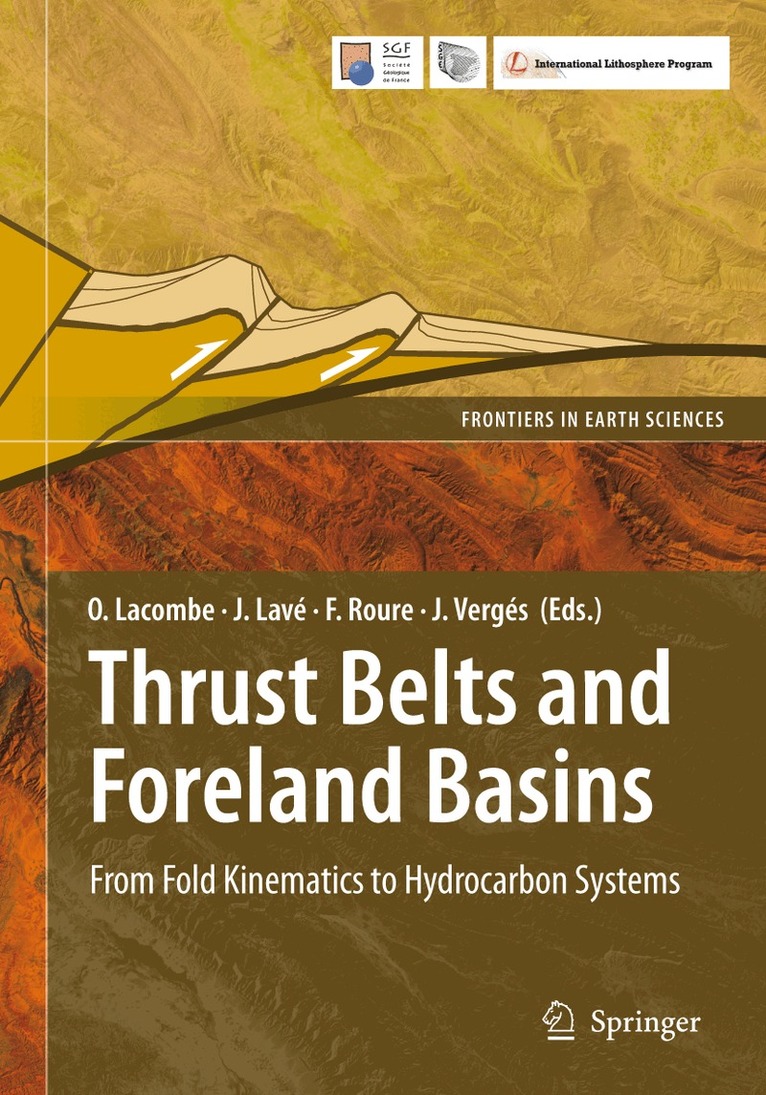
Thrust Belts and Foreland Basins
From Fold Kinematics to Hydrocarbon Systems
Av Olivier Lacombe, Jérôme Lavé m. fl.
Inbunden, 2007
3274 kr
Lägg i varukorg
T rust belts and foreland basins record the main phases of orogenic evolution. T ey are shaped by the coupled inf uence of deep (f exure, plate rheology and - nematics) and surf cial (erosion, sedimentation) geological processes, at dif erent time scales. T rust belts and foreland basins constitute …
Thrust Belts and Foreland Basins
From Fold Kinematics to Hydrocarbon Systems
Av Jaume Verges, Francois M. Roure m. fl.
E-bok, 2007
3978 kr
Lägg i varukorg
Thrust Belts and Foreland Basins
From Fold Kinematics to Hydrocarbon Systems
Av Olivier Lacombe, Jérôme Lavé m. fl.
Häftad, 2010
3274 kr
Lägg i varukorg
T rust belts and foreland basins record the main phases of orogenic evolution. T ey are shaped by the coupled inf uence of deep (f exure, plate rheology and - nematics) and surf cial (erosion, sedimentation) geological processes, at dif erent time scales. T rust belts and foreland basins constitute …
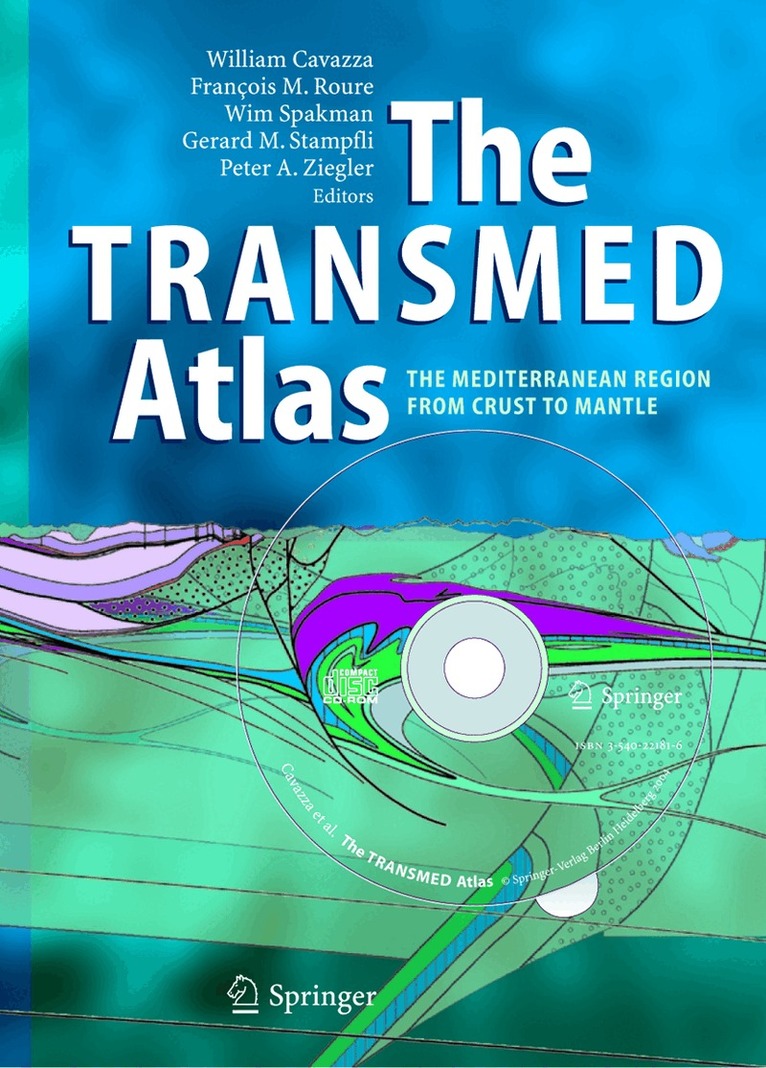
TRANSMED Atlas. The Mediterranean Region from Crust to Mantle
Geological and Geophysical Framework of the Mediterranean and the Surrounding Areas
Av Peter A. Ziegler, Gerard M. Stampfli m. fl.
E-bok, 2012
710 kr
Lägg i varukorg
The TRANSMED Atlas, a CD-ROM-and-book package, provides an unprecedented overview of the geological and geophysical characteristics of the Mediterranean region. By integrating new and pre-existing data on surface geology, seismic profiles and mantle tomography (on land and at sea), it combines the …
TRANSMED Atlas. The Mediterranean Region from Crust to Mantle
Geological and Geophysical Framework of the Mediterranean and the Surrounding Areas
Av William Cavazza, Francois M. Roure m. fl.
Häftad, 2014
552 kr
Lägg i varukorg
The TRANSMED Atlas, a CD-ROM-and-book package, provides an unprecedented overview of the geological and geophysical characteristics of the Mediterranean region. By integrating new and pre-existing data on surface geology, seismic profiles and mantle tomography (on land and at sea), it combines the …