Francoise Mengin – författare
Visar alla böcker från författaren Francoise Mengin. Handla med fri frakt och snabb leverans.
5 produkter
5 produkter
Inbunden, Engelska, 2003
503 kr
Skickas inom 10-15 vardagar
Faced with the usual list of paradoxes that plague our views of China: it is a communist regime with a capitalist economy; an authoritarian state with an entrepreneurial spirit; a unified nation with tendencies toward fragmentation, the contributions to this volume work to go beyond them and to seek new paths to understanding China. To do so, the essays avoid the conventional approaches toward Chinese politics that focus on either evolutionist (culturally bound) or functionalist (role bound) issues. Rather than separate state from society, these essays explore how the interweaving of these different spheres creates a hazy border between them. The contributors explore the moving frontiers between other spheres as well, such as rural and urban populations, internal evolution and external influence, and money and politics. This book does not aim to offer a new framework of analysis for understanding Chinese politics, but to open up new directions for research and study on the topic. The internationally diverse scholars in this volume offer readers an intriguing look at the present and future of China research.
Inbunden, Engelska, 2004
548 kr
Skickas inom 10-15 vardagar
The essays in this volume explore the new power struggles created in China, Taiwan, and Hong Kong through information technology. The contributors analyze the interaction between the development of information technologies and social logic on the one hand and processes of unification and fragmentation on the other. They seek to highlight the strategies of public and private actors aimed at monopolizing the benefits created by the information society - whether for monetary gain or bureaucratic consolidation - as well as the new loci of power now emerging. The book is organized around two main themes: One exploring societal change and power relations, the second examining the restructuring of Greater China's space. In so doing, the book seeks to shed light on both the state formation process as well as international relations theory.
Inbunden, Engelska, 2026
758 kr
Kommande
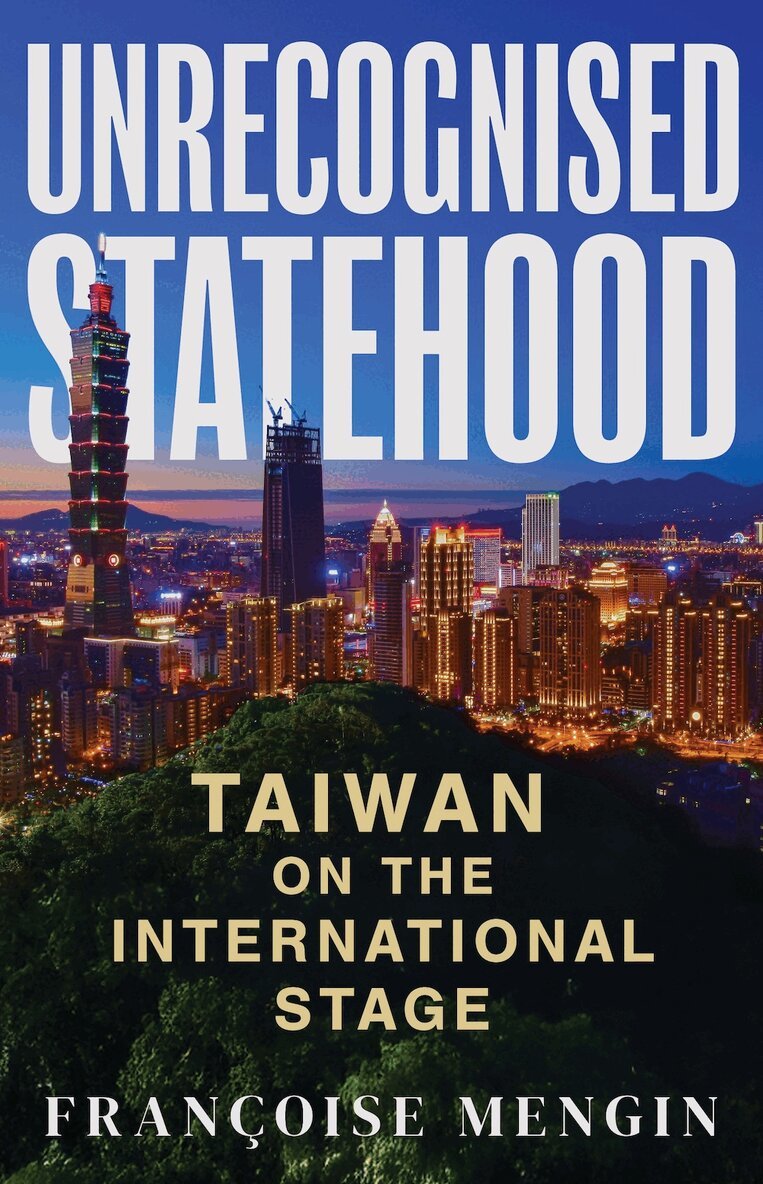
A revelatory look at the predicament of unrecognised entities and their place in the modern world.Taiwan is a fully independent state that controls its borders, maintains its own defence, is integrated into the international trading system, and holds free and regular elections within a multi-party framework.Notwithstanding these achievements, almost all national governments and international organisations worldwide do not recognise the Taiwanese state.Since its founding in 1949, the People’s Republic of China has consistently asserted its sovereignty over Taiwan, and there has been a notable escalation in Chinese military and diplomatic pressure on the island since the early 2020s. As a result, it is more important than ever to understand the origins of Taiwan’s unrecognised statehood, the methods by which it is denied, and its practical implications. How does the global system accommodate the exclusion of a sovereign state? And what means does the latter deploy to compensate for this exclusion?Unrecognised Statehood combines vital historical background with up-to-date analysis, drawing on multi-site fieldwork as well as on primary sources from the United Nations and the International Monetary Fund. It is essential reading for anyone interested in China and Taiwan, and in international relations, law and diplomacy more broadly.
E-bok
Franska, 1998301 kr
Läs direkt efter köp
Une ou plusieurs Chines ? Derrière la politique de réunification nationale engagée par Pékin et la reprise des échanges inter-chinois, il y a les trajectoires singulières de Taiwan et Hong-Kong. Ces trajectoires ont d''ailleurs été souvent faite d''emprunts en provenance du continent mais aussi d''hybridations multiples.
E-bok
Franska, 2013468 kr
Läs direkt efter köp
La République de Chine, repliée à Taiwan en 1949, a conservé une indépendance de fait. Mais les autorités communistes n’ont pas renoncé à réunifier formellement l’île à la Chine populaire. Outre une pression militaire croissante, la politique irrédentiste de Pékin a tablé sur l’intégration économique entre les deux rives du détroit de Formose. Répondant aussitôt aux mesures préférentielles qui leur ont été offertes, les industriels insulaires ont opéré un vaste mouvement de délocalisation de leurs activités sur le continent. Fragments d’une nation déchirée par des revendications contradictoires, ces entrepreneurs sont les vecteurs d’une unité de la Chine imposée par le Parti communiste, voulue mais différée par le Parti nationaliste, rejetée par les partis indépendantistes taiwanais.Dans cette guerre civile inachevée, les logiques sociales s’imbriquent au conflit de souveraineté. Les acteurs transnationaux ont pu s’affranchir d’une législation sécuritaire ou tirer parti des modes de gouvernement de la Chine des réformes pour reconfigurer, à terme, la scène démocratique taiwanaise et, par là même, les rapports entre Pékin et Taipei.Dans son irréductible spécificité, la question de Taiwan éclaire le rapport de l’économique au politique : une opération fictive de dépolitisation a présidé à l’ouverture de la frontière sino-taiwanaise afin d’ajourner toute résolution du conflit de souveraineté. Renouvelant la sociologie et l’économie politique des relations internationales, l’auteur apporte un éclairage aigu sur l’un des différends territoriaux qui font de l’Asie orientale une zone de risques majeurs. Françoise Mengin, directrice de recherche à Sciences Po (CERI), a consacré l’essentiel de ses travaux à la question de Taiwan dans son rapport à la formation de l’État dans le monde chinois. Elle a notamment publié Trajectoires chinoises : Taiwan, Hong Kong et Pékin (Karthala, 1998), et a dirigé Cyber China : Reshaping National Identities in the Age of Information (Palgrave Macmillan, 2004) et – en collaboration avec Jean-Louis Rocca – Politics in China : Moving Frontiers (Palgrave, 2002).