Frank Fleerackers – författare
Visar alla böcker från författaren Frank Fleerackers. Handla med fri frakt och snabb leverans.
10 produkter
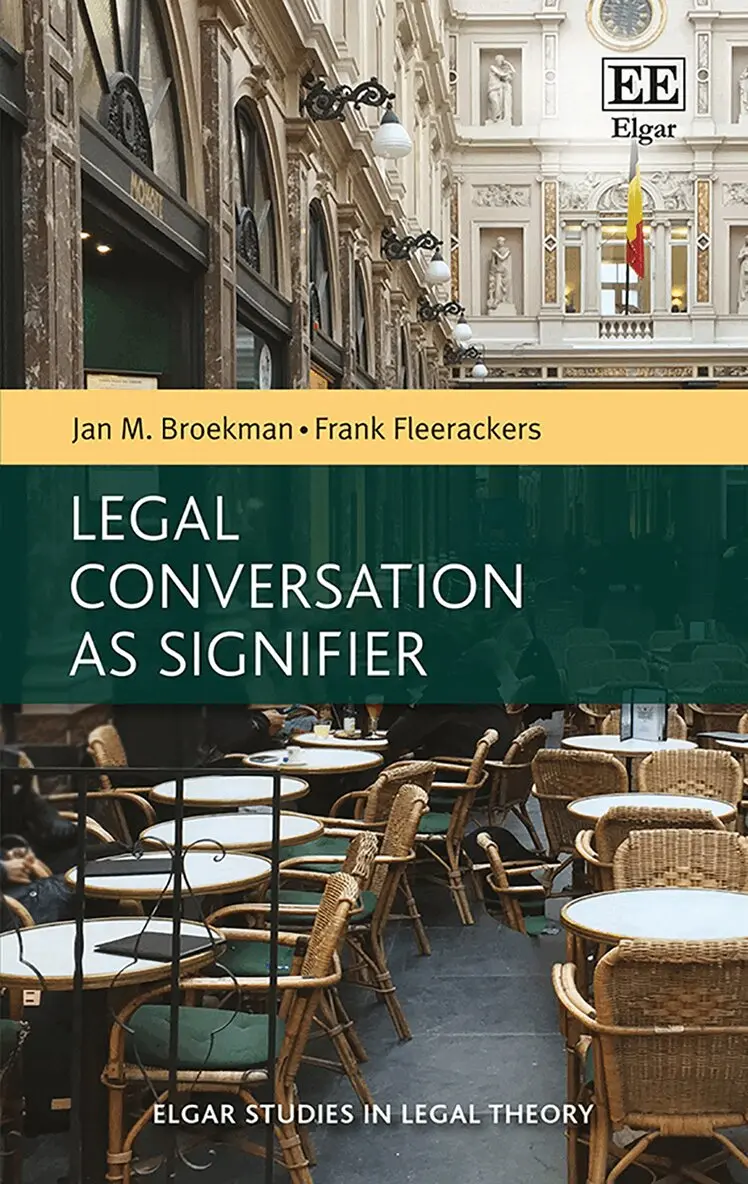
Legal Conversation as Signifier
Av Jan M. Broekman, Frank Fleerackers
Inbunden, 2017
1676 kr
Lägg i varukorg
Conversation and argument concerning laws and legal situations take place throughout society and at all levels, yet the language of these conversations differs greatly from that of the courtroom. This insightful book considers the gap between everyday discussion about law and the artificial, …
Legal Conversation as Signifier
Av Frank Fleerackers, Jan M. Broekman
E-bok, 2017
413 kr
Lägg i varukorg
Conversation and argument concerning laws and legal situations take place throughout society and at all levels, yet the language of these conversations differs greatly from that of the courtroom. This insightful book considers the gap between everyday discussion about law and the artificial, …
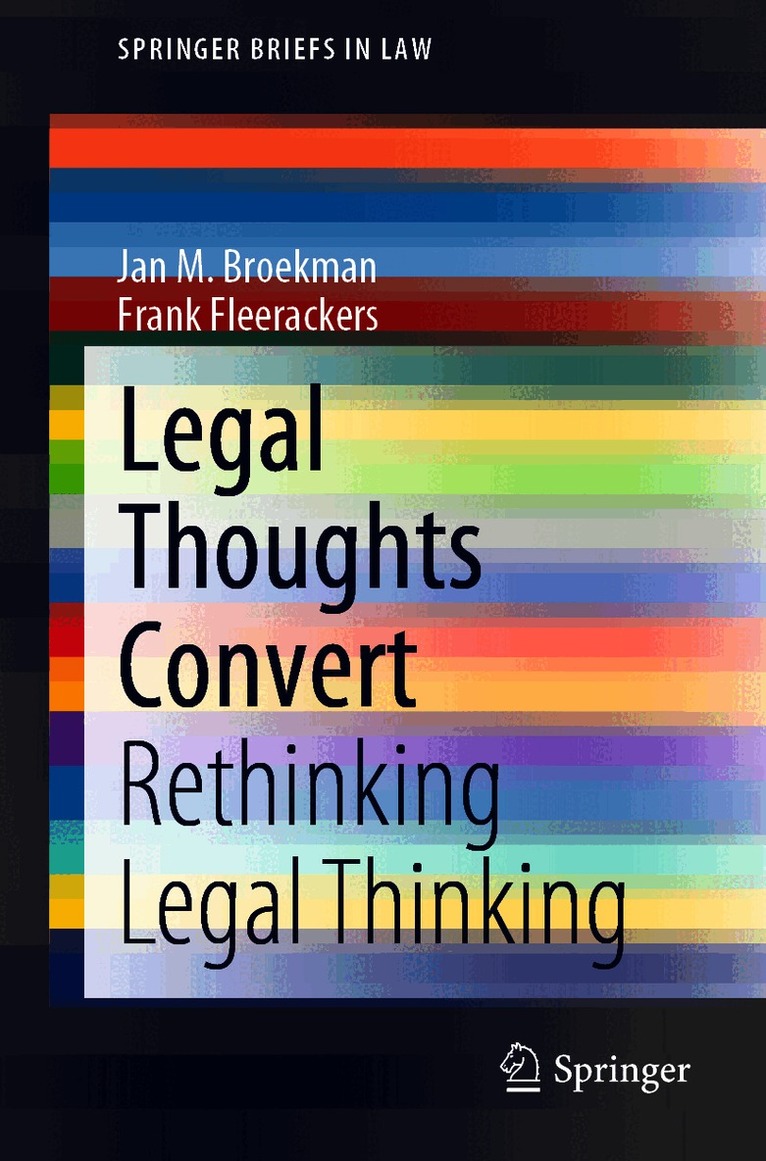
Legal Thoughts Convert
Rethinking Legal Thinking
Av Jan M. Broekman, Frank Fleerackers
Häftad, 2020
508 kr
Lägg i varukorg
This book highlights how conversion via communication is one of the most important issues in legal thinking. A major aspect is its link with language – legal texts, judgments, opinions and legal concepts included. Further, conversion is connected to all social positions in law. But a jurist will …
Legal Thoughts Convert
Rethinking Legal Thinking
Av Frank Fleerackers, Jan M. Broekman
E-bok, 2020
675 kr
Lägg i varukorg
This book highlights how conversion via communication is one of the most important issues in legal thinking. A major aspect is its link with language – legal texts, judgments, opinions and legal concepts included. Further, conversion is connected to all social positions in law. But a jurist will …
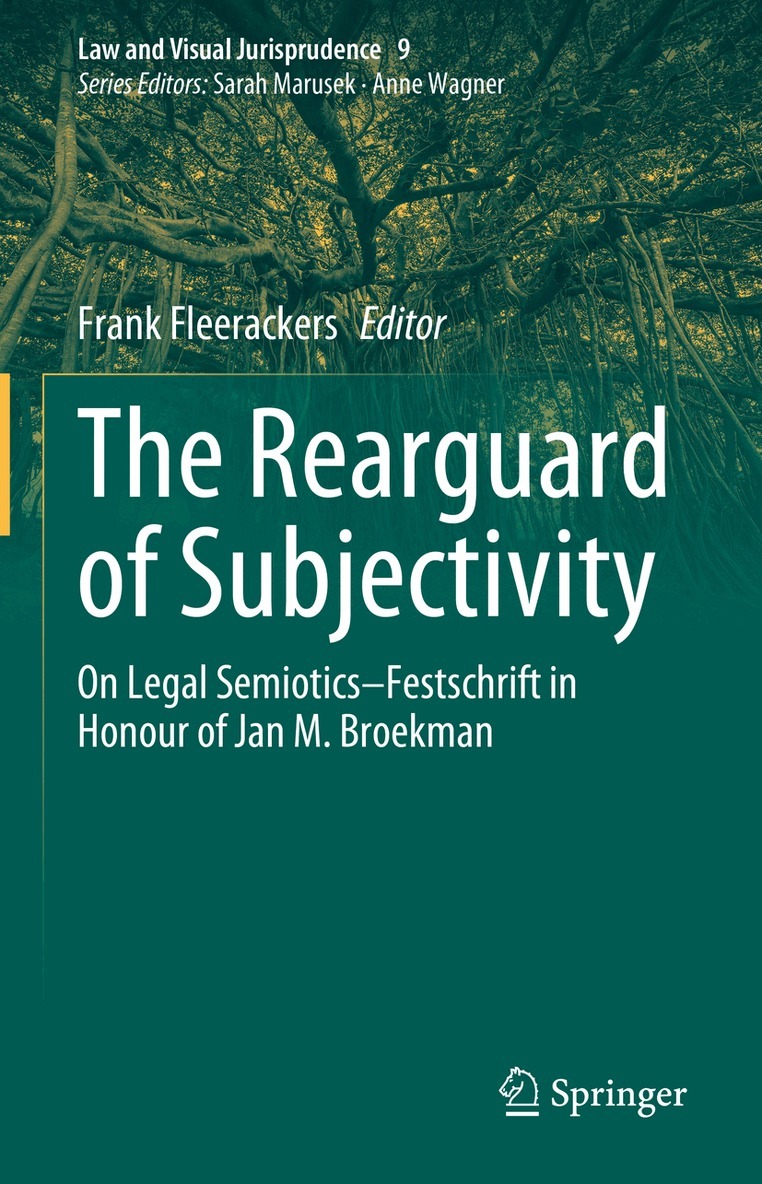
Rearguard of Subjectivity
On Legal Semiotics – Festschrift in Honour of Jan M. Broekman
Inbunden, 2023
1516 kr
Lägg i varukorg
Edmund Husserl’s ideas, informed by Kant’s Critiques, constituted a point of departure when rereading philosophical problems of subject and subjectivity. In his “Phänomenologie und Egologie” (1961/63), Jan Broekman revealed how Husserl analysed the “Split Ego” notion in Kant’s vision, which became …
Rearguard of Subjectivity
On Legal Semiotics – Festschrift in Honour of Jan M. Broekman
E-bok, 2023
1942 kr
Lägg i varukorg
Edmund Husserl’s ideas, informed by Kant’s Critiques, constituted a point of departure when rereading philosophical problems of subject and subjectivity. In his “Phänomenologie und Egologie” (1961/63), Jan Broekman revealed how Husserl analysed the “Split Ego” notion in Kant’s vision, which became …
The Rearguard of Subjectivity : On Legal Semiotics - Festschrift in Honour of Jan M. Broekman
2023
730 kr
Lägg i varukorg
Rearguard of Subjectivity
On Legal Semiotics – Festschrift in Honour of Jan M. Broekman
Häftad, 2024
1516 kr
Lägg i varukorg
Edmund Husserl’s ideas, informed by Kant’s Critiques, constituted a point of departure when rereading philosophical problems of subject and subjectivity. In his “Phänomenologie und Egologie” (1961/63), Jan Broekman revealed how Husserl analysed the “Split Ego” notion in Kant’s vision, which became …
Legal Signs Fascinate
Kevelson's Research on Semiotics
Av Jan M. Broekman, Frank Fleerackers
Häftad, 2017
508 kr
Lägg i varukorg
This engaging book examines the origins and first effects of the concept ‘legal semiotics’, focusing on the inventor of the term, Roberta Kevelson (1931-1998). It highlights the importance of her ideas and works which have contributed to legal theory, legal interpretation and philosophy of …
Legal Signs Fascinate
Kevelson''s Research on Semiotics
Av Frank Fleerackers, Jan M. Broekman
E-bok, 2017
734 kr
Lägg i varukorg
This engaging book examines the origins and first effects of the concept ‘legal semiotics’, focusing on the inventor of the term, Roberta Kevelson (1931-1998). It highlights the importance of her ideas and works which have contributed to legal theory, legal interpretation and philosophy of …