Frank Heidemann - Böcker
Visar alla böcker från författaren Frank Heidemann. Handla med fri frakt och snabb leverans.
4 produkter
4 produkter
2 692 kr
Skickas inom 10-15 vardagar
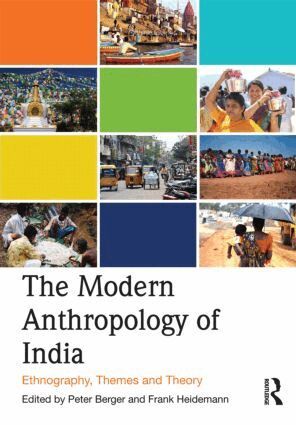
The Modern Anthropology of India is an accessible textbook providing a critical overview of the ethnographic work done in India since 1947. It assesses the history of research in each region and serves as a practical and comprehensive guide to the main themes dealt with by ethnographers. It highlights key analytical concepts and paradigms that came to be of relevance in particular regions in the recent history of research in India, and which possibly gained a pan-Indian or even trans-Indian significance.Structured according to the states of the Indian union, contributors raise several key questions, including: What themes were ethnographers interested in? What are the significant ethnographic contributions? How are peoples, communities and cultural areas represented? How has the ethnographic research in the area developed?Filling a significant gap in the literature, the book is an invaluable resource to students and researchers in the field of Indian anthropology/ethnography, regional anthropology and postcolonial studies. It is also of interest to students of South Asian studies in general as it provides an extensive and critical overview of regionally based ethnographic activity undertaken in India.
928 kr
Skickas inom 10-15 vardagar
The Modern Anthropology of India is an accessible textbook providing a critical overview of the ethnographic work done in India since 1947. It assesses the history of research in each region and serves as a practical and comprehensive guide to the main themes dealt with by ethnographers. It highlights key analytical concepts and paradigms that came to be of relevance in particular regions in the recent history of research in India, and which possibly gained a pan-Indian or even trans-Indian significance.Structured according to the states of the Indian union, contributors raise several key questions, including: What themes were ethnographers interested in? What are the significant ethnographic contributions? How are peoples, communities and cultural areas represented? How has the ethnographic research in the area developed?Filling a significant gap in the literature, the book is an invaluable resource to students and researchers in the field of Indian anthropology/ethnography, regional anthropology and postcolonial studies. It is also of interest to students of South Asian studies in general as it provides an extensive and critical overview of regionally based ethnographic activity undertaken in India.
307 kr
Skickas inom 3-6 vardagar
738 kr
Kommande
Through the words of twenty contributors, this volume addresses the dialectic relationship between islands and islanders as well as the resulting ways of life produced by this interrelation, a condition considered here as "islandness." It proposes "islandness" as a lens through which to investigate "insular" settings across oceans and interrogate the geographical category of an "island." What different conceptualizations of islandness can be discerned in various parts of the world? How do these conceptualizations frame experiences of time and space? How does this shape human perceptions, cultural practices, as well as relationships and interactions with other-than-human entities? In what ways do insular sensibilities configure ways of being and moving in historical and contemporary contexts? Islandness is an emergent quality; it is a process that the contributors explore theoretically, historically, and ethnographically by approaching diverse regions—the Indian and Pacific Oceans, Highland Asia, Europe, and Latin America—from different disciplinary perspectives. In analyzing these complexities through the lens of islandness, the volume draws transcultural and transregional comparisons in order to shed light on the human-environmental condition. The book’s fifteen chapters deal with both literal and metaphorical islandness across three parts: Oceania, Indian Ocean, and Beyond. Each section explores the processes through which islandness becomes constituted and the practices in which it becomes enacted by establishing and comparing relating regional contexts. Thus, the volume traces ways of experiencing islandness with a dual focus on the empirical dimension—the lived realities and temporalities of islandness—and the metaphorical plane—the ideas of islands or island settings that inform experiences of islandness. For scholars interested in seeing the "island" beyond the ocean, Experiencing Islandness: Oceans and Beyond shows that the metaphorical power of islands frames experiences all around the world.