Frank J. Convery - Böcker
Visar alla böcker från författaren Frank J. Convery. Handla med fri frakt och snabb leverans.
2 produkter
2 produkter
758 kr
Skickas inom 7-10 vardagar
The European Union's Emissions Trading Scheme (EU ETS) is the world's largest market for carbon and the most significant multinational initiative ever taken to mobilize markets to protect the environment. It will be an important influence on the development and implementation of trading schemes in the US, Japan, and elsewhere. However, as is true of any pioneering public policy experiment, this scheme has generated much controversy. Pricing Carbon provides the first detailed description and analysis of the EU ETS, focusing on the first 'trial' period of the scheme (2005-7). Written by an international team of experts, it allows readers to get behind the headlines and come to a better understanding of what was done and what happened based on a dispassionate, empirically based review of the evidence. This book should be read by anyone who wants to know what happens when emissions are capped, traded, and priced.
1 675 kr
Skickas inom 7-10 vardagar
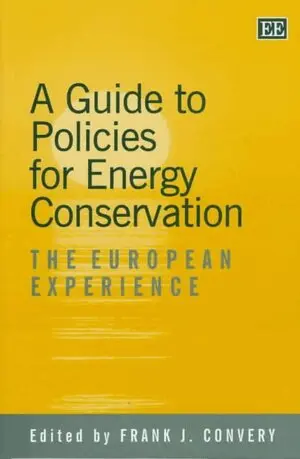
This important new book is a practical guide to the design of policies for effective energy conservation. Drawing on a wide range of European experiences, it analyses and evaluates the weaknesses of current conservation policies. The authors advance proposals that will ensure that political, administrative and energy conservation resources are used to maximum effect. Based on original investigations of conservation policies the book examines:the use of grants and subsidies to encourage investment in the conservation of energy in domestic housing and public buildingsthe use of information to inform householders of their conservation options and the implications of these optionsthe use of regulation to encourage the use of combined heating powerdemand-side management by utility companiesinstitutional development as a means of engendering 'bottom-up' conservation initiativesThe main lesson is that it is not the policy per se but its design and execution which dictates performance. The key variables in shaping such performance are identified and discussed.This timely book will be invaluable for those responsible for designing and implementing energy conservation policies and will be of special interest to those researching the practice of energy conservation.