Franklin Odo – författare
Visar alla böcker från författaren Franklin Odo. Handla med fri frakt och snabb leverans.
5 produkter
5 produkter
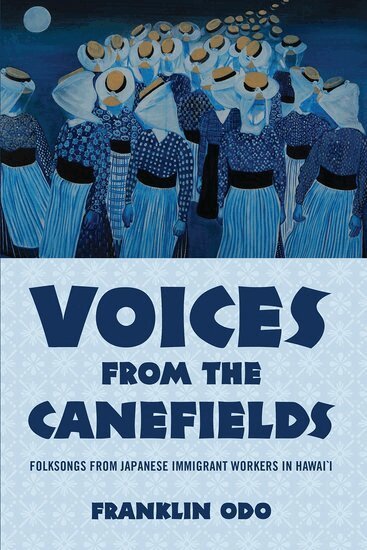
Voices from the Canefields
Folksongs from Japanese Immigrant Workers in Hawai'i
Häftad, Engelska, 2016
497 kr
Skickas inom 5-8 vardagar
Folk songs are short stories from the souls of common people. Some, like Mexican corridos or Scottish ballads reworked in the Appalachias, are stories of tragic or heroic episodes. Others, like the African American blues, reach from a difficult present back into slavery and forward into a troubled future. Japanese workers in Hawaii's plantations created their own versions, in form more akin to their traditional tanka or haiku poetry. These holehole bushi describe the experiences of one particular group caught in the global movements of capital, empire, and labor during the late nineteenth and early twentieth centuries. In Voices from the Canefields author Franklin Odo situates over two hundred of these songs, in translation, in a hitherto largely unexplored historical context. Japanese laborers quickly comprised the majority of Hawaiian sugar plantation workers after their large-scale importation as contract workers in 1885. Their folk songs provide good examples of the intersection between local work/life and the global connection which the workers clearly perceived after arriving. While many are songs of lamentation, others reflect a rapid adaptation to a new society in which other ethnic groups were arranged in untidy hierarchical order - the origins of a unique multicultural social order dominated by an oligarchy of white planters. Odo also recognizes the influence of the immigrants' rapidly modernizing homeland societies through his exploration of the "cultural baggage" brought by immigrants and some of their dangerous notions of cultural superiority. Japanese immigrants were thus simultaneously the targets of intense racial and class vitriol even as they took comfort in the expanding Japanese empire. Engagingly written and drawing on a multitude of sources including family histories, newspapers, oral histories, the expressed perspectives of women in this immigrant society, and accounts from the prolific Japanese language press into the narrative, Voices from the Canefields will speak not only to scholars of ethnomusicology, migration history, and ethnic/racial movements, but also to a general audience of Japanese Americans seeking connections to their cultural past and the experiences of their most recently past generations.
Voices from the Canefields
Folksongs from Japanese Immigrant Workers in Hawai'i
Inbunden, Engelska, 2013
943 kr
Skickas inom 5-8 vardagar
Folk songs are short stories from the souls of common people. Some, like Mexican corridos or Scottish ballads, reworked in the Appalachias, are stories of tragic or heroic episodes. Others, like the African American blues, reach from a difficult present back into slavery and forward into a troubled future. Japanese workers in Hawaii's plantations created their own versions, in form more akin to their traditional tanka or haiku poetry. These holehole bushi describe the experiences of one particular group caught in the global movements of capital, empire, and labor during the late nineteenth and early twentieth centuries. In Voices from the Canefields author Franklin Odo situates over two hundred of these songs, in translation, in a hitherto largely unexplored historical context. Japanese laborers quickly comprised the majority of Hawaiian sugar plantation workers after their large-scale importation as contract workers in 1885. Their folk songs provide good examples of the intersection between local work/life and the global connection which the workers clearly perceived after arriving. While many are songs of lamentation, others reflect a rapid adaptation to a new society in which other ethnic groups were arranged in untidy hierarchical order - the origins of a unique multicultural social order dominated by an oligarchy of white planters. Odo also recognizes the influence of the immigrants' rapidly modernizing homeland societies through his exploration of the "cultural baggage" brought by immigrants and some of their dangerous notions of cultural superiority. Japanese immigrants were thus simultaneously the targets of intense racial and class vitriol even as they took comfort in the expanding Japanese empire. Engagingly written and drawing on a multitude of sources including family histories, newspapers, oral histories, the expressed perspectives of women in this immigrant society, and accounts from the prolific Japanese language press into the narrative, Voices from the Canefields will speak not only to scholars of ethnomusicology, migration history, and ethnic/racial movements, but also to a general audience of Japanese Americans seeking connections to their cultural past and the experiences of their most recently past generations.
875 kr
Tillfälligt slut
Asian immigrants to America and their descendants have confronted numerous negative forces -- fear, arrogance, prejudice, and chauvinism -- and contributed many more positive elements -- courage, pride, tolerance, determination -- throughout their history in this country. This collection of key documents presents the rich Asian American heritage through primary sources -- speeches, diary entries, editorials, advertisements, court opinions, legislation, songs, and poems -- along with expert, concise editorial commentary. It testifies not only to the rapid expansion of the field of Asian American studies in the last decade but also to the innovations in scholarship on Asian Americans in many fields, including western history, feminist studies, political science, anthropology, and military history.Selections from the early twentieth century and before treat mostly Chinese and Japanese experience.For the period after 1965, when patterns of Asian immigration to American changed dramatically in the wake of the 1965 immigration act, a variety of documents tell the story of South and Southeast Asians' transplantation to a new culture, enabling readers to grapple with such issues as gender relations and sexuality, racial profiling and stereotyping, and diasporic connections to homeland cultures. Here are excerpts from the 1898 Supreme Court decision United States v. Wong Kim Ark, which guaranteed citizenship to all individuals born in the United States; accounts of the 1970 International Hotel struggle in San Francisco's Manilatown, when socially conscious academics united with community activists to preserve vital social services for San Francisco's Filipino population; and the 2000 Hmong Veterans Naturalization Act, which provided a temporary window for Laotian immigrants to enter the United States, part of the long legacy of America's war in Southeast Asia.Broad in scope and vividly multivocal, The Columbia Documentary History of the Asian American Experience presents the fullest picture to date of the historical fortunes and lasting influences of Asian peoples in America.
590 kr
Skickas inom 11-20 vardagar
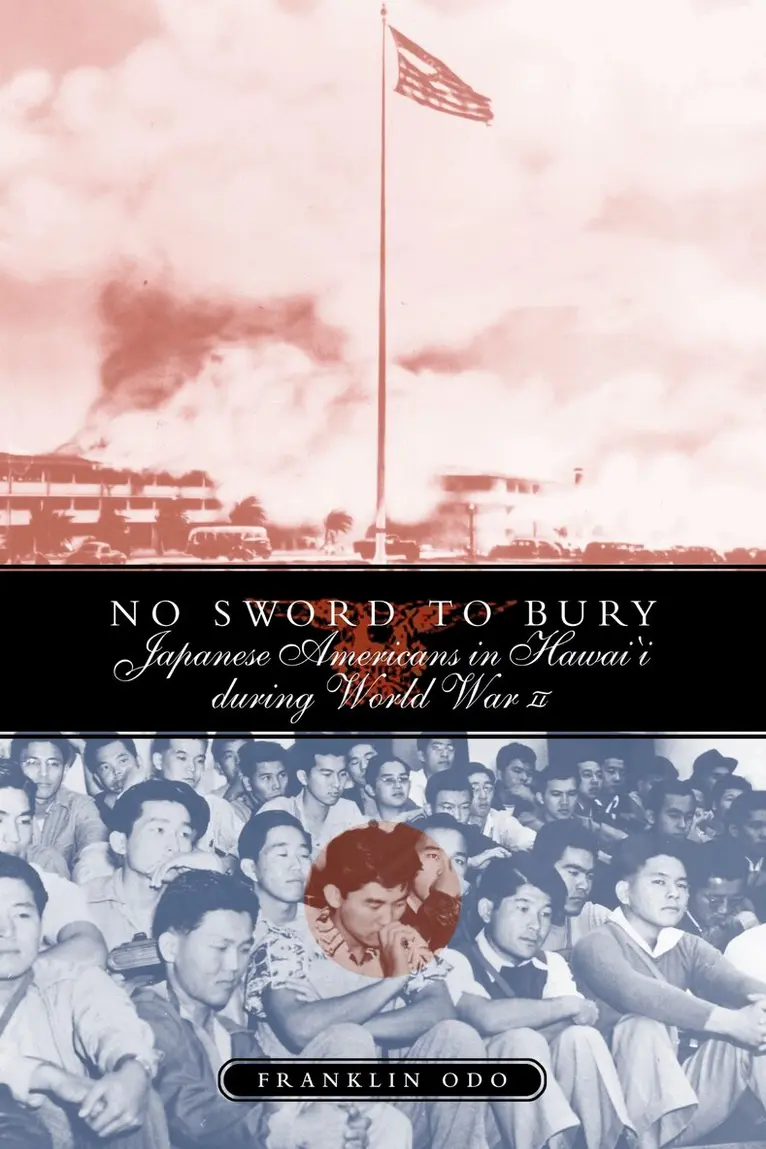
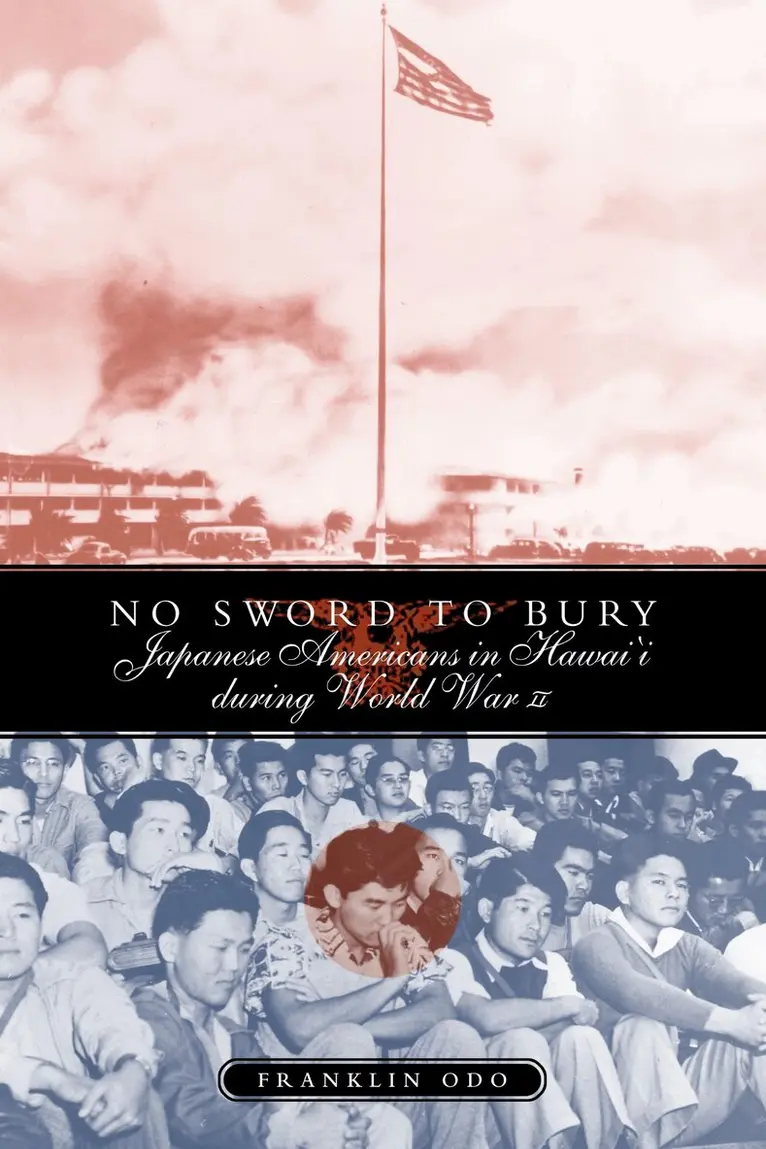
When bombs rained down on Pearl Harbor in 1941, Japanese American college students were among the many young men enrolled in ROTC and immediately called upon to defend the Hawaiian islands against invasion. In a few weeks, however, the military government questioned their loyalty and disarmed them. In No Sword to Bury, Franklin Odo places the largely untold story of the wartime experience of these young men in the context of the community created by their immigrant families and its relationship to the larger, white-dominated society. At the heart of the book are vivid oral histories that recall their service on the home front in the Varsity Victory Volunteers, a non-military group dedicated to public works, as well as in the segregated 442nd Regimental Combat Team. Illuminating a critical moment in ethnic identity formation among this first generation of Americans of Japanese descent (the nisei), Odo shows how the war-time service and the post-war success of these men contributed to the simplistic view of Japanese Americans as a model minority in Hawai'i.
295 kr
Skickas inom 5-8 vardagar
When bombs rained down on Pearl Harbor in 1941, Japanese American college students were among the many young men enrolled in ROTC and immediately called upon to defend the Hawaiian islands against invasion. In a few weeks, however, the military government questioned their loyalty and disarmed them. In No Sword to Bury, Franklin Odo places the largely untold story of the wartime experience of these young men in the context of the community created by their immigrant families and its relationship to the larger, white-dominated society. At the heart of the book are vivid oral histories that recall their service on the home front in the Varsity Victory Volunteers, a non-military group dedicated to public works, as well as in the segregated 442nd Regimental Combat Team. Illuminating a critical moment in ethnic identity formation among this first generation of Americans of Japanese descent (the nisei), Odo shows how the war-time service and the post-war success of these men contributed to the simplistic view of Japanese Americans as a model minority in Hawai'i.