Franklin Toker – författare
Visar alla böcker från författaren Franklin Toker. Handla med fri frakt och snabb leverans.
3 produkter
3 produkter
E-bok
Engelska, 2007310 kr
Läs direkt efter köp
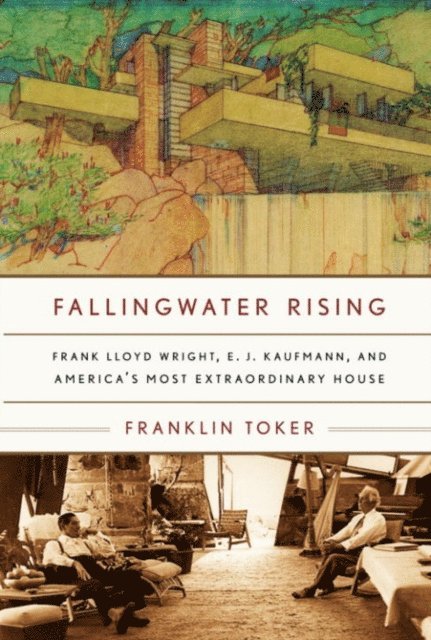
Fallingwater Rising is a biography not of a person but of the most famous house of the twentieth century. Scholars and the public have long extolled the house that Frank Lloyd Wright perched over a Pennsylvania waterfall in 1937, but the full story has never been told. When he got the commission to design the house, Wright was nearing seventy, his youth and his early fame long gone. It was the Depression, and Wright had no work in sight. Into his orbit stepped Edgar J. Kaufmann, a Pittsburgh department-store mogul–“the smartest retailer in America”–and a philanthropist with the burning ambition to build a world-famous work of architecture. It was an unlikely collaboration: the Jewish merchant who had little concern for modern architecture and the brilliant modernist who was leery of Jews. But the two men collaborated to produce an extraordinary building of lasting architectural significance that brought international fame to them both and confirmed Wright’s position as the greatest architect of the twentieth century. Fallingwater Rising is also an enthralling family drama, involving Kaufmann, his beautiful cousin/wife, Liliane, and their son, Edgar Jr., whose own role in the creation of Fallingwater and its ongoing reputation is central to the story. Involving such key figures of the l930s as Frida Kahlo, Albert Einstein, Henry R. Luce, William Randolph Hearst, Ayn Rand, and Franklin Roosevelt, Fallingwater Rising shows us how E. J. Kaufmann’s house became not just Wright’s masterpiece but a fundamental icon of American life. One of the pleasures of the book is its rich evocation of the upper-crust society of Pittsburgh–Carnegie, Frick, the Mellons–a society that was socially reactionary but luxury-loving and baronial in its tastes, hobbies, and sexual attitudes (Kaufmann had so many mistresses that his store issued them distinctive charge plates they could use without paying). Franklin Toker has been studying Fallingwater for eighteen years. No one but he could have given us this compelling saga of the most famous private house in the world and the dramatic personal story of the fascinating people who made and used it.A major contribution to both architectural and social history.From the Hardcover edition.
E-bok
PDF, Engelska, 19911 041 kr
Läs direkt efter köp
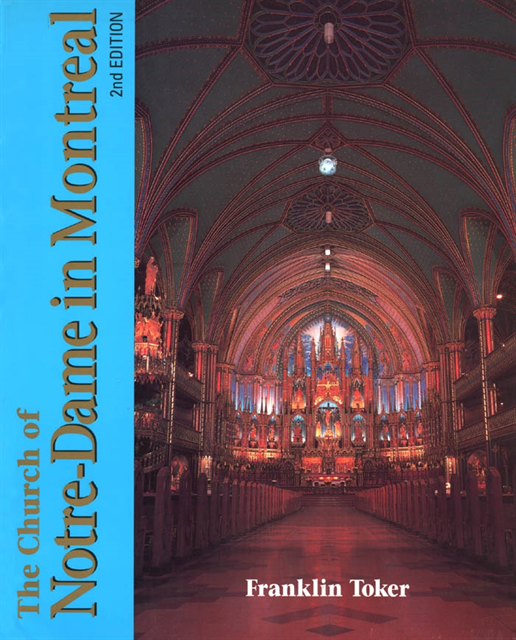
The construction of the Church of Notre-Dame was one of the boldest building projects of the nineteenth century. The first major example of Gothic Revival architecture in Canada, it was, at the time of its completion, the largest building in North America. Franklin Toker treats the church not only as a work of art but also as a historical document that reflected the social and nationalist aspirations of the community and marked a high point in the fascinating career of its architect, James O''Donnell.
Inbunden, Engelska, 2009
650 kr
Skickas inom 5-8 vardagar
From its founding in 1758, Pittsburgh has experienced several epic transformations. It began its existence as a fortress, on a site originally selected by George Washington. A hundred years later, and well into our own time, no other American city was as intensively industrialized, only to be later consigned to "rustbelt" status. Remade as a thriving twenty-first-century city and an international center for science, medicine, biotechnology, and financial services, Pittsburgh is now routinely acclaimed as one of the most promising and livable of America's cities. Franklin Toker shows us why.Toker highlights this remarkable story of urban reinvention by focusing on what makes Pittsburgh so resilient and appealing - its strong neighborhoods and their surprisingly rich architectural history. The many unique, lively urban communities that make up Pittsburgh are a treasure trove of every imaginable style of structure, from Victorian to Bauhaus, Gothic to Art Deco, and from Industrial to Green. These ordinary homes expressed the aspirations of people who came from around the world to settle in Pittsburgh, while they built the city itself into an economic powerhouse. With the wealth generated by this everyday work, local captains of industry could build their own monumental additions to Pittsburgh's urban landscape, including two of America's greatest buildings: H. H. Richardson's Allegheny Courthouse and Frank Lloyd Wright's Fallingwater. With accessible prose, Toker examines Pittsburgh in its historical context (from Indian settlement to postmodern city), in its regional setting (from the playgrounds of the Laurel Highlands to the hard-working mill towns dotting the landscape), and from the street level (leading the reader on a personal tour through every neighborhood). Lavishly illustrated with photos and maps, Pittsburgh: A New Portrait reveals the true colors of a truly great American city.