Frans Klijn – författare
Visar alla böcker från författaren Frans Klijn. Handla med fri frakt och snabb leverans.
5 produkter
5 produkter
Inbunden, Engelska, 2012
4 135 kr
Skickas inom 10-15 vardagar
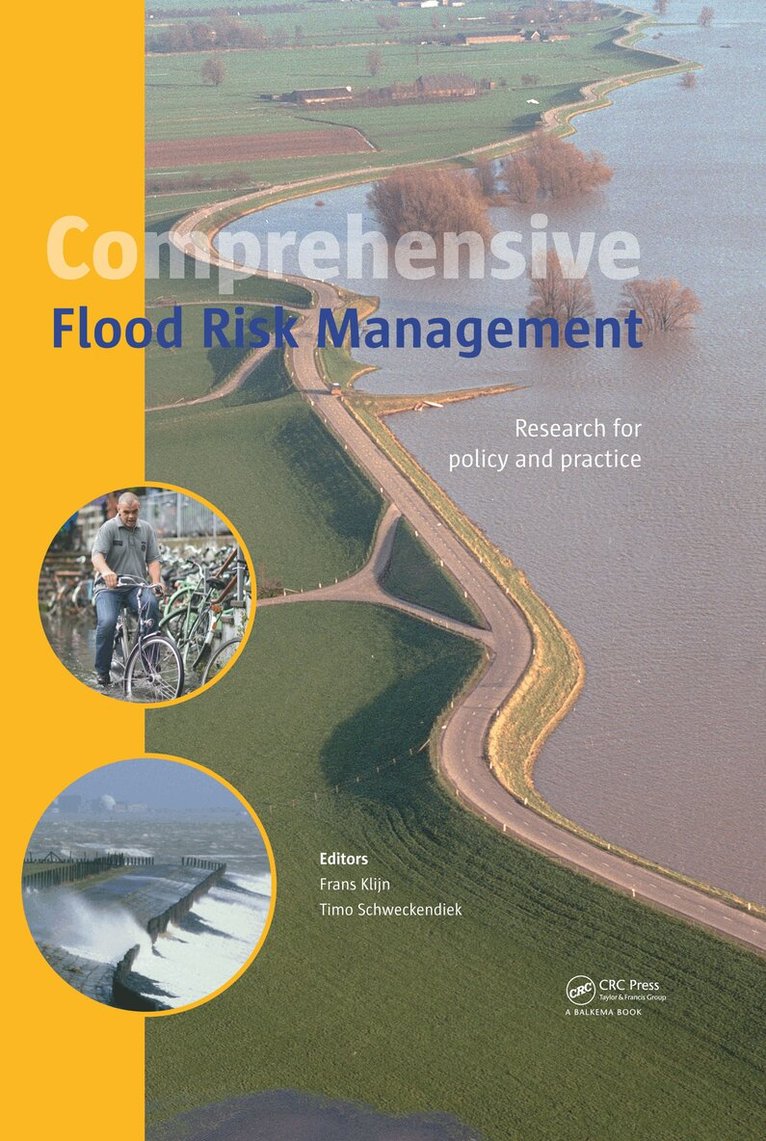
Flood risk management policy across the European Union is changing, partly in response to the EU Floods Directive and partly because of new scientific approaches and research findings. It involves a move towards comprehensive flood risk management, which requires bringing the following fields/domains closer together: the natural sciences, social sciences and arts; science, policy and practice; and engineering, spatial planning and governance. Naturally, this involves preventive fl ood risk management and flood event management, as well as learning from the past and considering future global change.Comprehensive Flood Risk Management includes about 200 contributions drawn from the 2nd European Conference on Flood Risk Management FLOODrisk2012 (Rotterdam, the Netherlands, 19-23 November 2012). This conference provided a forum for scientists, policy makers, researchers, and practitioners to discuss the practical implications of the latest research findings and to inventory which questions the research community still needs to answer.FLOODrisk2012, the successor of the 2008 conference held in Oxford, UK, was the initiative of Deltares, Delft, the Netherlands. Comprehensive Flood Risk Management includes the latest results of numerous projects issuing from the European Commission’s Sixth and Seventh Framework Programmes, as well as results of many other national and international research projects from Europe and elsewhere in the world. The book features contributions from natural and social sciences, engineering and spatial planning, as well as practical experiences of policy makers and designers, and covers all aspects of fl ood risk assessment and management: hydraulic loads, reliability of defences and their monitoring, flood hazard analysis, inundation modelling, hazard and risk mapping, estimating economic damage and loss-of-life and integrated flood risk analysis, as well as flood protection, damage and exposure reduction, reducing social vulnerability, policy instruments (zoning, regulations), integrated flood risk management planning and long-term planning for global change, flood prediction and early warning, evacuation and rescue and other aspects of flood event management. Finally, the book discusses risk communication, participatory planning, governance issues, and experiences with the EU Floods Directive.Comprehensive Flood Risk Management will be of interest to a readership ranging from scientists to practitioners involved in fl ood risk management, and consisting of researchers, consultants, engineers, spatial planners, postgraduate lecturers, students, civil servants, and policy makers.
Inbunden, Engelska, 1994
2 156 kr
Skickas inom 10-15 vardagar
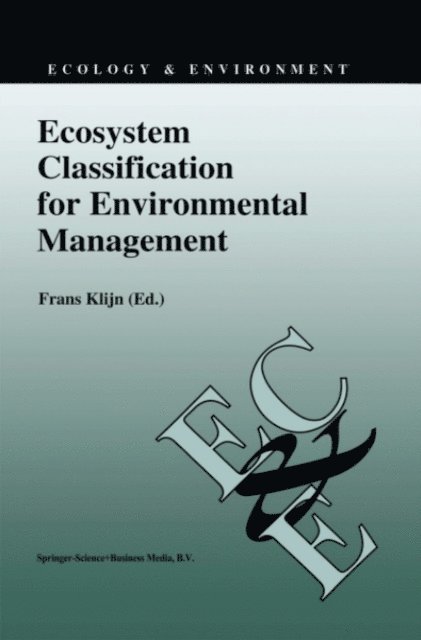
The ecosystem is a central concept in modern ecology and is fundamental to sound environmental policy making. Not all ecosystems are equally susceptible to human-induced environmental change, nor do we attribute equal value to all ecosystem types. From a nature conservation point of view we are concerned about the spatial extension of ecosystems and their quality, as well as about their responsiveness and recovery potential. This requires the classification and mapping of ecosystems. This book treats the why and how of such classification and mapping as a prerequisite to environmentally-sound management aimed at sustainability and the preservation of biodiversity. Existing concepts and procedures are modified for modern applications, including susceptibility assessment, environmental quality assessment and monitoring, as well as predictive modelling for environmental impact assessments. These procedures are illustrated by applying them to current environmental problems, such as acidification, eutrophication, changing land use and groundwater lowering.Written by a number of landscape ecologists from several West European countries, this book discusses a range of theories, concepts, and methods from plant ecology, vegetation science, physical geography, and other environmental sciences composed in such a way to constitute practically applicable tools. The text is designed for scientists engaged in applied research and professionals in environmental planning and graduate students.
E-bok
Engelska, 20124 785 kr
Läs direkt efter köp
Flood risk management policy across the European Union is changing, partly in response to the EU Floods Directive and partly because of new scientific approaches and research findings. It involves a move towards comprehensive flood risk management, which requires bringing the following fields/domains closer together: the natural sciences, social sc
Häftad, Engelska, 2011
2 171 kr
Skickas inom 10-15 vardagar
The ecosystem is a central concept in modern ecology and is fundamental to sound environmental policy making. Not all ecosystems are equally susceptible to human-induced environmental change, nor do we attribute equal value to all ecosystem types. From a nature conservation point of view we are concerned about the spatial extension of ecosystems and their quality, as well as about their responsiveness and recovery potential. This requires the classification and mapping of ecosystems. This book treats the why and how of such classification and mapping as a prerequisite to environmentally sound management aimed at sustainability and the preservation of biodiversity. Existing concepts and procedures are modified for modern applications, including susceptibility assessment, environmental quality assessment and monitoring, as well as predictive modelling for environmental impact assessments. These procedures are illustrated by applying them to current environmental problems, such as acidification, eutrophication, changing land use, or groundwater lowering.Written by a number of renowned landscape ecologists from several West European countries, this book discusses a wealth of theories, concepts, and methods from plant ecology, vegetation science, physical geography, and other environmental sciences composed in such a way to constitute practically applicable tools. For scientists engaged in applied research and professionals in environmental planning. Graduate students will find it inspiring as well as a source of practical advice.
E-bok
PDF, Engelska, 20132 741 kr
Läs direkt efter köp
When Lovelock published his ''Gaia'', it was for many people quite a relief. We would not be able to destroy life on earth. Lovelock illustrated this argument with a wealth of mechanistic feedback processes, as we know them to occur in ecosystems. These feedback processes would, somehow, lead the earth as a whole into a new equilibrium. An equilibrium with life within, be it in an entirely changed environment. This is, indeed, let us be earnest: a functioning ecosystem. But what kind of ecosystem? The Gaia-hypothesis triggered a great deal of thought and discussion about what we actually require as an environment. Bio diversity as an abbreviation of biotic diversity has since become the focal point of societal concern. But again, when we think about it, we are not only interested in the sheer number of species on earth. We also have '')ther interests: nearby, in our backyards, in the surrounding countryside, and on the various locations where we would like to spend our holidays. We also want to preserve rare or characteristic species just for their own sake. In fact, we want species in viable populations to be part of communities that are self-maintaining in environments where they belong. We know we cannot ask for this without protecting their environment, which is also our environment. This is where the next fashionable term emerges: sustainability.