Frye Gaillard – författare
377 kr
Skickas inom 5-8 vardagar
311 kr
Kommande
528 kr
Läs direkt efter köp
499 kr
Läs direkt efter köp
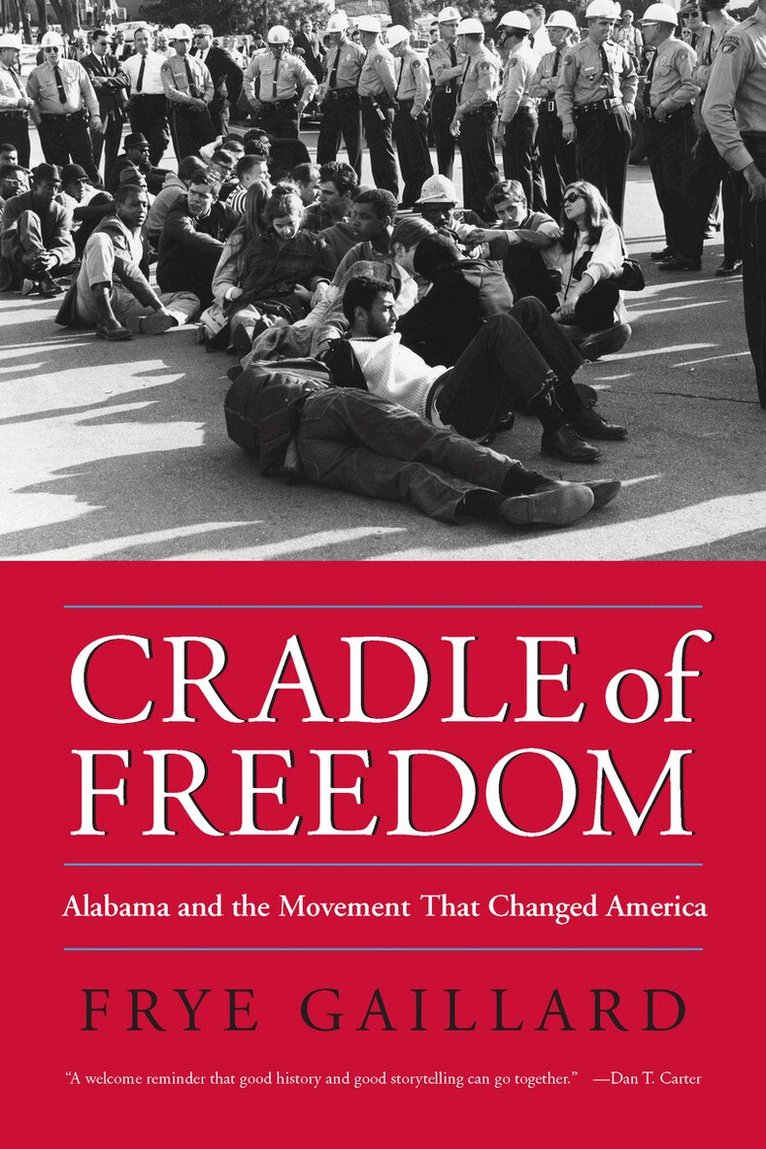
Cradle of Freedom puts a human face on the story of the black American struggle for equality in Alabama during the 1960s. While exceptional leaders such as Martin Luther King Jr., Rosa Parks, Fred Shuttlesworth, Ralph Abernathy, John Lewis, and others rose up from the ranks and carved their places in history, the burden of the movement was not carried by them alone. It was fueled by the commitment and hard work of thousands of everyday people who decided that the time had come to take a stand.
Cradle of Freedom is tied to the chronology of pivotal events occurring in Alabama the Montgomery bus boycott, the Freedom Rides, the Letter from the Birmingham Jail, the bombing of the 16th Street Baptist Church, Bloody Sunday, and the Black Power movement in the Black Belt. Gaillard artfully interweaves fresh stories of ordinary people with the familiar ones of the civil rights icons. We learn about the ministers and lawyers, both black and white, who aided the movement in distinct ways at key points. We meet Vernon Johns, King''s predecessor at the Dexter Avenue Baptist Church in Montgomery, who first suggested boycotting the buses and who wrote later, "It is a heart strangely un-Christian that cannot thrill with joy when the least of men begin to pull in the direction of the stars." We hear from John Hulett who tells how terror of lynching forced him down into ditches whenever headlights appeared on a night road. We see the Edmund Pettus Bridge beatings from the perspective of marcher JoAnne Bland, who was only a child at the time. We learn of E. D. Nixon, a Pullman porter who helped organize the bus boycott and who later choked with emotion when, for the first time in his life, a white man extended his hand in greeting to him on a public street.
How these ordinary people rose to the challenges of an unfair system with a will and determination that changed their times forever is a fascinating and extraordinary story that Gaillard tells with his hallmark talent. Cradle of Freedom unfolds with the dramatic flow of a novel, yet it is based on meticulous research. With authority and grace, Gaillard explains how the southern state deemed the Cradle of the Confederacy became with great struggle, some loss, and much hope the Cradle of Freedom.
427 kr
Läs direkt efter köp
306 kr
Skickas inom 3-6 vardagar
346 kr
Läs direkt efter köp
346 kr
Läs direkt efter köp
380 kr
Skickas inom 5-8 vardagar
1 154 kr
Skickas inom 5-8 vardagar
305 kr
Skickas inom 5-8 vardagar
1 325 kr
Skickas inom 10-15 vardagar
1 601 kr
Läs direkt efter köp
630 kr
Skickas inom 3-6 vardagar
243 kr
Skickas inom 5-8 vardagar
272 kr
Skickas inom 3-6 vardagar
426 kr
Skickas inom 3-6 vardagar
282 kr
Skickas inom 3-6 vardagar
260 kr
Skickas inom 3-6 vardagar
370 kr
Skickas inom 3-6 vardagar
361 kr
Skickas inom 3-6 vardagar
465 kr
Läs direkt efter köp
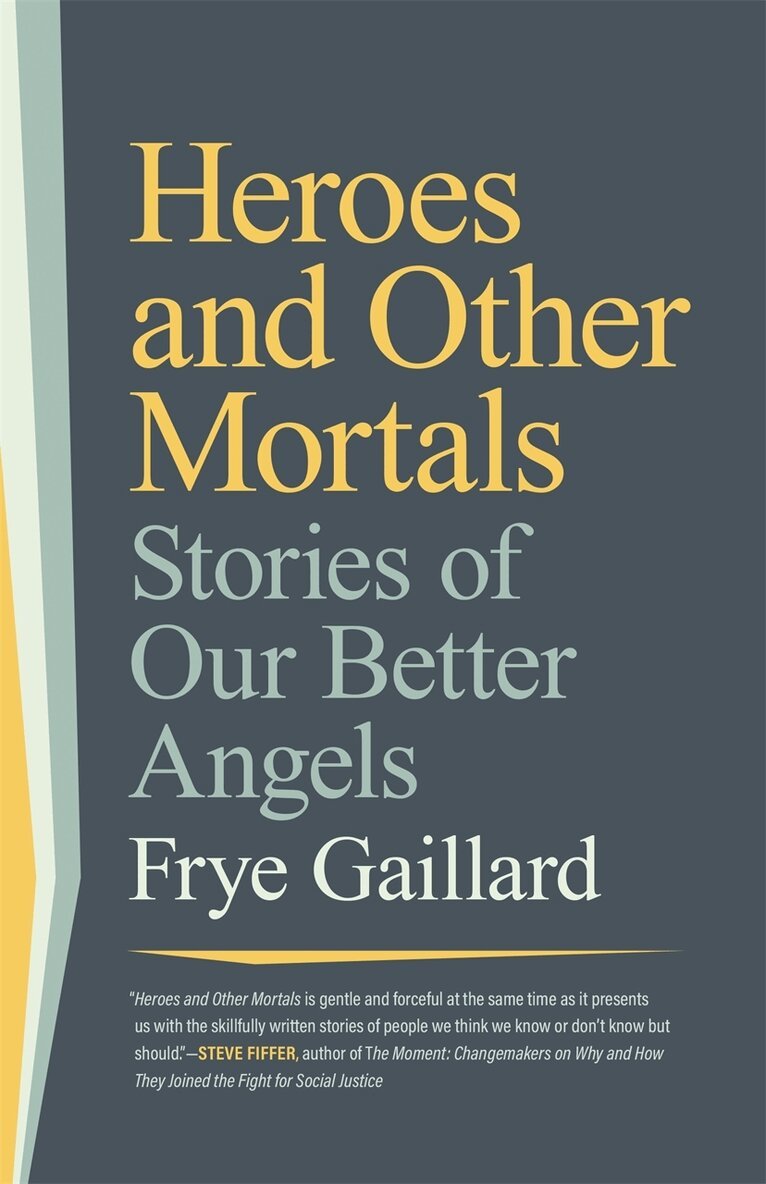
Frye Gaillard did not set out to write this book. One day as he was thumbing through a cardboard box of his essays, columns, and profiles, he simply realized that he had done it. Each article told the story of a person standing against social injustice or exploring the pain and ambiguity of the human condition. By blending interviews and stories of well-known figures like Archbishop Desmond Tutu, Sidney Poitier, Vine Deloria, Mikhail Gorbachev, and Jane Goodall with lesser-known heroes like Rabbi Abraham Heschel (who marched from Selma to Montgomery), Regina Benjamin (a Black doctor who was integral to the grassroots efforts of Katrina recovery), Kathy Mattea (who wrote powerful songs about coal mining and its real effects on the people of Appalachia), and Elyn Saks (who pioneered modern mental illness treatments while dealing with her own schizophrenia), Gaillard celebrates the people who have tried to make things better. While many of Gaillard’s subjects succeeded in what they were trying to do, others did not. Each story, however, contains a measure of inspiration. Against the backdrop of our turbulent time—our era of lesser angels on the rise—Gaillard asks, where would the rest of us be without them?
465 kr
Läs direkt efter köp
Frye Gaillard did not set out to write this book. One day as he was thumbing through a cardboard box of his essays, columns, and profiles, he simply realized that he had done it. Each article told the story of a person standing against social injustice or exploring the pain and ambiguity of the human condition. By blending interviews and stories of well-known figures like Archbishop Desmond Tutu, Sidney Poitier, Vine Deloria, Mikhail Gorbachev, and Jane Goodall with lesser-known heroes like Rabbi Abraham Heschel (who marched from Selma to Montgomery), Regina Benjamin (a Black doctor who was integral to the grassroots efforts of Katrina recovery), Kathy Mattea (who wrote powerful songs about coal mining and its real effects on the people of Appalachia), and Elyn Saks (who pioneered modern mental illness treatments while dealing with her own schizophrenia), Gaillard celebrates the people who have tried to make things better. While many of Gaillard’s subjects succeeded in what they were trying to do, others did not. Each story, however, contains a measure of inspiration. Against the backdrop of our turbulent time—our era of lesser angels on the rise—Gaillard asks, where would the rest of us be without them?
243 kr
Skickas inom 5-8 vardagar
426 kr
Läs direkt efter köp
A fifty-year history of one community''s battles with race in public education
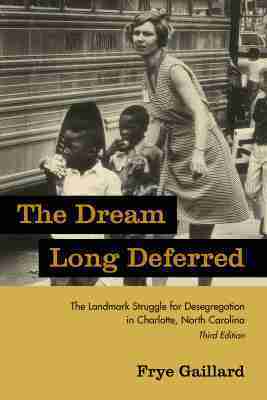
The Dream Long Deferred tells the fifty-year story of the landmark struggle for desegregation in Charlotte, North Carolina, and the present state of the city''s public school system. Award-winning writer Frye Gaillard, who covered school integration for the Charlotte Observer, updates his earlier 1988 and 1999 editions of this work to examine the difficult circumstances of the present day.
When the struggle to desegregate Charlotte began in the 1950s, the city was much like many other New South cities. But unlike peer communities that would resist federal rulings, Charlotte chose to begin voluntary desegregation of its schools in 1957. Over the next decade it made consistent, if slow, progress toward greater integration.
The glacial pace of change frustrated Charlotte''s black citizens, prompting them to file lawsuits in federal court to seek nothing less than complete integration. When the U.S. District Court in 1969, and subsequently the U.S. Supreme Court in 1971, upheld that demand in the landmark Swann v. Charlotte-Mecklenburg decision, Charlotte became the national test case for busing. Though the transition was not always peaceful, within five years Charlotte was a model of successful integration. North Carolinians of all races joined in public and private initiatives to make desegregation work and garnered national recognition for their achievement. Based on the favorable results, a powerful consensus developed in Charlotte that desegregation was morally right and educational beneficial. But that opinion was not to last.
Charlotte''s population grew rapidly in the 1990s, and many new arrivals were weary of the status of the public school system. In 1999 a group of white citizens reopened the case to push for a return to neighborhood schools. A federal judge sided with them, finding that the plans initiated in the 1971 ruling were both unnecessary and unconstitutional because they were race-based. Charlotte''s journey had come full circle.
Today, Gaillard explains, Charlotte''s schools are becoming segregated once more—this time along both economic and racial lines. A growing number of white students are either leaving the public school system for private institutions or converging on a few exceptional schools in affluent communities. This exodus from neighborhood schools has put the future of the city''s public school system in jeopardy once more.
In this new edition of The Dream Long Deferred, Gaillard chronicles the span of Charlotte''s five-decade struggle with race in education to remind us that the national dilemma of equal educational opportunity remains unsettled. Balanced in his treatment of all sides, Gaillard gives the issue a human face so that historians, educators, and ordinary citizens can better glean understanding from the triumph and tragedy of one American community.
219 kr
Skickas inom 5-8 vardagar
159 kr
Skickas inom 5-8 vardagar
146 kr
Skickas inom 5-8 vardagar
190 kr
Skickas inom 5-8 vardagar