F.W. Penning de Vries - Böcker
Visar alla böcker från författaren F.W. Penning de Vries. Handla med fri frakt och snabb leverans.
4 produkter
4 produkter
2 107 kr
Skickas inom 10-15 vardagar
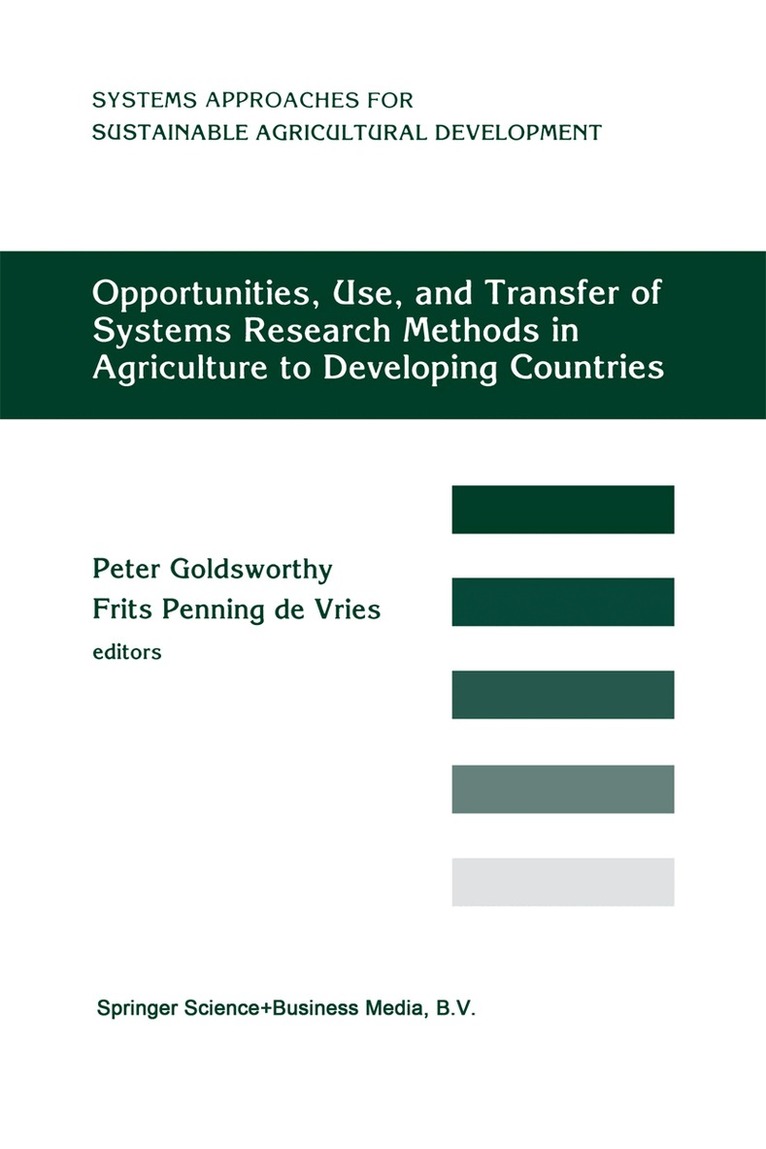
Although the application of systems approaches in agricultural research and natural resource management is a rather new field, there is already increasing demand for implementation of these approaches. This will require a critical mass of specialists in national agricultural research systems and international agricultural research centers. While these institutions are setting themselves up for systems research, the experience that has been gained in this area needs to be evaluated, further possibilities need to be explored, and new objectives and targets need to be set. This book contains the papers of a three-day seminar on systems approaches and modelling for agricultural development. The seminar, which was held at ISNAR and co-organized by ICASA, was attended by participants from 12 national agricultural research systems, nine international agricultural research centers, and five advanced research organizations. In 24 chapters the book assesses the state of the art of systems approaches in agricultural research, resource management, and rural planning, and gives an impression of the evolution of this interdisciplinary field and its use.
Del 5 - Current Issues in Production Ecology
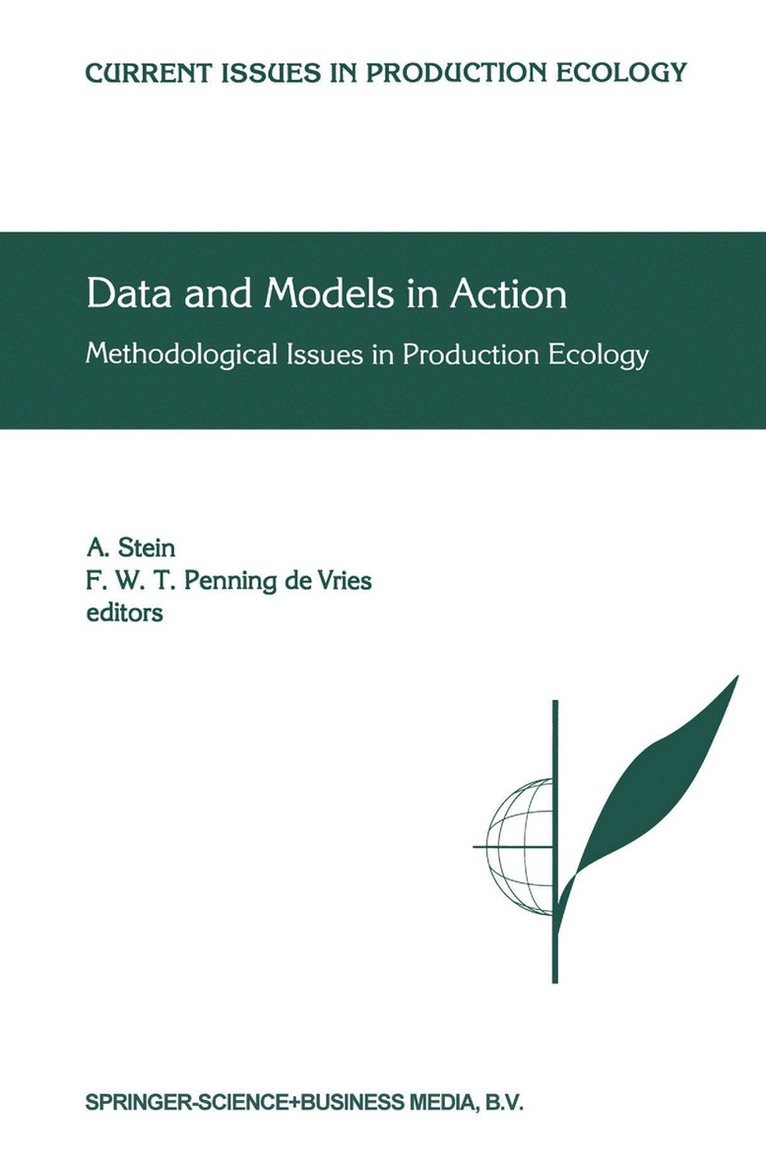
Data and Models in Action
Methodological Issues in Production Ecology
Inbunden, Engelska, 1999
1 582 kr
Skickas inom 10-15 vardagar
This text addresses methodological issues of production ecology, and contains scientific contributions written by nine specialists. A central issue is the combination of the agricultural model with reliable data in relation to scale. A model is developed with data from a single point, whereas decisions are to be made for areas of land. Such an approach requires the use of a skilful treatment of available data and information. The book is divided into four parts: advanced information science yields the best possible models in an efficient way; geographical information systems combine various layers of spatial information; statistics upscale local information towards regions and test its reliability; and modern trends in automated modelling are identified. The book is illustrated with various practical studies, ranging from the individual model to the whole European community. It aims at a readership of graduate and post-graduate agricultural scientists, practitioners and politicians.
1 590 kr
Skickas inom 10-15 vardagar
This book addresses methodological issues of production ecology, and contains scientific contributions written by nine specialists. A central issue is the combination of the agricultural model with reliable data in relation to scale. A model is developed with data from a single point, whereas decisions are to be made for areas of land. Such an approach requires the use of a skilful treatment of available data and information. The book is divided into four parts. Advanced information science yields the best possible models in an efficient way. Geographical Information Systems combine various layers of spatial information. Statistics upscale local information towards regions and test its reliability. Modern trends in automated modeling are identified. The book is illustrated with various practical studies, ranging from the individual model to the whole European Community. It aims at a readership of graduate and post-graduate agricultural scientists, practitioners and politicians.
2 118 kr
Skickas inom 10-15 vardagar
In December 1993, ISNAR, in collaboration with International Consortium for Application of Systems Approaches, organized a three-day workshop on systems approaches and -modelling for agricultural development. Sponsored by the Dutch Ministry for Development Cooperation, the workshop was attended by participants from 12 national agricultural research systems (NARS), nine international agricul tural research centers (IARCs), and five advanced research organizations (AROs). Although application of systems approaches in agricultural research and resource management is a rather new field, there is already increasing demand for implemen tation of these approaches. This will require a critical mass of specialists in the NARS and IARCs. Before this critical mass can be obtained, however, the experience that has been gained in this area needs to be evaluated, further possibilities need to be explored, and new objectives and targets need to be set. This book, which contains the papers presented at the workshop, assesses the state of the art of systems approaches in agricultural research, resource management, and rural planning. It also gives an impression of the evolution of this interdisciplinary field and its use in national and international research centers. Another, less tangible, outcome of the workshop was its contribution toward strengthening the network of NARS, IARCs, and AROs. It gave participants and organizers a chance to develop contacts, and provided an opportunity to make the first proposals for collaborative programs. Special thanks are due to Peter Goldsworthy and Luc Boerboom for their crucial role in making the workshop a success in this regard.