G. S. Gupta – författare
Visar alla böcker från författaren G. S. Gupta. Handla med fri frakt och snabb leverans.
11 produkter
11 produkter
Inbunden, Engelska, 2005
2 166 kr
Skickas inom 10-15 vardagar
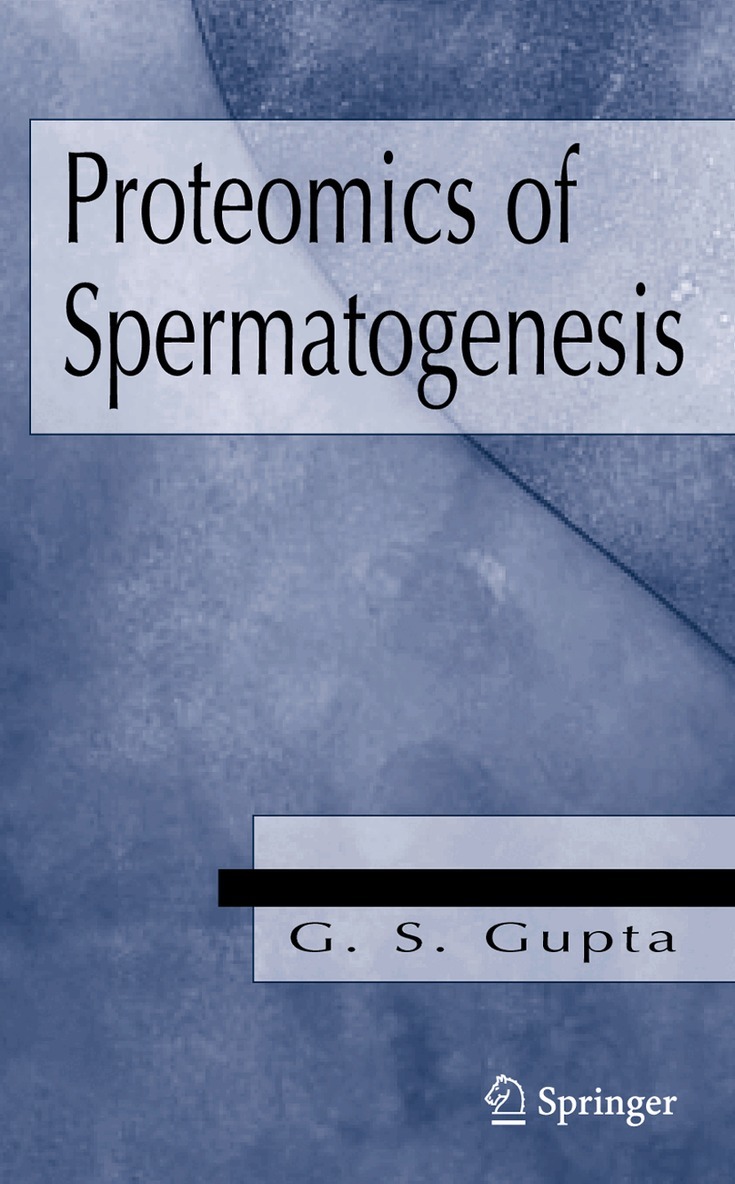
Recent developments of experimental techniques in cellular and molecular biology have made it possible to understand the molecular biology of male gametogenesis in greater detail. This book focuses on the description of specialized proteins, which are dominantly and/or specifically expressed in germ cells and localized in spermatozoa. There is an urgent need to classify proteins of spermatogenic cells with a view of their functions, and their applications in the regulation of fertility and in understanding infertility. The understanding of structural properties of male germ cell specific proteins can offer vulnerable points for targeted intervention in testis without generalized effects on stages of spermatogenesis. Besides targeted action in male germ cells, sperm specific proteins and polypeptides may also offer potential application in the development of a contraceptive vaccine.
E-bok
PDF, Engelska, 20062 840 kr
Läs direkt efter köp
Recent developments of experimental techniques in cellular and molecular biology have made it possible to understand the molecular biology of male gametogenesis in greater detail. This book focuses on the description of specialized proteins, which are dominantly and/or specifically expressed in germ cells and localized in spermatozoa. There is an urgent need to classify proteins of spermatogenic cells with a view of their functions, and their applications in the regulation of fertility and in understanding infertility. The understanding of structural properties of male germ cell specific proteins can offer vulnerable points for targeted intervention in testis without generalized effects on stages of spermatogenesis. Besides targeted action in male germ cells, sperm specific proteins and polypeptides may also offer potential application in the development of a contraceptive vaccine.
3 842 kr
Skickas inom 10-15 vardagar
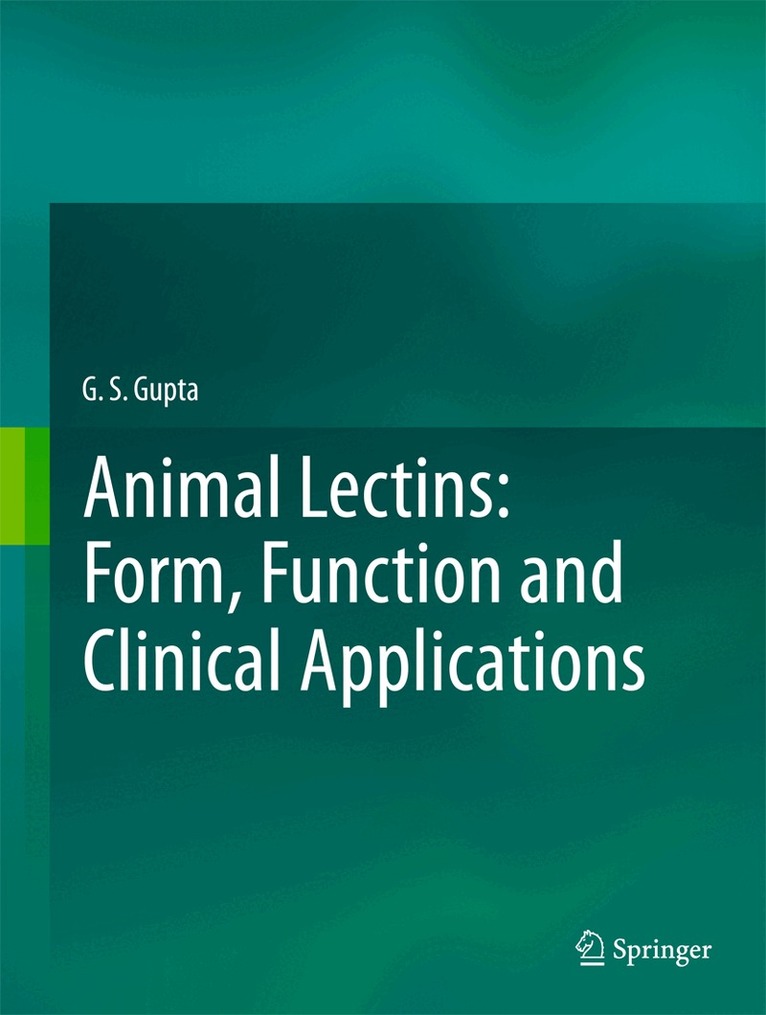
Animal Lectins: Form, Function and Clinical Applications presents up-to-date knowledge of animal lectins. Detailed descriptions on biological activities, tissue and/or subcellular distribution, molecular structure, gene organization, possible functions, clinical applications, lectin-ligand interactions and their intervention for therapeutic purposes are provided. The recently discovered C-type lectins as well as further novel super-families of this group of molecules are described in detail. Furthermore, the clinical significance of animal lectins in inflammatory diseases, defects of immune defense and autoimmunity are described and their application as drugs and therapeutic targets is discussed. With the increasing interest in lectins in biomedical research and their therapeutic applications, this book on animal lectins and associated proteins is a must have for researchers in the area.
E-bok
PDF, Engelska, 20123 923 kr
Läs direkt efter köp
Animal Lectins: Form, Function and Clinical Applications presents up-to-date knowledge of animal lectins. Detailed descriptions on biological activities, tissue and/or subcellular distribution, molecular structure, gene organization, possible functions, clinical applications, lectin-ligand interactions and their intervention for therapeutic purposes are provided. The recently discovered C-type lectins as well as further novel super-families of this group of molecules are described in detail. Furthermore, the clinical significance of animal lectins in inflammatory diseases, defects of immune defense and autoimmunity are described and their application as drugs and therapeutic targets is discussed. With the increasing interest in lectins in biomedical research and their therapeutic applications, this book on animal lectins and associated proteins is a must have for researchers in the area.
E-bok
Engelska, 20216 978 kr
Läs direkt efter köp
Veterinary pathologists are doctors of veterinary medicine who specialize in the diagnosis of diseases through the examination of animal tissue and body fluids. Like medical pathology, veterinary pathology is divided into two branches, anatomical pathology and clinical pathology. Veterinary pathologists are critical participants in the drug development process. Anatomical pathology ( Common wealth) or Anatomic pathology (U.S.) is concerned with the diagnosis of disease based on the gross, microscopic, and molecular examination of organs, tissues, and whole bodies (necropsy). The Indian, European, Japanese and American Colleges of Veterinary Pathologists certify veterinary pathologists through a certifying exam. The American College of Veterinary Pathologist certification exam consists of four parts - gross pathology, microscopic pathology, veterinary pathology (a review of the current literature), and general pathology. Only the general pathology section is shared between the anatomic and clinical pathology examinations. Anatomic pathologists are employed in a number of different positions, including diagnostics, teaching, research, and the pharmaceutical industry. Clinical pathology is concerned with the diagnosis of disease based on the laboratory analysis of bodily fluids such as blood and urine, using the tools of chemistry, microbiology, hematology and molecular pathology. The Indian, European, Japanese and American Colleges of Veterinary Pathologists certify veterinary clinical pathologists. The American College of Veterinary Pathologists certification exam consists of four parts: General Pathology (shared with the Anatomic Pathology certifying examination), Cytology and Surgical Pathology, Hematology, and Clinical Chemistry. The credential, DACVP (Diplomate, American College of Veterinary Pathologists) is usually followed by a parenthetical notation of (Clinical Pathology) to distinguish DACVP counterparts certified for anatomic pathology.

E-bok
Engelska, 20132 993 kr
Läs direkt efter köp
Surveillance And Monitoring Of Animal Diseases: National Perspective ¨ Research Intelligence In Animal Disease Epidemiology ¨ Collection And Despatch Of Clinical Samples For Laboratory Diagnosis Of Animal Diseases ¨ Serum Bank – Uitilities And Requirements ¨ Sampling Technique ¨ Sampling Frames ¨ Approaches For Recording Of Disease Outbreakss ¨ Glossary In Epidemiology ¨ Livestock Disease Outbreak Investigation ¨ Disease Informatics Risk Factors, Modeling And Analysis ¨ Measuring Economic Losses Due To Diseases In Livestock And Poultry An Overview ¨ Zoonoses At The Human-Animal Interface ¨ International Disease Surveillance And Networking For Emerging Infectious Diseases/Zoonoses ¨ Economic Impact Of Foot-And-Mouth Disease In India ¨ Geographical Information Systems: Concepts ¨ Approaches For Reporting Of Major Haemoprotozoan Diseases Of Domestic Ruminants For Surveillance ¨ Economic Analysis Modules For Animal Disease Impact Assessment ¨ Role Of Vectors In Vector Borne Diseases ¨ Case Studies On Vector Borne Zoonotic Diseases ¨ Animal Disease Information System With Special Reference To Tadinfo
E-bok
Engelska, 20011 939 kr
Läs direkt efter köp
A ''disease'' is any impairment of normal physiological function affecting all or part of an organism, especially a specific pathological change caused by infection, stress etc., producing characteristic symptoms. As such disease is a condition of the body or a part of it in which functions are disturbed or deranged. A disease may be caused by excess or deficiency or absence a disease agent which can be a substance or a force. The disease causing biological agents are called parasites and their study is called parasitology. Parasites have a direct impact on humans or on domesticated animals that is almost beyond comprehension. The world has become smalle1,and parasites can travel faster. In some instances our own changing social patterns have also created a more favourable environment for parasites. A variety of factors thus make parasitology a subject of increasing concern for the medical profession. No doubt, medical students and physicians as well as other paramedical professionals such as medical technologists, nurses and public health personnel should have a basic grounding in the diagnosis, prevention and treatment of human parasitic infection. The aim of the present work has been, and continues to be, to provide such fundamental information.
E-bok
PDF, Engelska, 20011 939 kr
Läs direkt efter köp
A ''disease'' is any impairment of normal physiological function affecting all or part of an organism, especially a specific pathological change caused by infection, stress etc., producing characteristic symptoms. As such disease is a condition of the body or a part of it in which functions are disturbed or deranged. A disease may be caused by excess or deficiency or absence a disease agent which can be a substance or a force. The disease causing biological agents are called parasites and their study is called parasitology. Parasites have a direct impact on humans or on domesticated animals that is almost beyond comprehension. The world has become smalle1,and parasites can travel faster. In some instances our own changing social patterns have also created a more favourable environment for parasites. A variety of factors thus make parasitology a subject of increasing concern for the medical profession. No doubt, medical students and physicians as well as other paramedical professionals such as medical technologists, nurses and public health personnel should have a basic grounding in the diagnosis, prevention and treatment of human parasitic infection. The aim of the present work has been, and continues to be, to provide such fundamental information.
E-bok
Engelska, 20011 939 kr
Läs direkt efter köp
A ''disease'' is any impairment of normal physiological function affecting all or part of an organism, especially a specific pathological change caused by infection, stress etc., producing characteristic symptoms. As such disease is a condition of the body or a part of it in which functions are disturbed or deranged. A disease may be caused by excess or deficiency or absence a disease agent which can be a substance or a force. The disease causing biological agents are called parasites and their study is called parasitology. Parasites have a direct impact on humans or on domesticated animals that is almost beyond comprehension. The world has become smalle1,and parasites can travel faster. In some instances our own changing social patterns have also created a more favourable environment for parasites. A variety of factors thus make parasitology a subject of increasing concern for the medical profession. No doubt, medical students and physicians as well as other paramedical professionals such as medical technologists, nurses and public health personnel should have a basic grounding in the diagnosis, prevention and treatment of human parasitic infection. The aim of the present work has been, and continues to be, to provide such fundamental information.
E-bok
Engelska, 20011 939 kr
Läs direkt efter köp
A ''disease'' is any impairment of normal physiological function affecting all or part of an organism, especially a specific pathological change caused by infection, stress etc., producing characteristic symptoms. As such disease is a condition of the body or a part of it in which functions are disturbed or deranged. A disease may be caused by excess or deficiency or absence a disease agent which can be a substance or a force. The disease causing biological agents are called parasites and their study is called parasitology. Parasites have a direct impact on humans or on domesticated animals that is almost beyond comprehension. The world has become smalle1,and parasites can travel faster. In some instances our own changing social patterns have also created a more favourable environment for parasites. A variety of factors thus make parasitology a subject of increasing concern for the medical profession. No doubt, medical students and physicians as well as other paramedical professionals such as medical technologists, nurses and public health personnel should have a basic grounding in the diagnosis, prevention and treatment of human parasitic infection. The aim of the present work has been, and continues to be, to provide such fundamental information.
E-bok
Engelska, 20011 871 kr
Läs direkt efter köp
A ''disease'' is any impairment of normal physiological function affecting all or part of an organism, especially a specific pathological change caused by infection, stress etc., producing characteristic symptoms. As such disease is a condition of the body or a part of it in which functions are disturbed or deranged. A disease may be caused by excess or deficiency or absence a disease agent which can be a substance or a force. The disease causing biological agents are called parasites and their study is called parasitology. Parasites have a direct impact on humans or on domesticated animals that is almost beyond comprehension. The world has become smalle1,and parasites can travel faster. In some instances our own changing social patterns have also created a more favourable environment for parasites. A variety of factors thus make parasitology a subject of increasing concern for the medical profession. No doubt, medical students and physicians as well as other paramedical professionals such as medical technologists, nurses and public health personnel should have a basic grounding in the diagnosis, prevention and treatment of human parasitic infection. The aim of the present work has been, and continues to be, to provide such fundamental information.