G S L H V Prasada Rao - Böcker
Visar alla böcker från författaren G S L H V Prasada Rao. Handla med fri frakt och snabb leverans.
4 produkter
4 produkter
2 619 kr
Skickas inom 7-10 vardagar
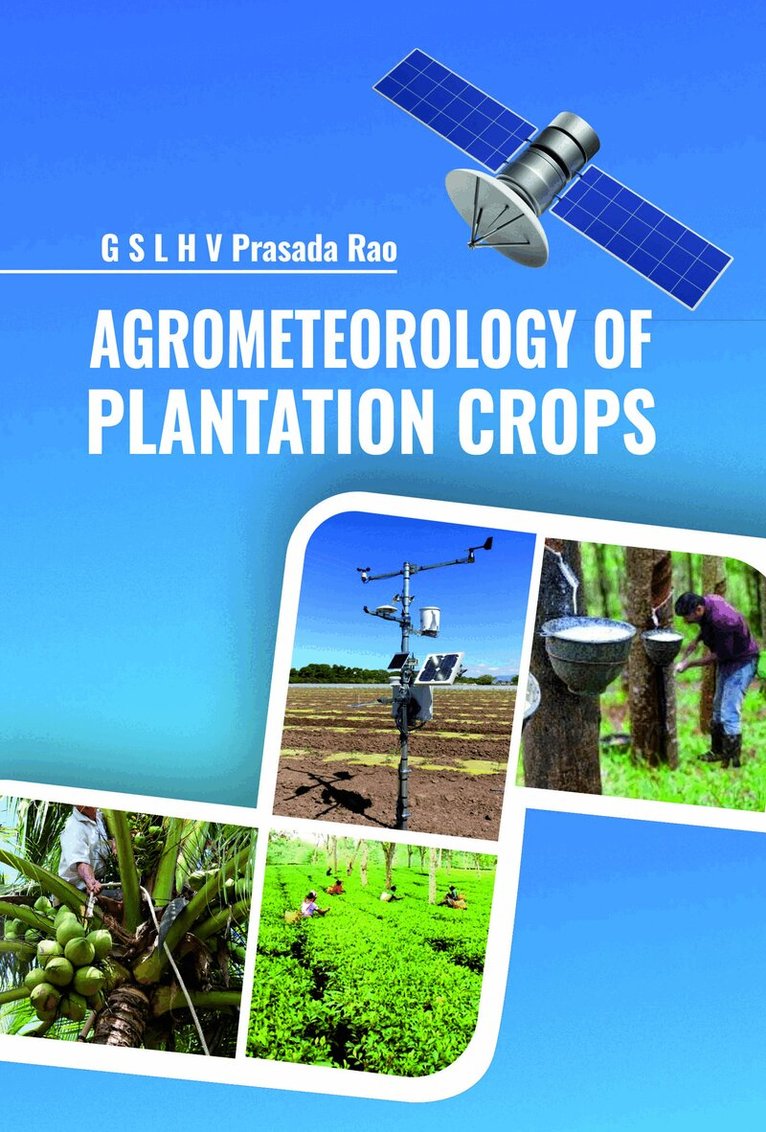
This book presents a comprehensive scientific analysis of agrometeorological parameters influencing the growth, yield, and quality of key plantation crops in Kerala, including coconut, cashew, coffee, tea, rubber, cardamom, cocoa, and black pepper.It investigates the complex interactions between altitude, temperature, rainfall, humidity, solar radiation, and wind dynamics, and their roles in shaping crop phenology, productivity, and spatial distribution. The work further addresses climate-induced stresses, seasonal variability, and the implications of extreme weather events on plantation ecosystems. Emphasis is placed on region-specific agrometeorological assessments, sustainable crop management strategies, and the integration of mixed cropping systems for climate resilience. Incorporating empirical research data, long-term climatological observations, and adaptive cultivation models, this publication serves as a critical reference for researchers, academicians, and professionals engaged in agrometeorology, plantation science, and climate-resilient agriculture.
2 961 kr
Skickas inom 7-10 vardagar
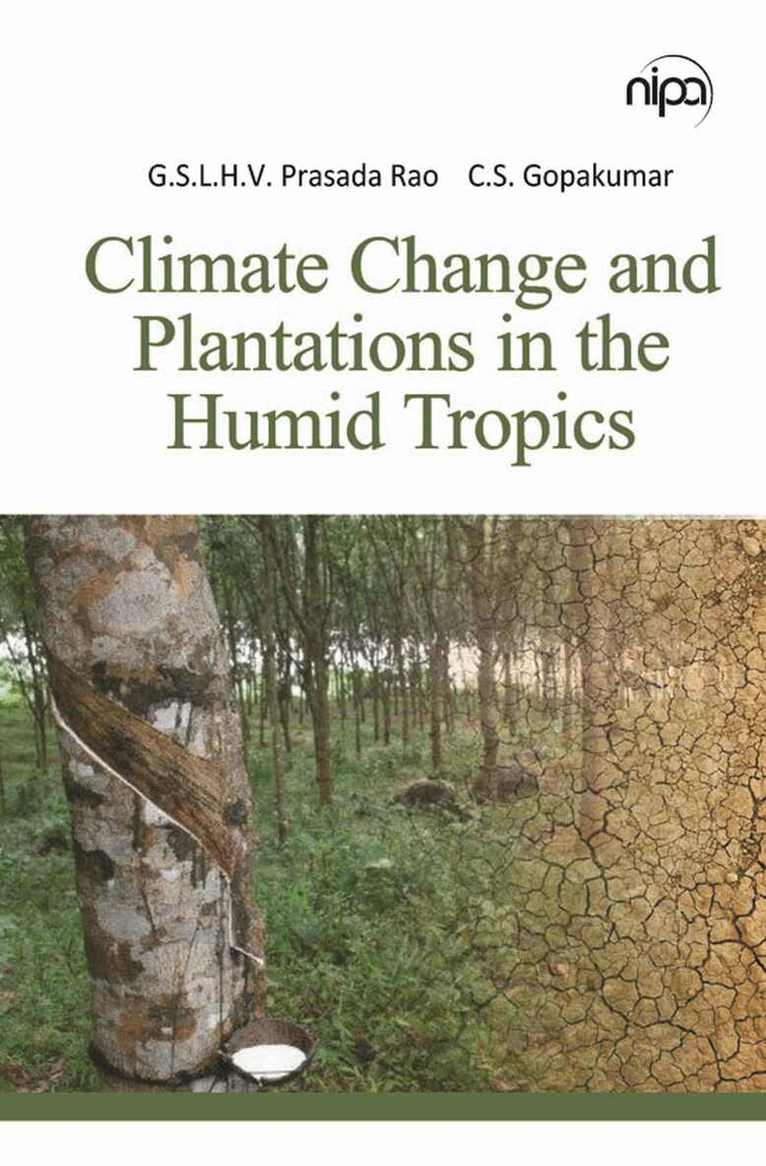
Weather and climate play a critical role in the production of plantation crops. While climate determines the suitability of a particular crop in a specific region, weather determines the yield attributes of the crop. The impacts of global warming and climate change on plantation crops are evident in the form of extreme weather events such as floods, droughts, heat waves, cold waves, and strong cyclonic winds. The frequency of these events is likely to increase in the coming decades, as evidenced by the years 1998, 2003, 2005, 2007, 2009, 2010, 2012, 2014, and 2015. The economic viability of plantations in the future is at risk due to the increased variability of the climate. The decline in monsoon rainfall and the number of rainy days, the increase in day and night maximum and minimum ambient air temperatures, the decline in groundwater table and wetland area, the decline in surface water resources, the increase in forest fires and the decline in forest area, the increase in landslides during both monsoon seasons, the indiscriminate sand mining from river beds, and the unscientific land filling are significant climate change-related issues in the Humid Tropics.
3 092 kr
Skickas inom 7-10 vardagar
Animal husbandry is strongly influenced by weather and climate. Climate change/variability imposes multiple stresses in animals and thus vital to understand the impact of environmental stress on livestock production and reproduction. Among the environmental variables affecting livestock, heat stress seems to be one of the more intriguing factors making difficult animal reproduction and production. Information and knowledge on animal responses to the environment continues to be in process, managing livestock to reduce the impact of adverse weather and climate remains a challenge. Responding to the challenges of global warming necessitate a paradigm shift in the practice of agriculture and in the role of livestock within the farming system. The key thematic issues on environment stress and livestock production includes: early warning system, multiple stress research, exploitation of genetic potential of native breeds, suitable breeding programme and nutritional intervention research. Livestock farmers should have key roles in determining what adaptation and mitigation strategies they support if these have to sustain livestock production in changing climate. The integration of new technologies into the research and technology transfer systems potentially offers many opportunities to further the development of climate change adaptation strategies. This publication is therefore a multi-authored attempt to present the scientific fraternity high quality resource material in the field of climate change and livestock production. Attempts were made to discuss the adaptive mechanism that the animal exhibits to counteract the adverse effects of heat stress. In addition to the adaptive mechanisms, several management and feeding practices have also been established as tested methods for reduction of stress effects in livestock. It also highlights the challenges the livestock industry faces in maintaining the delicate balance between animal welfare and production. This book is a comprehensive resource for the researchers, teachers and students to understand stress, stress management and livestock productivity so as to sustain animal production in the Country under projected climate change scenario.
2 803 kr
Skickas inom 7-10 vardagar
Climate change is a gradual phenomenon that takes millions of years to occur and has made the Earth habitable for living beings. It is a global issue that affects various regions, including the United States, Canada, and Texas, where droughts and floods are common. Climate change poses a threat to agriculture, making it difficult to predict its impact on various systems.Agroforestry is a sustainable land use practice that increases diversity in agricultural lands, providing ecological and production services that enhance resilience to the impact of climate change mitigation and adaptation. Agroforestry offers a way to manage the risk of climate change in annual cropping systems by providing crop diversification and increased resource use efficiency.Deep-rooted trees in agroforestry systems help access nutrients and water during droughts, allowing for better use of resources. Agroforestry practices increase soil porosity, reduce runoff, and increase soil cover, which enhance water infiltration and reduce moisture stress during low rainfall periods. During periods of excessive soil moisture, tree-based systems help aerate the soil by pumping out excess water, offering economic benefits.