Gabriella Muscolo – författare
2 340 kr
Läs direkt efter köp
2 228 kr
Läs direkt efter köp
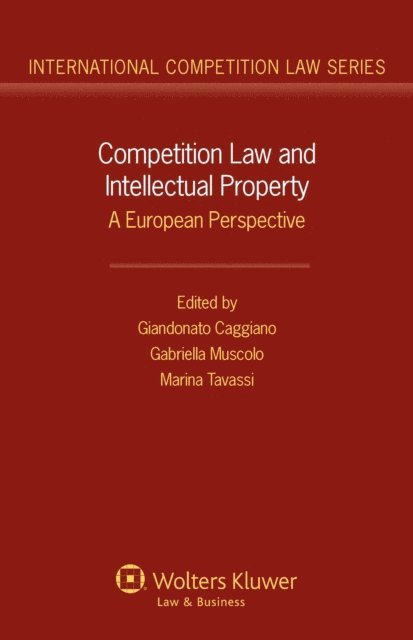
Although competition law and intellectual property are often interwoven, until this book there has been little guidance on how they work together in practice. As the intersection between the two fields continues to grow worldwide, both in case law and in regulation, the book''s markets-based approach, focusing on sectors such as pharmaceuticals, IT, telecoms, energy and agriculture in eleven of the world''s most active jurisdictions, provides a much-needed in-depth understanding of how this interplay reveals itself among the different legal systems.
Written by a range of authors including judges, regulators, academics, economists and practitioners in both fields, the book provides an international comparative perspective as well as detailed analysis of specific cases, policies and proposals for change. Among the issues and topics covered are the following:
– free movement of goods and the protection of intellectual property rights;– standard essential patents & injunction in patent cases;– intellectual property rights between technological development and consumer protection;– geo-blocking;– online platforms and antitrust;– excessive prices.In this context, special attention is paid throughout to the increasing dialogue among Competition Authorities and between Judges and Competition Authorities around the world. As matchless remedy for the lack of uniformity heretofore, the book''s investigation of the nexus between competition law and intellectual property in different sectors and in various countries takes a giant step towards a more-balanced approach and more-levelled regulation and practices. It will be warmly appreciated by policy makers, decision makers, regulators, practitioners and academics in both competition law and intellectual property fields
2 150 kr
Läs direkt efter köp
Although competition law and intellectual property are often interwoven, until this book there has been little guidance on how they work together in practice. As the intersection between the two fields continues to grow worldwide, both in case law and in regulation, the book''s markets-based approach, focusing on sectors such as pharmaceuticals, IT, telecoms, energy and agriculture in eleven of the world''s most active jurisdictions, provides a much-needed in-depth understanding of how this interplay reveals itself among the different legal systems.
Written by a range of authors including judges, regulators, academics, economists and practitioners in both fields, the book provides an international comparative perspective as well as detailed analysis of specific cases, policies and proposals for change. Among the issues and topics covered are the following:
– free movement of goods and the protection of intellectual property rights;– standard essential patents & injunction in patent cases;– intellectual property rights between technological development and consumer protection;– geo-blocking;– online platforms and antitrust;– excessive prices.In this context, special attention is paid throughout to the increasing dialogue among Competition Authorities and between Judges and Competition Authorities around the world. As matchless remedy for the lack of uniformity heretofore, the book''s investigation of the nexus between competition law and intellectual property in different sectors and in various countries takes a giant step towards a more-balanced approach and more-levelled regulation and practices. It will be warmly appreciated by policy makers, decision makers, regulators, practitioners and academics in both competition law and intellectual property fields
3 068 kr
Läs direkt efter köp
The apparent contradiction between intellectual property (IP) rights (particularly patents) and competition is often noted: in ostensibly aiming to promote innovation and long-term competition, the patent system in fact provides a temporary right to exclude. Is it possible to adjust patent policies to better account for the trade-off between static and dynamic welfare, and minimize the risks of anticompetitive behaviour implemented through the misuse of patents? With a focus on the pharmaceutical sector, this book, the first to deal with this issue on a global basis, tackles the clashes of case law by Courts and antitrust enforcement by competition authorities that undermine the predictability of solutions to this problem and increase the risk of fundamental rights violations and excessive transitional costs for enterprises.
Examining the approaches to both competition and IP regulation in fourteen leading jurisdictions, the analysis provides a comparative perspective on recent relevant regulations and case law in the pharmaceutical sector. Thirty-one contributions by internationally known experts in both fields – judges in specialized courts, chairmen and board members of national competition authorities, and well known scholars and practitioners – focus on the salient topics and on the interplay between patent law and competition law, with an insight into the human rights issues that arise. Among the topics covered are the following:
- balancing the human right to health with competition law and IP law;- patent lifecycle strategies;- reverse payment settlements;- abusive litigation;- damages for patents and antitrust infringements;- co-marketing and co-promotion agreements; and- the role of the Unified Patent Court.The jurisdictions covered are Brazil, Canada, China, France, Germany, Greece, India, Italy, Japan, the Netherlands, Russia, South Africa, the United Kingdom, and the United States.
The book’s ultimate and challenging proposal identifies the pharmaceutical sector itself as a starting point for reshaping a more procompetitive and harmonized system of regulation.
In its dedication to striking the right balance between static (short-term) and dynamic (long-term) efficiency, and thus opening the way to a more balanced approach and a higher standard of harmonization in the pharmaceutical sector, this book has no peers.
As a detailed comparative analysis and clarification of current trends worldwide in regulation and jurisprudence at the crossroads between IP and competition law, it suggests new ground for steps forward in an essential area for modern economies. It will be of great value to lawyers, economists, and policymakers in both fields of IP and competition law.
2 779 kr
Skickas inom 5-8 vardagar
2 366 kr
Läs direkt efter köp
International Competition Law Series [ICLS], Volume 89
Designed to deter anticompetitive conduct and to ensure full compensation for loss and damage caused by competition infringements, the Antitrust Damages Directive has become a crucial factor in companies’ risk management planning. This first book of its kind offers a comparative overview, practical and authoritative, of the implementation and application of private enforcement rules in each EU Member State as well as in the post-Brexit United Kingdom, covering legislation and case law to date. For leading jurisdictions where practice is already well developed, there are more detailed chapters, with perspectives of judges, competition authorities, practitioners, and economists.
The contributors – all experts in the use of EU competition law in their respective jurisdictions – cover the provisions of the Directive in detail, including the following:
requirement of full compensation;
rules preventing overcompensation;
court’s power to estimate damages that cannot be precisely quantified;
joint and several liability for infringing undertakings;
coordination between public and private enforcement;
provisions related to passing-on;
certain rules on admissibility of evidence;
rules on limitation periods; and
consensual dispute resolution.
In its detailed explanations of shared best practices and its highlighting of opportunities for convergence, the book provides much-needed insight into judicial practice and thinking, the economic approaches and strategies relevant to damages, and the coordination between public and private enforcement. These expert views will prove invaluable for practitioners wishing to see how the law and practice might evolve in their own jurisdictions, as well as into the problems that have arisen or might arise in the future.
2 452 kr
Läs direkt efter köp
International Competition Law Series [ICLS], Volume 89
Designed to deter anticompetitive conduct and to ensure full compensation for loss and damage caused by competition infringements, the Antitrust Damages Directive has become a crucial factor in companies’ risk management planning. This first book of its kind offers a comparative overview, practical and authoritative, of the implementation and application of private enforcement rules in each EU Member State as well as in the post-Brexit United Kingdom, covering legislation and case law to date. For leading jurisdictions where practice is already well developed, there are more detailed chapters, with perspectives of judges, competition authorities, practitioners, and economists.
The contributors – all experts in the use of EU competition law in their respective jurisdictions – cover the provisions of the Directive in detail, including the following:
requirement of full compensation;
rules preventing overcompensation;
court’s power to estimate damages that cannot be precisely quantified;
joint and several liability for infringing undertakings;
coordination between public and private enforcement;
provisions related to passing-on;
certain rules on admissibility of evidence;
rules on limitation periods; and
consensual dispute resolution.
In its detailed explanations of shared best practices and its highlighting of opportunities for convergence, the book provides much-needed insight into judicial practice and thinking, the economic approaches and strategies relevant to damages, and the coordination between public and private enforcement. These expert views will prove invaluable for practitioners wishing to see how the law and practice might evolve in their own jurisdictions, as well as into the problems that have arisen or might arise in the future.
3 220 kr
Tillfälligt slut