Gail Hart – författare
Visar alla böcker från författaren Gail Hart. Handla med fri frakt och snabb leverans.
6 produkter
6 produkter
E-bok
Engelska, 202157 kr
Läs direkt efter köp
This is a book of Poetry written for the author's peace of mind. It contains sections on her opinions, observations and actual incidents from her life. Having had a near death experience she was driven to put something of herself into these written words of poetry. Recording a part of her psyche, her inner spirit, basically, her soul, so not only her children and grandchildren would know who she was but, for someone from a future generation who may pick up the book and read her thoughts and maybe wonder what made this lady tick?The Poems seem to be a little Morbid, but that is how she envisions her life and the world around her. In a couple of her poems, she takes a stab at hopefulness, but it does not ring true to her ear. e.g. (Like New Beginnings) She cannot seem to find the goodness in mankind, which she is so desperately seeking e.g. (Destruction), (Death By Hand) and (Murder). You can feel her anguish and despair for the human race, in her words. It is sad to know there are starving, homeless people in the world; but it is also so very sad to read about so much desperation in the hearts of those who want only Peace on this Planet. The Book is a heartfelt rendition of One Woman s Long and Lonely Walk through Life.
Häftad, Engelska, 2021
209 kr
Skickas inom 5-8 vardagar
Inbunden, Engelska, 2021
350 kr
Skickas inom 5-8 vardagar
Del 80 - German Studies in America
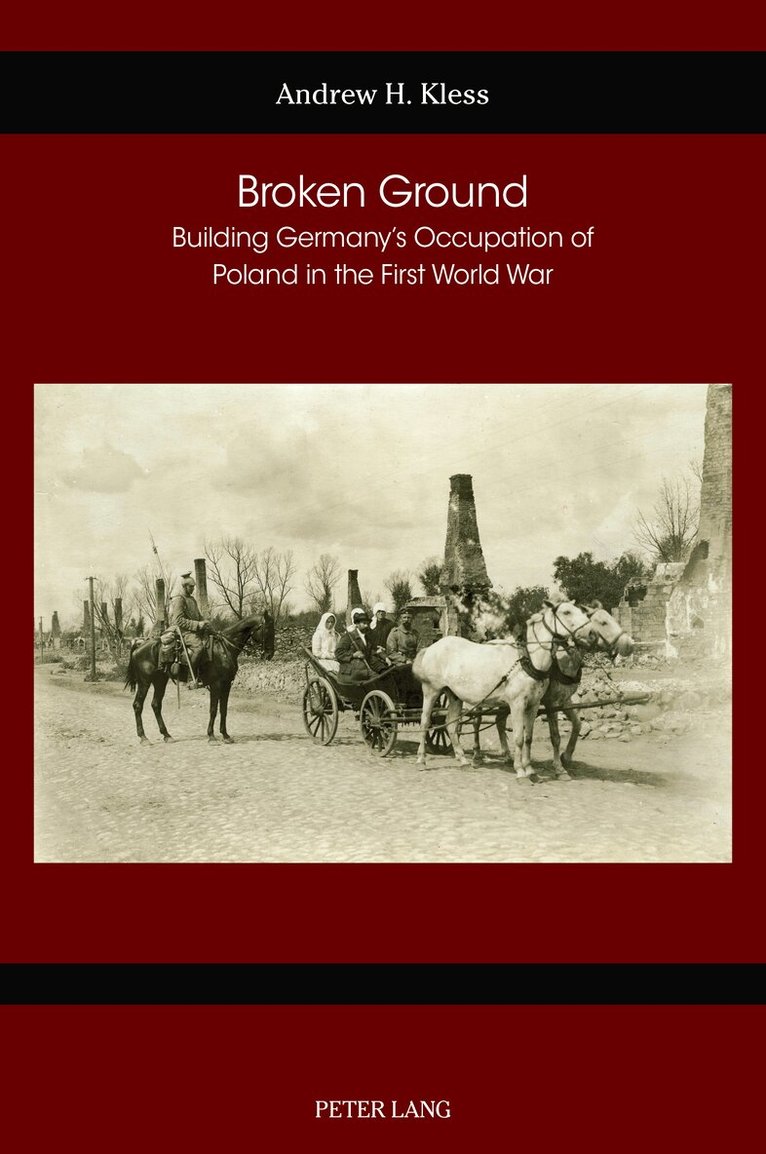
Broken Ground
Building Germany’s Occupation of Poland in the First World War
Häftad, Engelska, 2025
634 kr
Skickas inom 5-8 vardagar
«Based on extensive archival sources, this book provides a much-needed look behind the surface of the Imperial German state at war. In contrast to the image of a rapacious and finely tuned war machine, Kless illustrates the frictions, uncertainties, and rivalries that marked Germany’s often confused attempts to create an occupation regime in Poland.»(Dr. Jesse Kauffman, Professor, Eastern Michigan University)«Occupations are often described in terms of their consequences, with the beginnings being neglected. Andrew Kless shows how an occupation in Russian Poland came into being during a critical time in the First World War—it emerged from the ground. He therefore fills an important gap in research.»(Dr. Christian Westerhoff, Director, Library for Contemporary History (Bibliothek für Zeitgeschichte) Landesbibliothek Baden-Württemberg, Stuttgart)Broken Ground captures Germany’s tumultuous first year of the First World War, as it built an occupation administration from scratch between August 1914 and August 1915. Borderlands of the German, Russian, and Austro-Hungarian Empires became battlegrounds. The German army, struggling to maintain order in a thin strip of war-ravaged, ethnically Polish territory seized from Russia, called for the aid of bureaucrats from the German Kingdom of Prussia to form the Civil Administration for Russian Poland. With few resources, the civilian administrators relied on independent Polish citizens committees and militias to maintain order and called upon the American Rockefeller Foundation to intervene philanthropically to provide food aid. Despite these immense challenges, the enterprising administrators built an enduring occupation administration. They created new offices and departments from finance to forestry, mining to medical. They hired wounded soldiers and aged university professors and self-funded their operation through taxes and tariffs. Their growth was not a directive of Berlin but a product of their own ambition. After the May 1915 Gorlice-Tarnów Offensive and capture of Warsaw, the Civil Administration was adopted into Germany’s German General Government of Warsaw entirely. The broken ground of the first year of war guided the remainder of Germany’s occupation of Poland in the First World War.This book project was the Joint Winner of the 2020 Peter Lang Young Scholars Competition for German Studies in America.
Del 79 - German Studies in America
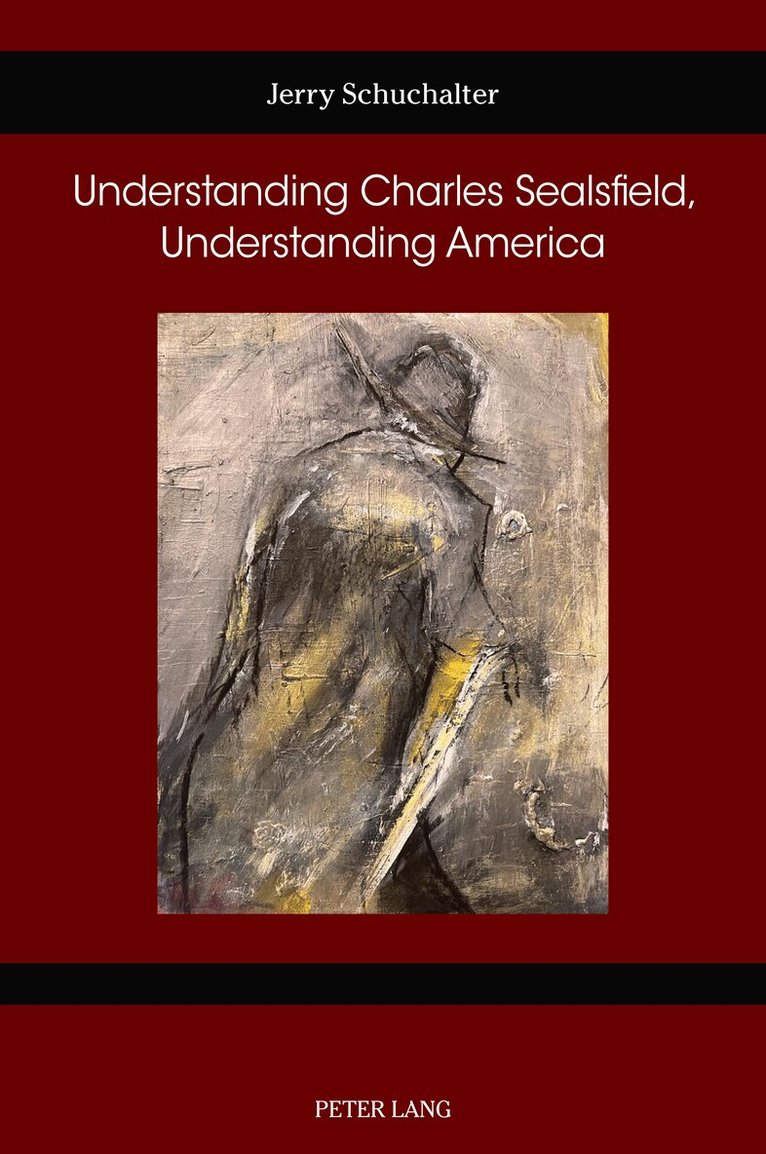
Understanding Charles Sealsfield, Understanding America
Häftad, Engelska, 2023
816 kr
Skickas inom 5-8 vardagar
«Schuchalter’s comprehensive study of the enigmatic author Charles Sealsfield is a welcome contribution to German-American studies. He convincingly explains the development of Sealsfield’s political philosophy: After having fled Europe, the former Catholic priest discovered liberalism and saw its promises fulfilled in the New World before getting disgruntled with actual developments in the USA since the late 1830s.»(Wynfrid Kriegleder, Professor of Modern German Literature, University of Vienna)This work explores the literary phenomenon of Charles Sealsfield, known throughout much of his career as «the Great Unknown» and for a brief time as «Seatsfield, the Greatest American Author.» Sealsfield, a runaway Moravian monk, living in permanent disguise, reinvented himself as an American author and the self-proclaimed founder of a new novel form. Despite publishing works both in English and in German, he has been relegated to a marginalized, if not forgotten, place in the American canon and a constricted place in the German canon. This study examines his fiction and travel books, as well as his correspondence, and strives for a reassessment of his achievement in both canons.
Del 5 - Berliner Beitraege zur Literatur- und Kulturgeschichte
Theology and Dehumanization
Trauma, Grief, and Pathological Mourning in Seventeenth and Eighteenth-Century German Thought and Literature. Edited by Gail K. Hart in Collaboration with Ursula Mahlendorf, Thomas P. Saine and Hans Medick
Inbunden, Engelska, 2009
767 kr
Skickas inom 5-8 vardagar
In this posthumous volume Jill Anne Kowalik analyzes pathological grief in 17th and 18th-century Germany. Early chapters outline the methodological prerequisites and the main theoretical underpinnings for her multidisciplinary study of mentality and give an overview of the theories and practices of consolation in the Western tradition. She traces the origins of pathological grief to the trauma of the Thirty Years War, and analyzes mourning practices as evidenced by funeral sermons for their punitive theological content. Rather than helping, these practices actually intensified the trauma of loss. The second part of the volume addresses the work of German writers such as Moritz, Nietzsche, Freud, and Goethe for their psychologically acute depiction of the effects of pathological mourning.