Gareth Darbyshire – författare
Visar alla böcker från författaren Gareth Darbyshire. Handla med fri frakt och snabb leverans.
3 produkter
3 produkter
911 kr
Skickas inom 5-8 vardagar
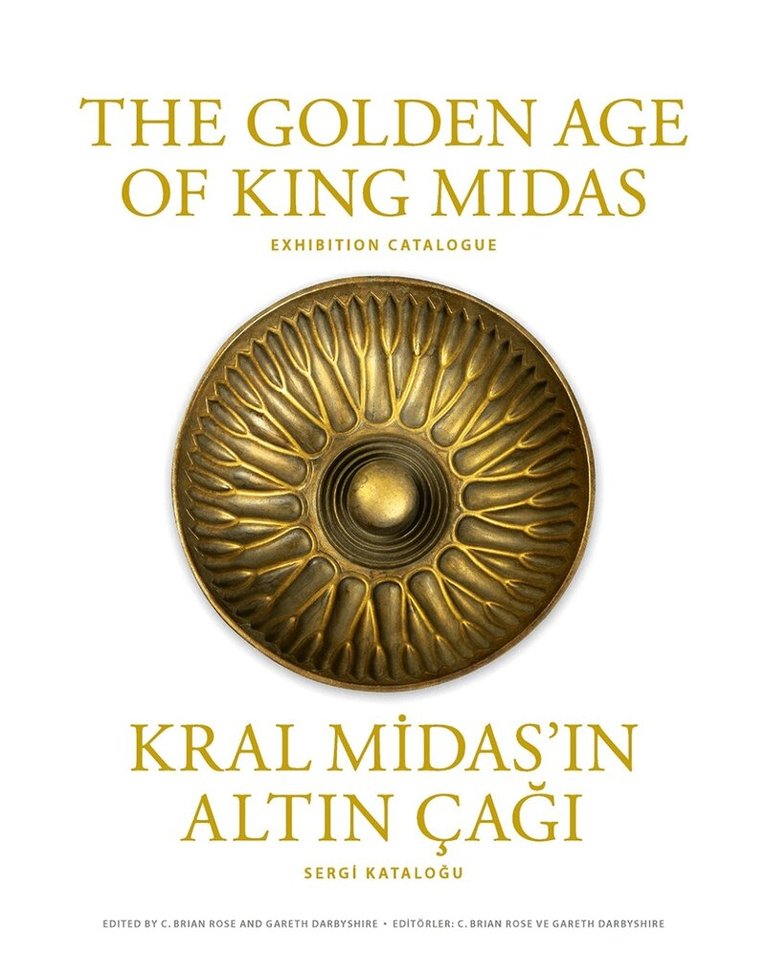
Gordion is frequently remembered as the location of an intricate knot ultimately cut by Alexander, but in antiquity it served as the center of the Phrygian kingdom that ruled much of Asia Minor during the early millennium B.C.E. The site lies approximately seventy kilometers southeast of Ankara in central Turkey, at the intersection of the great empires of the East (Assyrians, Babylonians, and Hittites) and the West (Greeks and Romans). Consequently, it occupied a strategic position on nearly all trade routes that linked the Mediterranean and the Near East. The University of Pennsylvania has been excavating at Gordion since 1950, unearthing a wide range of discoveries that span nearly four millennia. The vast majority of these artifacts attests to the city's interactions with the other great kingdoms and city states of the Near East during the Iron Age and Archaic periods (ca. 950-540 B.C.E.), especially Assyria, Urartu, Persia, Lydia, Greece, and the Neo-Hittite city-states of North Syria, among others. Gordion is thus the ideal centerpiece of an exhibition dealing with Anatolia and its neighbors during the first millennium B.C.E. Through a special agreement signed between the Republic of Turkey and the University of Pennsylvania, Turkey has loaned the Penn Museum more than one hundred artifacts gathered from four museums in Turkey (Ankara, Gordion, Istanbul, and Antalya) for an exhibition titled The Golden Age of King Midas. The exhibition features most of the material recovered in Tumulus MM, or the "Midas Mound" (ca. 740 B.C.E.), which was the burial site of King Midas's father, as well as a number of objects found in a series of Lydian tombs. The Turkish loan has made possible a uniquely comprehensive and elaborate exhibition that also features a disparate group of rarely seen objects from the Penn Museum's own collections, particularly from sites in the Ukraine, Iran, Iraq, Turkey, and Greece. With the historic King Midas (ca. 740-700 B.C.E.) as its guiding theme, the exhibition illuminates the relationships Phrygia maintained with Lydia, Persia, Assyria, and Greece. The accompanying catalog includes full-color illustrations and essays that expound on the sites and objects of the exhibition.
Del 133 - The New Chronology of Iron Age Gordion
New Chronology of Iron Age Gordion
Inbunden, Engelska, 2011
1 033 kr
Skickas inom 5-8 vardagar
The New Chronology of Iron Age Gordion argues that the history and archaeology of the site of Gordion, in central Turkey, have been misunderstood since the beginning of its excavation in the 1950s. The first excavation director, Rodney Young, found evidence for substantial destruction during the first decade of fieldwork; this was interpreted as proof that Gordion had been destroyed ca. 700 B.C. by the Kimmerians, a group of invaders from the Caucusus/Black Sea region, as attested in several ancient literary sources. During the last decade, however, renewed research on the archaeological evidence, within, above, and below the destruction level indicated that the catastrophe that destroyed much of Gordion occurred 100 years earlier, in 800 B.C., and was the result of a fire that quickly got out of control rather than a foreign invasion. This discovery requires a reassessment of Anatolian history during the entire first millennium B.C. and has serious implications for our understanding of the surrounding regions, such as Assyria, Syria, Greece, and Urartu, among others. The New Chronology of Iron Age Gordion is the product of a multidisciplinary research program, with dendrochronology and radiocarbon dating working hand in hand with textual and artifact analysis, each of which is treated in a separate chapter in this volume. All of these categories of evidence point to the same conclusion and demonstrate that we need to look at Gordion, and much of the ancient Near East, in a completely new way.
Gordion Excavations, 1950–1973 – Final Reports Volume II; The Lesser Phrygian Tumuli Part 2 The Cremations
Final Reports Volume II; the Lesser Phrygian Tumuli Part 2 the Cremations
Inbunden, Engelska, 2023
1 808 kr
Skickas inom 5-8 vardagar
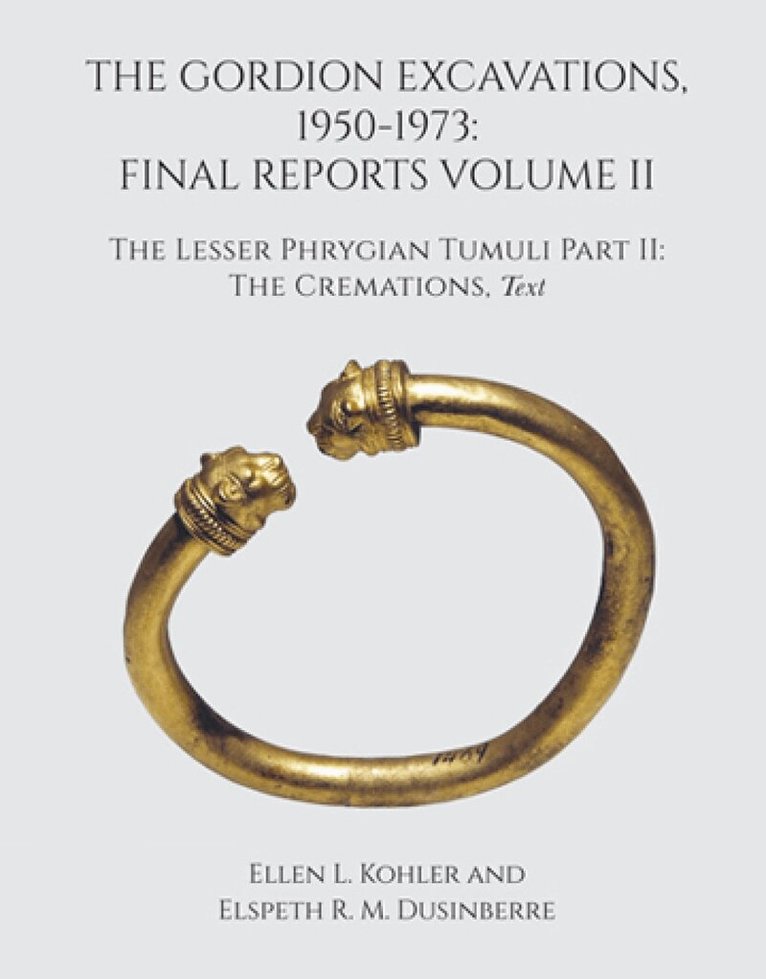
This volume contains the excavation report for 12 cremation burials from the Phrygian site of Gordion in central Anatolia. These tombs, dating from the later seventh century to the third quarter of the 6th century BCE, were excavated by The University Museum between 1950 and 1969, and by the German brothers Alfred and Gustav K÷rte in 1900. The processes for interment through construction of tumulus and cremation procedure are carefully detailed, followed by an analysis of associated finds. Two tumuli of the Hellenistic period, both covering stone chambers with inhumation burials within, are included in an appendix. Further appendices discuss other specific materials excavated from the cremation burials. A discussion of the contemporary inhumation and cremation tumulus burials at Gordion in the Phrygian period, highlighting their continuities and significant differences, forms part of the conclusion, as does discussion of sociocultural developments at Gordion between ca. 650-525 BCE as illuminated by the mortuary remains. The tumuli afford insights into questions related to gender, religion, adult/child identity, trade, social status, ethnicity, transcultural affiliations, ceramic developments, jewelry manufacture, high-status artifact display (including ivory), feasting behaviors, animal sacrifice, hero cult, and widespread "killing" of artifacts associated with the cremation burials. This entirely new publication of Gordion's tumuli makes available at last the elite cremation burials of the later Middle and early Late Phrygian (Achaemenid) periods excavated by The University Museum. By including the two K÷rte tumuli, it provides a complete assemblage of the cremation tumuli at Gordion. They afford remarkable new insights into life, death, and an elaborate system of value at Gordion during this most turbulent century.