Gary T. Gardner - Böcker
Visar alla böcker från författaren Gary T. Gardner. Handla med fri frakt och snabb leverans.
2 produkter
2 produkter
239 kr
Skickas inom 5-8 vardagar
Human demands are pressing up against more and more of the Earth's limits. This book from the Worldwatch Institute examines the impacts of population growth on global resources and services, including food, fresh water, fisheries, jobs, education, income, and health. Despite the current hype of a "birth dearth" in parts of Europe and Japan, the fact remains that human numbers are projected to increase by over 3 billion by 2050. Rapidly growing nations are likely to outstrip the carrying capacity of their natural support systems. Governments worn down by several decades of rapid population growth often cannot mobilize the resources necessary to cope with emerging threats such as new diseases, food and water shortages, and mass unemployment. Already, in several African nations, hunger, disease, and social disintegration are leading to rising death rates, checking the rapid growth of population. Either nations with surging populations will quickly shift to smaller families or nature will impose its own, less humane limits to growth. As the world enters the new millennium, no challenge is perhaps so urgent as the need to quickly reduce population growth. Pakistan's population is projected to increase from 148 million to 357 million, surpassing that of the United States before 2050. Zimbabwe, Botswana, Zambia, Namibia, and Swaziland, where over one-fifth of the adult population is infected with HIV, will likely reach population stability shortly after the year 2000, as AIDS-related deaths offset soaring birth rates. A Worldwatch Environmental Alert book. Newsmaking press conference on publication National press and television coverage
245 kr
Skickas inom 5-8 vardagar
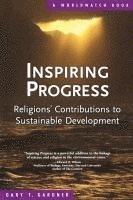
The absence of strong spiritual and ethical dimensions in twentieth-century development helped to produce one of the most violent, environmentally impoverished, and economically unequal centuries in human history. Ethical and spiritual contributions in the twenty-first century are needed to rectify these pitfalls. Religions can help societies to wrestle with the bedrock question of societal advancement: What does it mean to be a developed society? In doing so, religious traditions help to create the new worldviews needed to build sustainable civilizations in the new century. Fortunately, many religious traditions are awakening to their vital role. Inspiring Progress identifies the value that religions add to the debate about societal advancement, and it encourages the world’s religious traditions to step up their involvement in shaping the development path of the human family in the twenty-first century.