Gavin Hughes – författare
Visar alla böcker från författaren Gavin Hughes. Handla med fri frakt och snabb leverans.
3 produkter
3 produkter
E-bok
Engelska, 201362 kr
Läs direkt efter köp
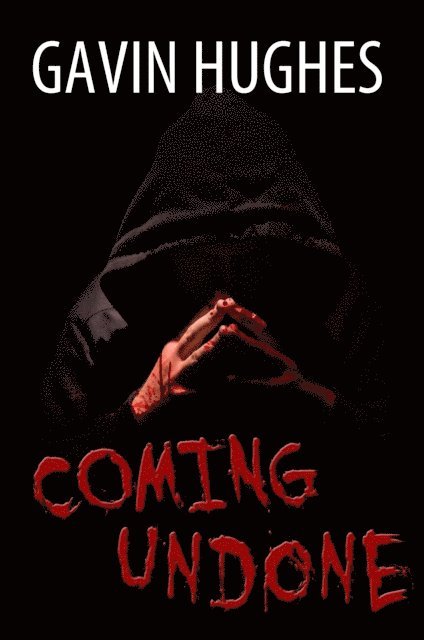
Dan Weston is a simple, hard working family man. That quickly and violently changes when he is forced to watch the senseless murder of his wife and child at the hands of demons hiding in human form. As the man/demon responsible toys with Weston as if he were a simple pawn, Weston swears a vow of vengeance on all of the demon kind. With nothing left to lose, he immerses himself in the dangerous world of preternatural creatures.On his quest to find some inner peace, Weston begrudgingly accepts help from the beautiful demon, Lucy. He finds comfort in conversations with an old war vet and Weston's longtime friend, Father Robert tries to right Weston's sinking ship of morality.In a battle that seems to be stacked against Weston, he fights not only for the memory of his wife and child, but also to keep from losing his humanity and becoming a monster himself.
Häftad, Engelska, 2026
262 kr
Kommande
Del 33 - Reimagining Ireland
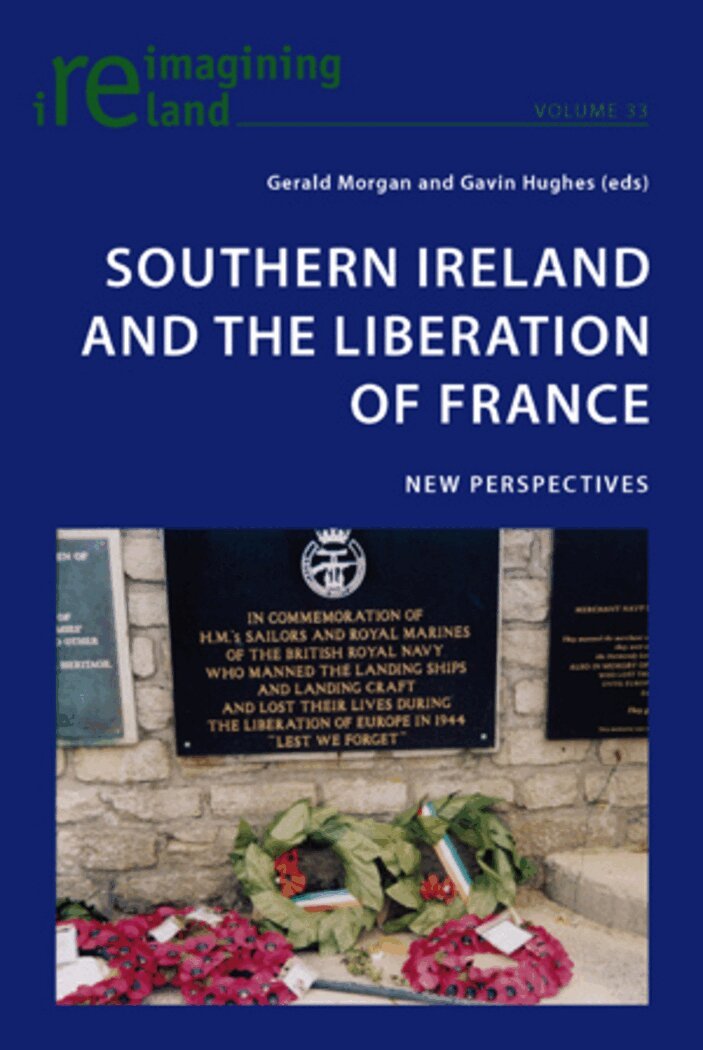
Southern Ireland and the Liberation of France
New Perspectives
Häftad, Engelska, 2010
641 kr
Skickas inom 5-8 vardagar
This collection of essays sets out to correct an injustice to citizens of the Irish Free State, or Twenty-Six Counties, whose contribution to the victory against Nazi Germany in the Second World War has thus far been obscured. The historical facts reveal a divided island of Ireland, in which the volunteers from the South were obliged to fight in a foreign (that is, British) army, navy and air force. Recent research has now placed this contribution on a secure basis of historical and statistical fact for the first time, showing that the total number of Irish dead (more than nine thousand) was divided more or less equally between the two parts of Ireland.The writers in this volume establish that the contribution by Ireland to the eventual liberation of France was not only during the fighting at Dunkirk in 1940 and in Normandy in 1944, but throughout the conflict, as revealed by the list of the dead of Trinity College Dublin, which is examined in one chapter. Respect for human values in the midst of war is shown to have been alive in Ireland, with chapters examining the treatment of shipwreck casualties on Irish shores and the Irish hospital at Saint Lô in France. Other essays in the volume place these events within the complex diplomatic network of a neutral Irish Free State and examine the nature and necessity of memorial in the context of a divided Ireland.