G.E.A. Meier – författare
Visar alla böcker från författaren G.E.A. Meier. Handla med fri frakt och snabb leverans.
8 produkter
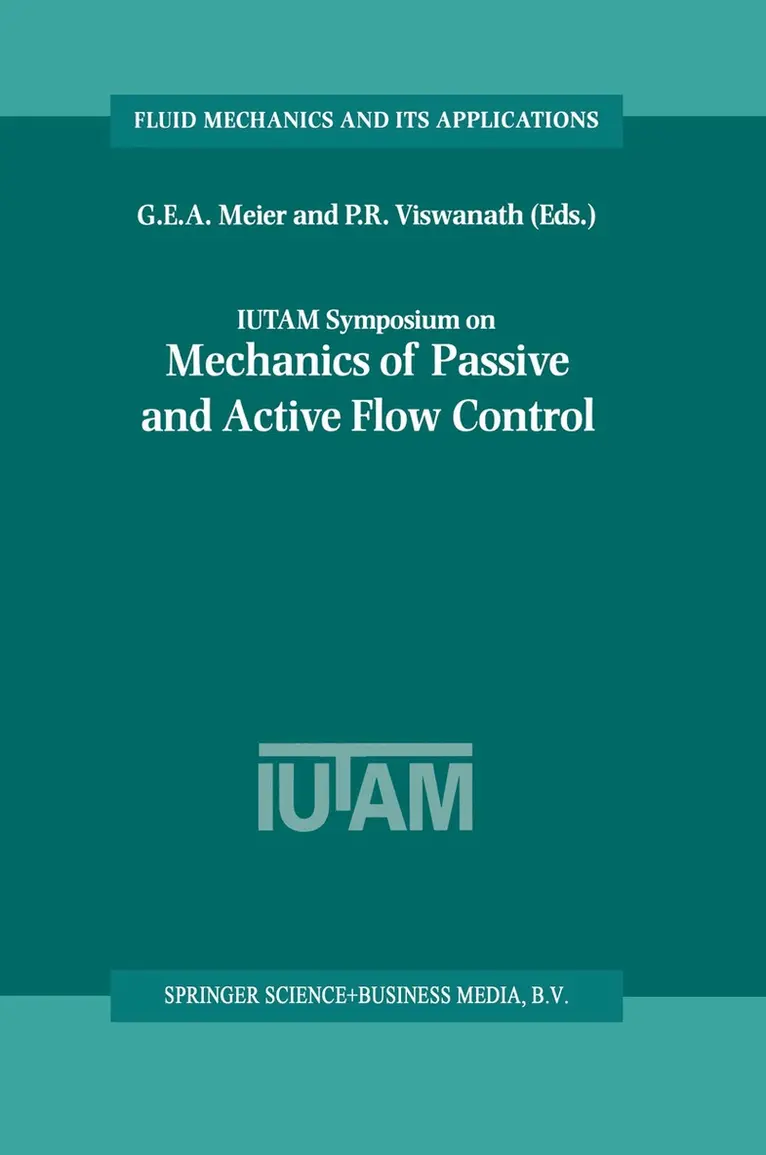
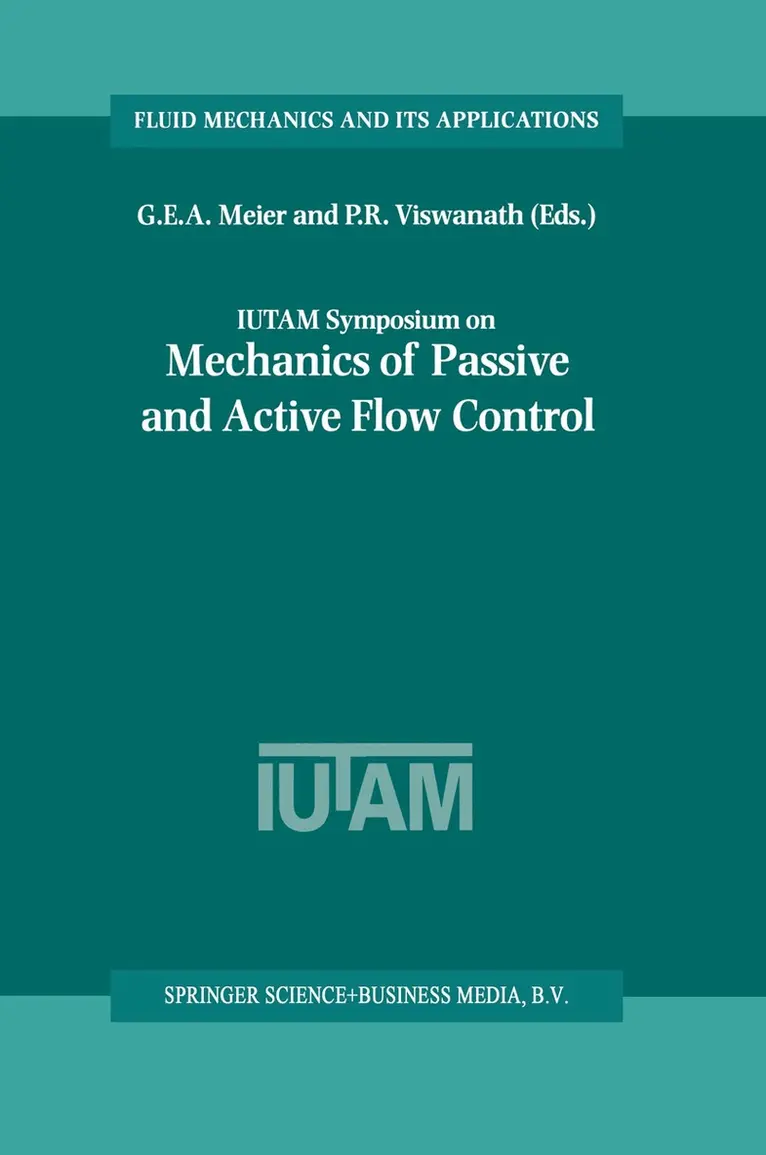
IUTAM Symposium on Mechanics of Passive and Active Flow Control
Proceedings of the IUTAM Symposium held in Göttingen, Germany, 7–11 September 1998
Av G.E.A. Meier, P.R. Viswanath
Inbunden, 1999
1636 kr
Lägg i varukorg
The call for papers for the rUTAM-Symposium on Mechanics of Passive and Active Flow Control brought an overwhelming response of applications for contributions. Fi nally 12 invited lectures, 48 papers and 23 posters were selected by thc Scientific Com mittee to be presented in the conference. 58 …
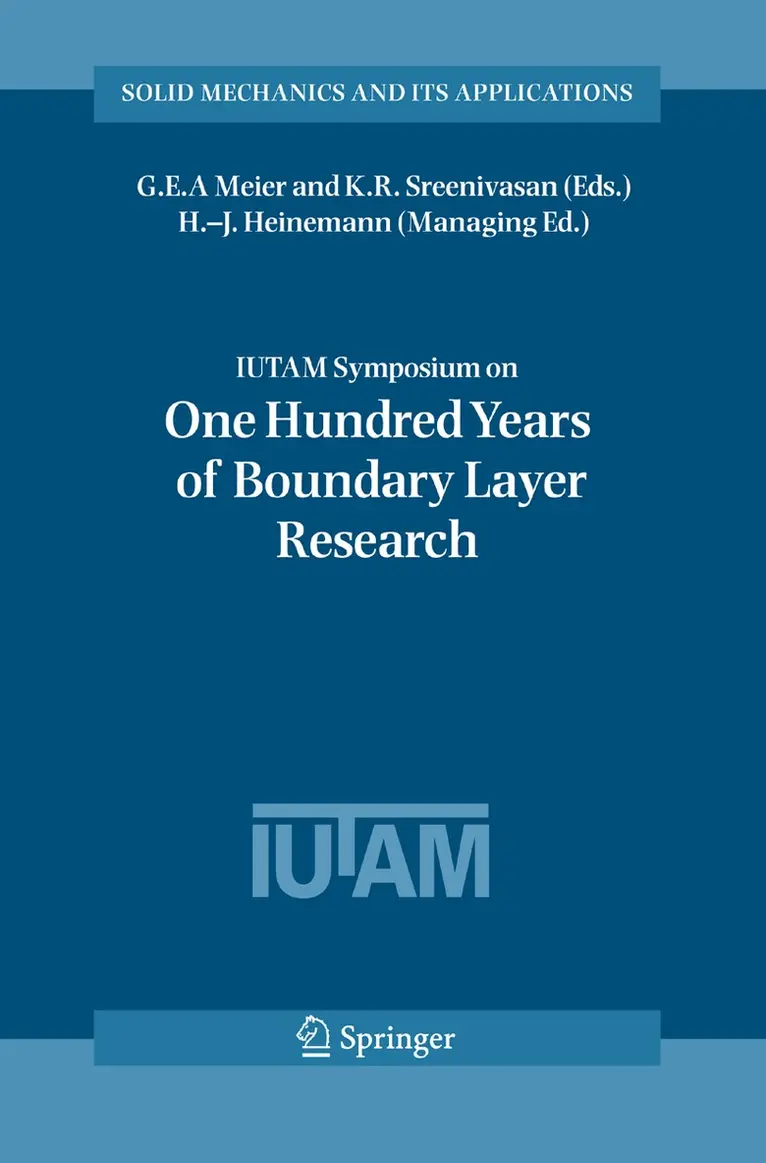
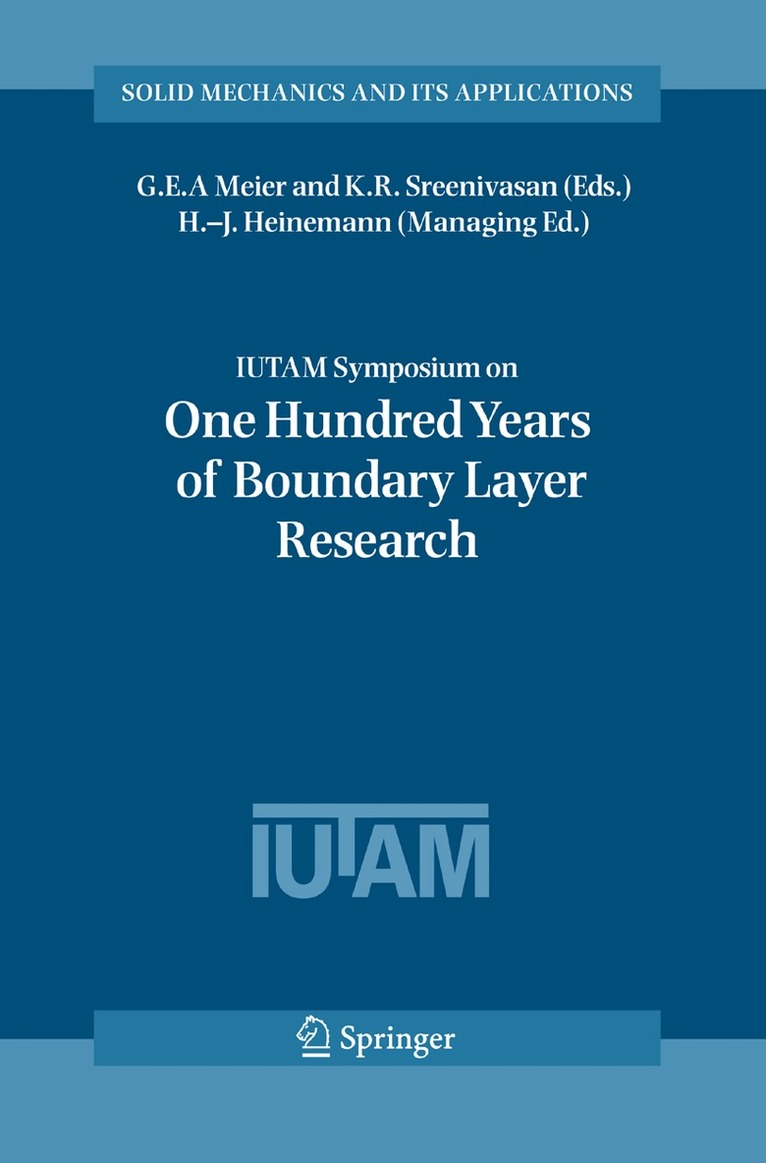
IUTAM Symposium on One Hundred Years of Boundary Layer Research
Proceedings of the IUTAM Symposium held at DLR-Göttingen, Germany, August 12-14, 2004
Av G.E.A. Meier, K.R. Sreenivasan
Inbunden, 2006
1636 kr
Lägg i varukorg
Prandtl’s famous lecture with the title “Über Flüssigkeitsbewegung bei sehr kleiner Reibung” was presented on August 12, 1904 at the Third Internationalen Mathematischen Kongress in Heidelberg, Germany. This lecture invented the phrase “Boundary Layer” (Grenzschicht). The paper was written during …
IUTAM Symposium on One Hundred Years of Boundary Layer Research
Proceedings of the IUTAM Symposium held at DLR-Göttingen, Germany, August 12-14, 2004
Av K.R. Sreenivasan, G.E.A. Meier
E-bok, 2006
2111 kr
Lägg i varukorg
Prandtl’s famous lecture with the title “Über Flüssigkeitsbewegung bei sehr kleiner Reibung” was presented on August 12, 1904 at the Third Internationalen Mathematischen Kongress in Heidelberg, Germany. This lecture invented the phrase “Boundary Layer” (Grenzschicht). The paper was written during …
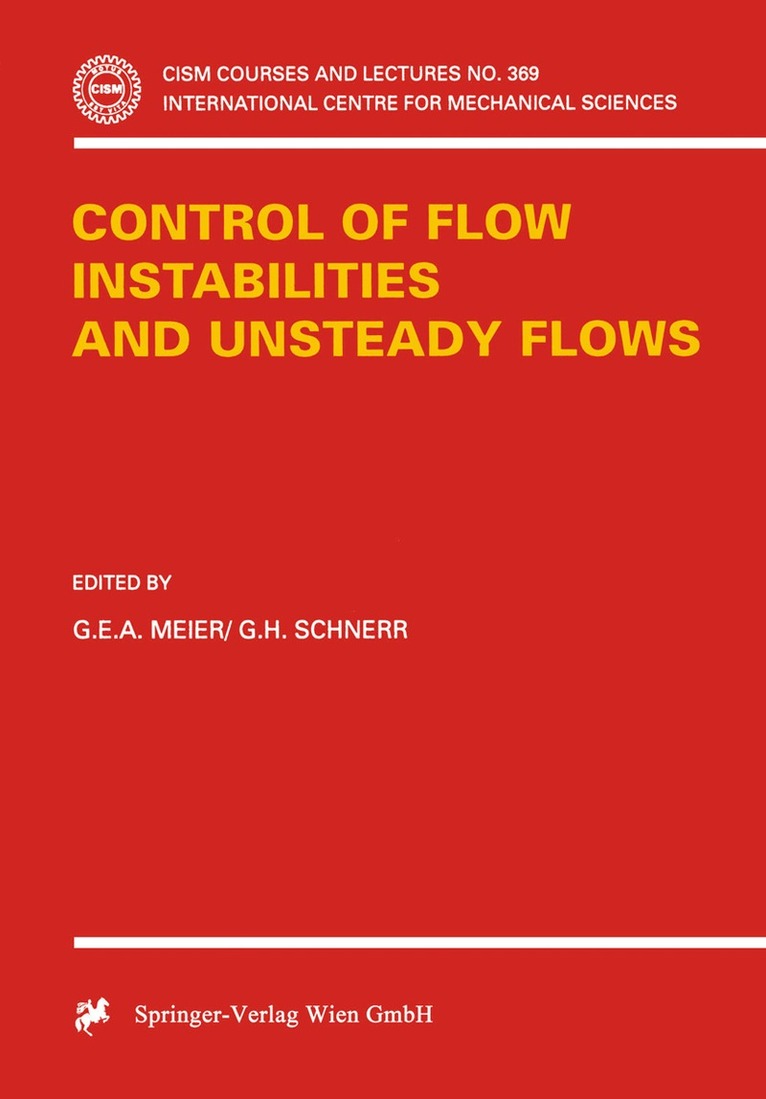
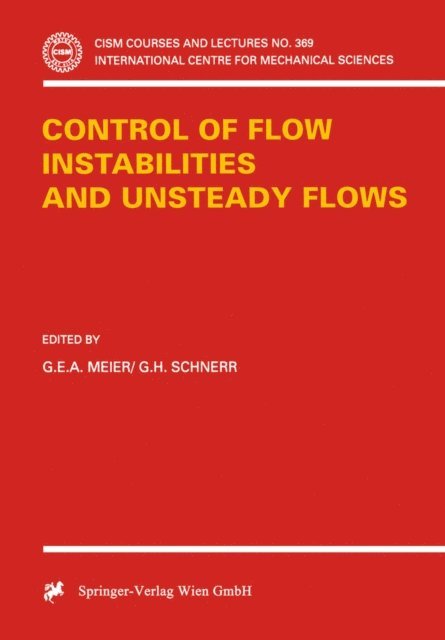
Control of Flow Instabilities and Unsteady Flows
Häftad, 1996
1093 kr
Lägg i varukorg
This volume contributes to one of the most important topics of Fluid Mechanics in future and presents recent research results on control theory and applied control methods. Understanding and handling of control methods of nonlinear systems, typical of Fluid Mechanics, is the key to reduce losses …
Control of Flow Instabilities and Unsteady Flows
E-bok, 2014
1459 kr
Lägg i varukorg
This volume contributes to one of the most important topics of Fluid Mechanics in future and presents recent research results on control theory and applied control methods. Understanding and handling of control methods of nonlinear systems, typical of Fluid Mechanics, is the key to reduce losses …
IUTAM Symposium on One Hundred Years of Boundary Layer Research
Proceedings of the IUTAM Symposium held at DLR-Göttingen, Germany, August 12-14, 2004
Av G.E.A. Meier, K.R. Sreenivasan
Häftad, 2014
1636 kr
Lägg i varukorg
Prandtl’s famous lecture with the title “Über Flüssigkeitsbewegung bei sehr kleiner Reibung” was presented on August 12, 1904 at the Third Internationalen Mathematischen Kongress in Heidelberg, Germany. This lecture invented the phrase “Boundary Layer” (Grenzschicht). The paper was written during …
IUTAM Symposium on Mechanics of Passive and Active Flow Control
Proceedings of the IUTAM Symposium held in Göttingen, Germany, 7–11 September 1998
Av G.E.A. Meier, P.R. Viswanath
Häftad, 2012
1636 kr
Lägg i varukorg
The call for papers for the rUTAM-Symposium on Mechanics of Passive and Active Flow Control brought an overwhelming response of applications for contributions. Fi nally 12 invited lectures, 48 papers and 23 posters were selected by thc Scientific Com mittee to be presented in the conference. 58 …
IUTAM Symposium on Mechanics of Passive and Active Flow Control
Proceedings of the IUTAM Symposium held in Göttingen, Germany, 7–11 September 1998
Av P.R. Viswanath, G.E.A. Meier
E-bok, 2012
2111 kr
Lägg i varukorg
The call for papers for the rUTAM-Symposium on Mechanics of Passive and Active Flow Control brought an overwhelming response of applications for contributions. Fi nally 12 invited lectures, 48 papers and 23 posters were selected by thc Scientific Com mittee to be presented in the conference. 58 …