Gene Lees – författare
Visar alla böcker från författaren Gene Lees. Handla med fri frakt och snabb leverans.
11 produkter
11 produkter
E-bok
Engelska, 1999126 kr
Läs direkt efter köp
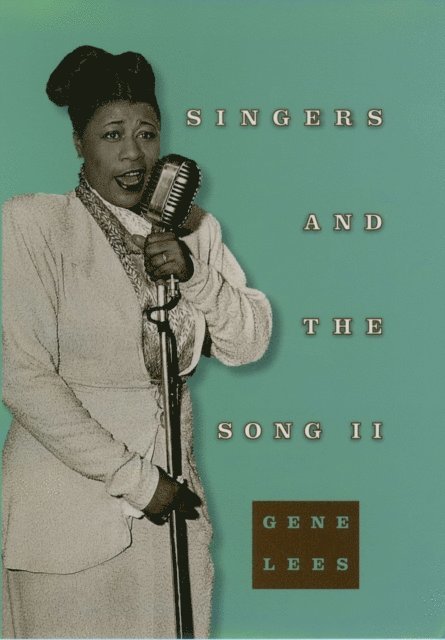
Gene Lees is probably the best jazz essayist in America today, and the book that consolidated his reputation was Singers and the Song, which appeared in 1987. Now this classic volume is being rereleased in an expanded edition. The new edition retains a number of famous pieces from the original volume, some in expanded form, such as Lees''s classic profile of Frank Sinatra. Lees has also retained his marvelous essay on lyric writing, his piece on the art of Edith Piaf, and his admiring look at the genius of songwriter Johnny Mercer. The expanded edition offers seven new essays that are no less accomplished. Here readers will find a wonderful tribute to "the sweetest voice in the world," Ella Fitzgerald; a moving interview with Jackie and Roy Kral; Lees''s account of his involvement with Bossa Nova music and his collaboration with Antonio Carlos Jobim. We also read about Julius La Rosa, the lyrics of "Yip" Harburg, Harry Warren''s unforgettable compositions, and the elegant Arthur Schwartz, writer of "Dancing in the Dark" and many other memorable songs. Here then is an engaging volume that weaves together colorful portraits of major performers and insightful glimpses into the art of singing and songwriting.
Inbunden, Engelska, 1989
672 kr
Skickas inom 7-10 vardagar
Jim and Andy's in New York was one of the city's four musicians' haunts in the 1960s. In a vivid series of portraits, we meet its clientele, an unforgettable gallery of individualists including Duke Ellington, Artie Shaw, Woody Herman, Art Farmer, Billy Taylor, Gerry Mulligan, and Paul Desmond.
Häftad, Engelska, 1990
408 kr
Skickas inom 5-8 vardagar
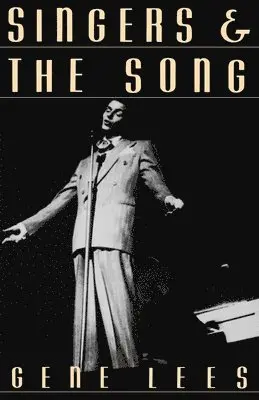
This book is a celebration of the generation of popular singers which emerged during and after the war: singers such as Frank Sinatra, Peggy Lee, and Sarah Vaughan. Universally praised as intuitive performers, Gene Lees's expert analysis also shows them to be intelligent, skilful artists, didicated to their work. Sinatra is singled out for special praise: Lees describes him as 'our Poet Laureate, and best singer we've ever heard', and points out his technical virtuosity and his unique style of phrasing.The book also looks at some of the composers and lyricists whose material was finely tuned to suit the abilities of these new popular stars. A lyricist himself, Lees gives us an illuminating account of the language used by writers such as Johnny Mercer, their choice of subject matter, and their extraordinary gifts for rhyme and rhythm.
Häftad, Engelska, 1996
220 kr
Skickas inom 5-8 vardagar
It was none other than Louis Armstrong who said, `These people who make the restrictions, they don't know nothing about music. It's no crime for cats of any colour to get together and blow.' In Cats of Any Color, Gene Lees takes a long overdue look at the shocking pervasiveness of racism in jazz's past and present - both the white racism that long ghettoized the music and generations of talented black musicians, and what Lees maintains is an increasingly virulent reverse racism aimed at white jazz musicians. In candid interviews, living jazz legends such as Horace Silver, Red Rodney (Charlie Parker's white trumpet player), and Dave Brubeck (part Modoc Indian), step forward and share their thoughts on how racism has affected their lives. At the heart of this book is a passionate plea to recognize jazz not as the sole property of any one group, but as an art form celebrating the human spirit.
Häftad, Engelska, 1997
243 kr
Skickas inom 5-8 vardagar
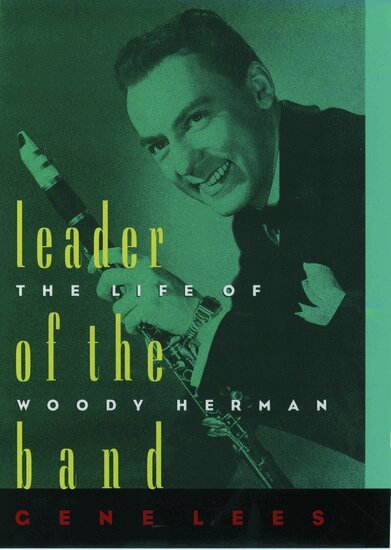
Woody Herman was a central figure in the development of jazz - a musical giant whose career spanned the big band and bebop eras. Gene Lees has spent close to a decade interviewing Herman's friends and fellow musicians, to produce a vivid portrayal of the triumph and tragedy of a life in jazz.We follow his rise to prominence in the 1930s as leader of `the band that plays the blues,' through success in the 1940s , when bebop rapidly developed, to the ultimate tragedy that broke Herman's career - when his manager diverted the band's withholding tax to settle gambling debts. Along the way, Lees brings to life the weary routine of performing on the road, with its constant one-night engagements and unending travel, broken only by brief stays at home and moments of camaraderie.
E-bok
PDF, Engelska, 199595 kr
Läs direkt efter köp
It was none other than Louis Armstrong who said, "These people who make the restrictions, they don''t know nothing about music. It''s no crime for cats of any color to get together and blow." "You can''t know what it means to be black in the United States--in any field," Dizzy Gillespie once said, but Gillespie vigorously objected to the proposition that only black people could play jazz. "If you accept that premise, well then what you''re saying is that maybe black people can only play jazz. And black people, like anyone else, can be anything they want to be." In Cats of Any Color, Gene Lees, the acclaimed author of three previous collections of essays on jazz and popular music, takes a long overdue look at the shocking pervasiveness of racism in jazz''s past and present--both the white racism that long ghettoized the music and generations of talented black musicians, and what Lees maintains is an increasingly virulent reverse racism aimed at white jazz musicians. In candid interviews, living jazz legends, critics, and composers step forward and share their thoughts on how racism has affected their lives. Dave Brubeck, part Modoc Indian, discusses native Americans'' contribution to jazz and the deeply ingrained racism that for a time made it all but impossible for jazz groups with black and white players to book tours and television appearances. Horace Silver looks back on his long career, including the first time he ever heard jazz played live. Blacks were not not allowed into the pavilion in Connecticut where Jimmie Lunceford''s band was performing, so the ten-year-old Silver listened and watched through the wooden slats surrounding the pavilion. "And oh man! That was it!" Silver recalls. Red Rodney recalls his early days with Charlie "Bird" Parker, and pianist and composer Cedar Walton tells of the time Duke Ellington played at the army base at Ford Dix and allowed the young enlisted Walton to sit in. Tracing the jazz world''s shifting attitude towards race, many of the stories Lees tells are inspiring--Brubeck cancelling 23 out of 25 concert dates in the South rather than replace black bass player Eugene Wright, or Silver insisting that while he strives to provide his fellow black musicians opportunities, "I just want the best musicans I can get. I don''t give a damn if they''re pink or polka dot." Others are profoundly disturbing--Lees'' first encounter with Oscar Peterson, after a Canadian barber flatly refused to cut Peterson''s hair, or Wynton Marsalis on television claiming that blacks have been held back for so many years because the music business is controlled by "people who read the Torah and stuff." From the old shantytowns of Louisville, to the streets of South Central L.A., to the up-to-the-minute controversies surrounding Marsalis''s jazz program at Lincoln Center, and the Jazz Masters awards given by the NEA, Cats of Any Color confronts racism head-on. At its heart is a passionate plea to recognize jazz not as the sole property of any one group, but as an art form celebrating the human spirit--not just for the protection of individual musicians, but for the preservation of the music itself.
Inbunden, Engelska, 2001
909 kr
Skickas inom 5-8 vardagar
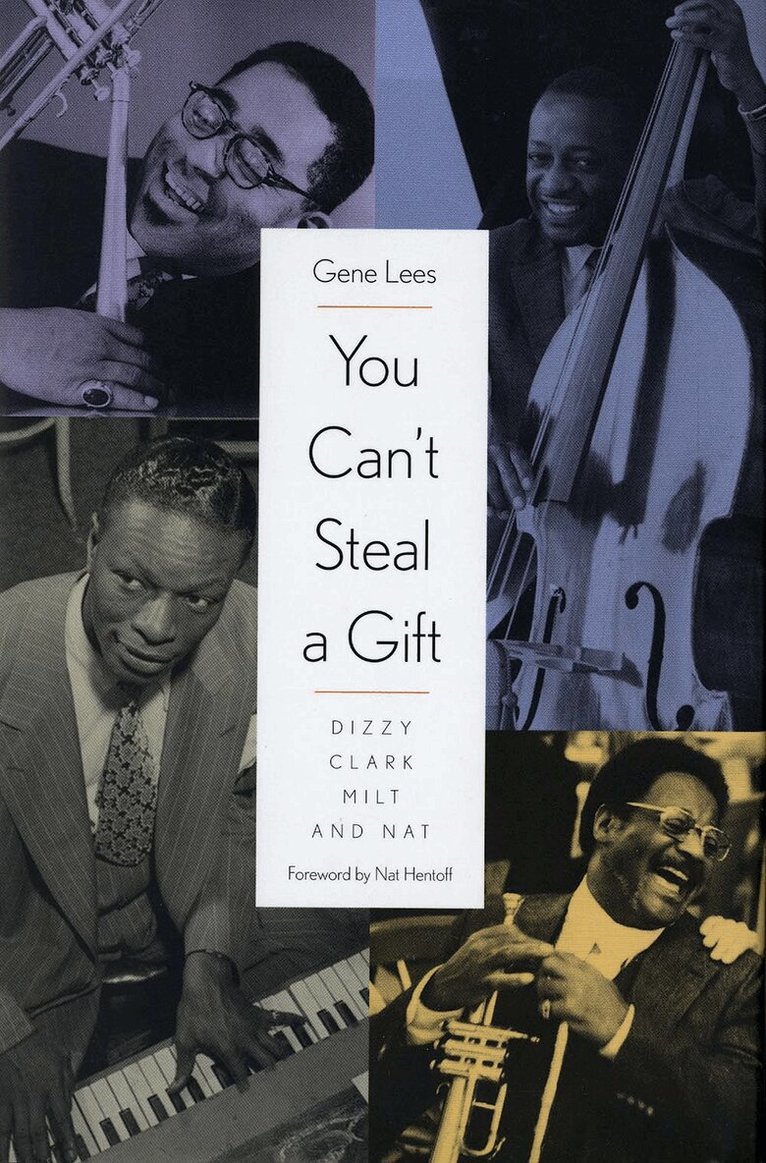
In this wise, stimulating, and deeply personal book, an eminent jazz chronicler writes of his encounters with four great black musicians: Dizzy Gillespie, Clark Terry, Milt Hinton, and Nat "King" Cole. Equal parts memoir, oral history, and commentary, each of the main chapters is a minibiography, weaving together conversations Gene Lees had with the musicians and their families, friends, and associates over a period of several decades. Lees begins the book with an essay that tells of his introduction to the world of jazz and his reaction to racism in the United States when he emigrated from Canada in 1955. The underlying theme in his book is the impact racism had on the four musicians’ lives and careers and their determination to overcome it. As Lees writes, “No white person can even begin to understand the black experience in the United States. . . . All [of the four jazz makers] are men who had every reason to embrace bitterness—and didn’t.”
Inbunden, Engelska, 2003
917 kr
Skickas inom 5-8 vardagar
A celebrated jazz writer offers fascinating portraits of friends he’s known during a lifetime in jazzFor more than half a century, jazz writer and lyricist Gene Lees has been the friend of many in the world of jazz music. In this delightful book he offers minibiographies of fifteen of these friends—some of them jazz greats, some lesser-known figures, and some up-and-comers. Combining conversations and memoirs with critical commentary, Lees’s insightful and intimate profiles will captivate jazz fans, performers, and historians alike. The subjects of the book range from the versatile orchestrator and arranger Claus Ogerman to legendary jazz broadcaster Willis Conover, from the gifted young Chinese violinist Yue Deng to undersung pianist Junior Mance. Lees writes about these figures both as musicians and as human beings, and he writes out of a conviction that jazz as an art form represents the highest values of American culture. Inviting us into the lives of these unique individuals, Lees offers an affectionate view of the jazz community that only an insider could provide.
Häftad, Engelska, 2000
183 kr
Skickas inom 5-8 vardagar
In a series of candid interviews with jazz players, composers, and critics, Gene Lees explores racism in the past and present of jazz,both the white racism that for decades ghettoized black musicians and their music, and the prejudice that Lees documents of some black musicians against their white counterparts. With subjects ranging from Horace Silver to Dave Brubeck to Red Rodney, and a new introduction analyzing recent developments, Cats of Any colour chronicles jazz as a multiethnic art.
E-bok
Engelska, 2009185 kr
Läs direkt efter köp
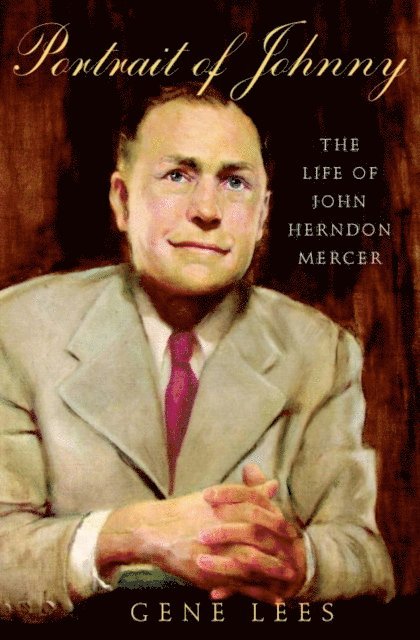
An intimate biography of the great songwriter, this is also a deeply affectionate memoir by one of Johnny Mercer’s best friends.“Moon River,” “Laura,” “Skylark,” ”That Old Black Magic,” “One for My Baby,” “Accentuate the Positive,” “Satin Doll,” “Days of Wine and Roses,” “Something’s Gotta Give”—the honor roll of Mercer’s songs is endless. Both Oscar Hammerstein II and Alan Jay Lerner called him the greatest lyricist in the English language, and he was perhaps the best-loved and certainly the best-known songwriter of his generation. But Mercer was also a complicated and private man.A scion of an important Savannah family that had lost its fortune, he became a successful Hollywood songwriter (his primary partners included Harold Arlen and Jerome Kern), a hit recording artist, and, as co-founder of Capitol Records, a successful businessman, but he remained forever nostalgic for his idealized childhood (with his “huckleberry friend”). A gentleman, a nasty drunk, funny, tender, melancholic, tormented—Mercer was a man immensely talented yet plagued by self-doubt, much admired and loved but never really understood.In music historian and songwriter Gene Lees, Mercer has his perfect biographer, who deals tactfully but directly with Mercer’s complicated relationships with his domineering mother; his tormenting wife, Ginger; and Judy Garland, who was the great love of his life. Lees’s highly personal examination of Mercer’s life is sensitive as only the work of a friend of many years could be to the conflicts in Mercer’s nature. And it is filled with insights into Mercer’s work that could come only from a fellow lyricist (whose own lyrics were much admired by Mercer). A poignant, candid, revelatory portrait of Johnny.From the Hardcover edition.
Häftad, Engelska, 2000
259 kr
Skickas inom 5-8 vardagar
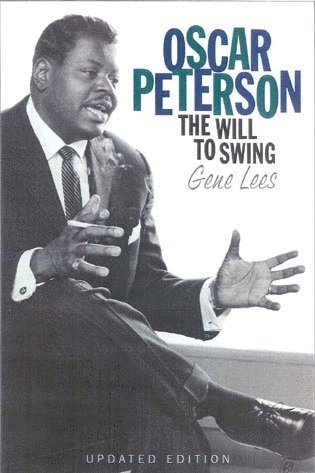
An engaging biography of a living musical legend, Oscar Peterson. A man Duke Ellington once called the " maharajah of the piano." Gene Lees carefully builds up the portrait of Peterson, his childhood and what it meant to be be black and talented in Montreal in the 1940s, hist three marriages and six children, his musical partners (Ray Brown, Herb Ellis and Ed Thigpen), his musical friends and colleagues (Ella Fitzgerald, Dizzy Gillespie, Art Tatum and Lester Young, amongst others) and the critical controversy and mythology that have long surrounded Peterson. This updated version has a new chapter that covers Peterson's appointment as Chancellor of York University; his receipt of ten honorary doctorates and the Order of Canada; his stroke and partial recovery; the origins and fallout of his cancelled North American tour and much more.