George L. Heritage – författare
Visar alla böcker från författaren George L. Heritage. Handla med fri frakt och snabb leverans.
5 produkter
Field Guide to British Rivers
Av George L. Heritage, Andrew R. G. Large m. fl.
Inbunden, 2021
946 kr
Lägg i varukorg
Temperate rivers are influenced by many factors including geology, climate, soils, sediment type, flow, as well as human activity. The complex interactions of the non-anthropogenic controlling factors have led to a wonderful diversity of river type throughout the British Isles. Sadly, almost all …
Field Guide to British Rivers
Av David Milan, Andrew R. G. Large m. fl.
E-bok, 2021
1068 kr
Lägg i varukorg
Temperate rivers are influenced by many factors including geology, climate, soils, sediment type, flow, as well as human activity. The complex interactions of the non-anthropogenic controlling factors have led to a wonderful diversity of river type throughout the British Isles. Sadly, almost all …
Field Guide to British Rivers
Av David Milan, Andrew R. G. Large m. fl.
E-bok, 2021
1068 kr
Lägg i varukorg
Temperate rivers are influenced by many factors including geology, climate, soils, sediment type, flow, as well as human activity. The complex interactions of the non-anthropogenic controlling factors have led to a wonderful diversity of river type throughout the British Isles. Sadly, almost all …
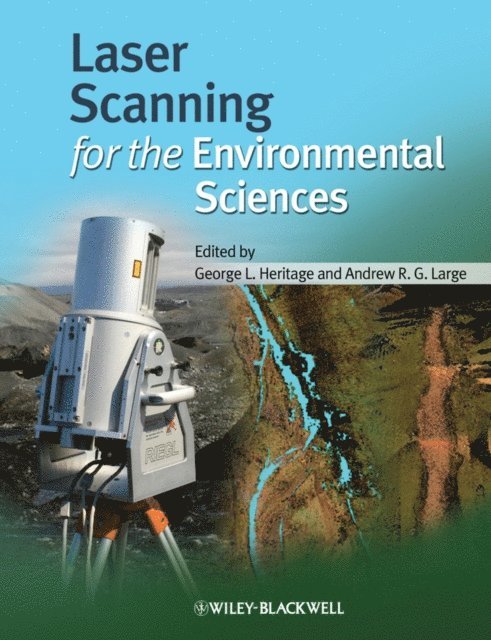
Laser Scanning for the Environmental Sciences
Av George L. Heritage, Andrew R. G. Large
Inbunden, 2009
1504 kr
Lägg i varukorg
Airborne and terrestrial laser scanning (LiDAR) are well-established methods for gathering precise and reliable 3D geo-information, and innovative tools for DEM generation, landscape modelling and analysis. As the technology matures to become standard practice for recording complex topography, a …
Laser Scanning for the Environmental Sciences
Av Andrew R. G. Large, George L. Heritage
E-bok, 2009
1711 kr
Lägg i varukorg
3D surface representation has long been a source of information describing surface character and facilitating an understanding of system dynamics from micro-scale (e.g. sand transport) to macro-scale (e.g. drainage channel network evolution). Data collection has been achieved through field mapping …