George L. Mosse – författare
Visar alla böcker från författaren George L. Mosse. Handla med fri frakt och snabb leverans.
22 produkter
22 produkter
Häftad, Engelska, 2023
248 kr
Skickas inom 10-15 vardagar
First published in 1975, The Nationalization of the Masses is George L. Mosse’s major statement about political symbols and the means of their diffusion. Focusing on Germany and, to a lesser degree, France and Italy, Mosse analyzes the role of symbols in fueling mass politics, mass movements, and nationalism in a way that is broadly applicable and as relevant today as it was almost fifty years ago. In this analysis Mosse introduces terms like “secular religion,” “political liturgy,” “national mystique,” “the new politics,” and “the aesthetics of politics” that are now standard in studies of nationalism and fascism, demonstrating the importance of his cultural, anthropologically informed lens to contemporary discourse. This new edition contains a critical introduction by Victoria de Grazia, Moore Collegiate Professor of History at Columbia University, contextualizing Mosse’s research and exploring its powerful influence on subsequent generations of historians.
E-bok
Engelska, 1998786 kr
Läs direkt efter köp
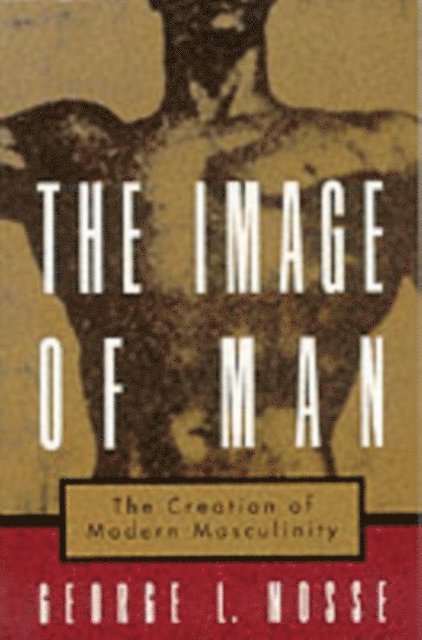
The stereotype of masculinity embraces many qualities. To be manly one must be brave, daring, and cool under fire. A man must be physically strong--tough, skillful, dexterous. And one must also be honorable, honest, and courteous. A man must not complain. A man must not lose control of his emotions. A man must not cry. Even today, many men would accept these qualities as defining masculinity. But how did our idea of manliness evolve? How long have these qualities been the norm? And will they continue to be our basic image of man? In The Image of Man, noted historian George L. Mosse provides the first historical account of the masculine stereotype in modern Western culture, tracing the evolution of the idea of manliness to reveal how it came to embody physical beauty, courage, moral restraint, and a strong will. This stereotype, he finds, originated in the tumultuous changes of the eighteenth century, as Europe''s dominant aristocrats grudgingly yielded to the rise of the professional, bureaucratic, and commercial middle classes. Mosse reveals how the new bourgeoisie, faced with a bewildering, rapidly industrialized world, latched onto the knightly ideal of chivalry. And he shows how the rise of universal conscription created a "soldierly man" as an ideal type. In England, the nineteenth century gave rise to an educational system that emphasized athletics, team sports, and physical strength, as did the gymnastics movement on the continent. At the same time, ideals of masculine beauty developed throughout the continent, intertwined with theories of art and personal comportment. And dueling experienced a renaissance, spreading throughout society, though tinged by each country''s character (in France, many duels were fought, but few ended in death, whereas Germans evolved an almost bureaucratic set of rules governing such combats--participants used pistols rather than swords, leading to a high fatality rate). Indeed, in the nineteenth century, the idea of manliness appeared in so many areas of life and thought that it was accepted as a social constant, a permanent endowment granted by nature. Mosse shows, however, that it continued to evolve, particularly in contrast to stereotypes of women and unmanly men--Jews and homosexuals--all considered weak and fearful, unable to control their passions. Mosse concludes that socialism also made use of this stereotype, while in the twentieth century Fascism took this process to its extreme expression--mass political rallies glorified the fearless storm trooper as outsiders were stigmatized and persecuted. Today, the manly image has been challenged as never before. The old foils for masculine assertiveness have been eroded: the women''s movement and gay and lesbian organizations have won new recognition, while anti-Semitic stereotypes have crumbled in the wake of the Holocaust and the rise of Israel. The long-standing idea of middle class respectability--one of the foundations of the masculine norm--has been cracked and battered. And yet, Mosse writes, manliness remains with us, a component of society that demands to be understood as we move into the future.
Häftad, Engelska, 1994
265 kr
Skickas inom 5-8 vardagar
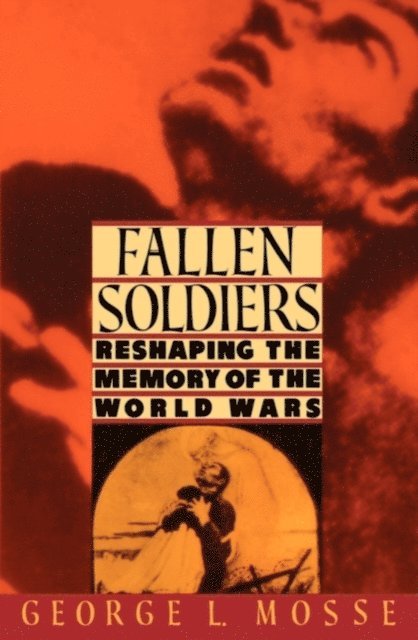
Millions were killed and maimed in the senseless brutality of the First World War, but once the armistice was signed the realities were cleansed of their horror by the nature of the burial and commemoration of the dead. In the interwar period, war monuments and cemeteries provided the public with places of worship and martyrs for the civic religion of nationalism. The cult of the fallen soldier blossomed in Germany and other European countries, and people seemed to build war into their lives as a necessary and glorious event - a proof of manhood and loyalty to the flag. Ultimately there was even a process of trivialization, with light comedies, war toys, and battlefield tourism becoming popular.Tracing wartime experience from the Napoleonic Wars to Vietnam, Professor Mosse's chilling study explores why mankind has drawn the sting of death from modern war and transformed it into an acceptable, even sacred, event.
E-bok
PDF, Engelska, 1998786 kr
Läs direkt efter köp
The stereotype of masculinity embraces many qualities. To be manly one must be brave, daring, and cool under fire. A man must be physically strong--tough, skillful, dexterous. And one must also be honorable, honest, and courteous. A man must not complain. A man must not lose control of his emotions. A man must not cry. Even today, many men would accept these qualities as defining masculinity. But how did our idea of manliness evolve? How long have these qualities been the norm? And will they continue to be our basic image of man? In The Image of Man, noted historian George L. Mosse provides the first historical account of the masculine stereotype in modern Western culture, tracing the evolution of the idea of manliness to reveal how it came to embody physical beauty, courage, moral restraint, and a strong will. This stereotype, he finds, originated in the tumultuous changes of the eighteenth century, as Europe''s dominant aristocrats grudgingly yielded to the rise of the professional, bureaucratic, and commercial middle classes. Mosse reveals how the new bourgeoisie, faced with a bewildering, rapidly industrialized world, latched onto the knightly ideal of chivalry. And he shows how the rise of universal conscription created a "soldierly man" as an ideal type. In England, the nineteenth century gave rise to an educational system that emphasized athletics, team sports, and physical strength, as did the gymnastics movement on the continent. At the same time, ideals of masculine beauty developed throughout the continent, intertwined with theories of art and personal comportment. And dueling experienced a renaissance, spreading throughout society, though tinged by each country''s character (in France, many duels were fought, but few ended in death, whereas Germans evolved an almost bureaucratic set of rules governing such combats--participants used pistols rather than swords, leading to a high fatality rate). Indeed, in the nineteenth century, the idea of manliness appeared in so many areas of life and thought that it was accepted as a social constant, a permanent endowment granted by nature. Mosse shows, however, that it continued to evolve, particularly in contrast to stereotypes of women and unmanly men--Jews and homosexuals--all considered weak and fearful, unable to control their passions. Mosse concludes that socialism also made use of this stereotype, while in the twentieth century Fascism took this process to its extreme expression--mass political rallies glorified the fearless storm trooper as outsiders were stigmatized and persecuted. Today, the manly image has been challenged as never before. The old foils for masculine assertiveness have been eroded: the women''s movement and gay and lesbian organizations have won new recognition, while anti-Semitic stereotypes have crumbled in the wake of the Holocaust and the rise of Israel. The long-standing idea of middle class respectability--one of the foundations of the masculine norm--has been cracked and battered. And yet, Mosse writes, manliness remains with us, a component of society that demands to be understood as we move into the future.
E-bok
PDF, Engelska, 1991189 kr
Läs direkt efter köp
At the outbreak of the First World War, an entire generation of young men charged into battle for what they believed was a glorious cause. Over the next four years, that cause claimed the lives of some 13 million soldiers--more than twice the number killed in all the major wars from 1790 to 1914. But despite this devastating toll, the memory of the war was not, predominantly, of the grim reality of its trench warfare and battlefield carnage. What was most remembered by the war''s participants was its sacredness and the martyrdom of those who had died for the greater glory of the fatherland. War, and the sanctification of it, is the subject of this pioneering work by well-known European historian George L. Mosse. Fallen Soldiers offers a profound analysis of what he calls the Myth of the War Experience--a vision of war that masks its horror, consecrates its memory, and ultimately justifies its purpose. Beginning with the Napoleonic wars, Mosse traces the origins of this myth and its symbols, and examines the role of war volunteers in creating and perpetuating it. But it was not until World War I, when Europeans confronted mass death on an unprecedented scale, that the myth gained its widest currency. Indeed, as Mosse makes clear, the need to find a higher meaning in the war became a national obsession. Focusing on Germany, with examples from England, France, and Italy, Mosse demonstrates how these nations--through memorials, monuments, and military cemeteries honoring the dead as martyrs--glorified the war and fostered a popular acceptance of it. He shows how the war was further promoted through a process of trivialization in which war toys and souvenirs, as well as postcards like those picturing the Easter Bunny on the Western Front, softened the war''s image in the public mind. The Great War ended in 1918, but the Myth of the War Experience continued, achieving its most ruthless political effect in Germany in the interwar years. There the glorified notion of war played into the militant politics of the Nazi party, fueling the belligerent nationalism that led to World War II. But that cataclysm would ultimately shatter the myth, and in exploring the postwar years, Mosse reveals the extent to which the view of death in war, and war in general, was finally changed. In so doing, he completes what is likely to become one of the classic studies of modern war and the complex, often disturbing nature of human perception and memory.
E-bok
Engelska, 1991213 kr
Läs direkt efter köp
At the outbreak of the First World War, an entire generation of young men charged into battle for what they believed was a glorious cause. Over the next four years, that cause claimed the lives of some 13 million soldiers--more than twice the number killed in all the major wars from 1790 to 1914. But despite this devastating toll, the memory of the war was not, predominantly, of the grim reality of its trench warfare and battlefield carnage. What was most remembered by the war''s participants was its sacredness and the martyrdom of those who had died for the greater glory of the fatherland. War, and the sanctification of it, is the subject of this pioneering work by well-known European historian George L. Mosse. Fallen Soldiers offers a profound analysis of what he calls the Myth of the War Experience--a vision of war that masks its horror, consecrates its memory, and ultimately justifies its purpose. Beginning with the Napoleonic wars, Mosse traces the origins of this myth and its symbols, and examines the role of war volunteers in creating and perpetuating it. But it was not until World War I, when Europeans confronted mass death on an unprecedented scale, that the myth gained its widest currency. Indeed, as Mosse makes clear, the need to find a higher meaning in the war became a national obsession. Focusing on Germany, with examples from England, France, and Italy, Mosse demonstrates how these nations--through memorials, monuments, and military cemeteries honoring the dead as martyrs--glorified the war and fostered a popular acceptance of it. He shows how the war was further promoted through a process of trivialization in which war toys and souvenirs, as well as postcards like those picturing the Easter Bunny on the Western Front, softened the war''s image in the public mind. The Great War ended in 1918, but the Myth of the War Experience continued, achieving its most ruthless political effect in Germany in the interwar years. There the glorified notion of war played into the militant politics of the Nazi party, fueling the belligerent nationalism that led to World War II. But that cataclysm would ultimately shatter the myth, and in exploring the postwar years, Mosse reveals the extent to which the view of death in war, and war in general, was finally changed. In so doing, he completes what is likely to become one of the classic studies of modern war and the complex, often disturbing nature of human perception and memory.
Häftad, Engelska, 2013
227 kr
Skickas inom 10-15 vardagar
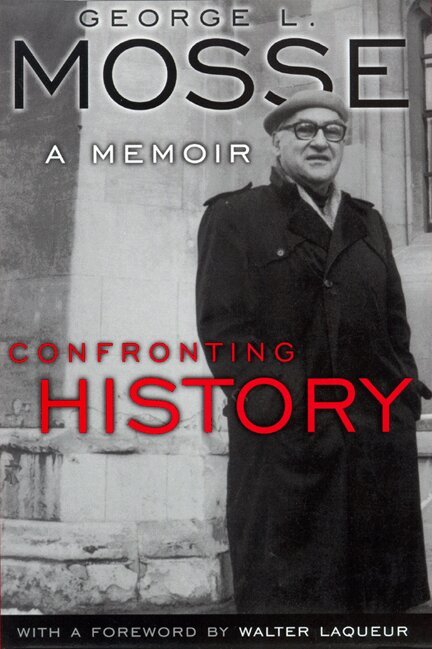
Just two weeks before his death in January 1999, George L. Mosse, one of the great American historians, finished writing his memoir, a fascinating and fluent account of a remarkable life that spanned three continents and many of the major events of the twentieth century.Confronting History describes Mosse's opulent childhood in Weimar Berlin; his exile in Paris and England, including boarding school and study at Cambridge University; his second exile in the U.S. at Haverford, Harvard, Iowa, and Wisconsin; and his extended stays in London and Jerusalem. Mosse discusses being a Jew and his attachment to Israel and Zionism, and he addresses his gayness, his coming out, and his growing scholarly interest in issues of sexuality. This touching memoir—told with the clarity, passion, and verve that entranced thousands of Mosse's students—is guided in part by his belief that ""what man is, only history tells"" and, most of all, by the importance of finding one's self through the pursuit of truth and through an honest and unflinching analysis of one's place in the context of the times.
Häftad, Engelska, 2020
234 kr
Skickas inom 10-15 vardagar
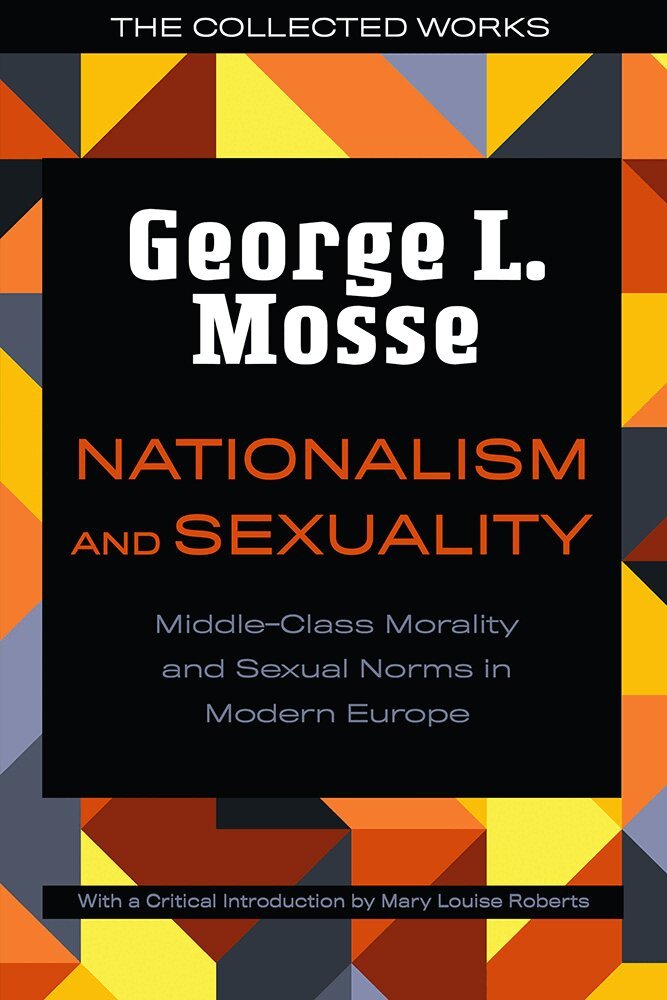
This landmark work by George L. Mosse, first published in 1985, examines the history of sexuality through the lens of bourgeois respectability and nationalism. Using a daring breadth of German and English sources, Nationalism and Sexuality pioneered the use of gender stereotypes as a methodology for studying the history of sexuality in mainstream European history. Mosse’s innovative inquiries on gender remain central to discussions about modern constructions of national belonging and the workings of the state. This edition of Mosse’s classic volume includes a new critical introduction by Mary Louise Roberts, whose books include What Soldiers Do: Sex and the American GI in World War II France.
Häftad, Engelska, 2020
248 kr
Skickas inom 10-15 vardagar
Originally published in 1978, Toward the Final Solution was one of the first in-depth studies of the evolution of racism in Europe, from the Age of Enlightenment through the Holocaust and Hitler's Final Solution. George L. Mosse details how antisemitism and dangerous prejudices have long existed in the European cultural tradition, revealing an appalling and complex history. With the global renewal of extreme, right-wing nationalism, this instrumental work remains as important as ever for understanding how bigotry impacts political, cultural, and intellectual life. This edition of Mosse's classic book includes a new critical introduction by Christopher R. Browning, author of Ordinary Men: Reserve Police Battalion 101 and the Final Solution in Poland.
Häftad, Engelska, 2021
248 kr
Skickas inom 10-15 vardagar
This new edition revisits the renowned historian George L. Mosse’s landmark work exploring the ideological foundations of Nazism in Germany. First published in 1964, this volume was among the first to examine the intellectual origins of the Third Reich. Mosse introduced readers to what is known as the vÖlkisch ideal—the belief that the German people were united through a transcendental essence. This mindset led to the exclusion of Jews and other groups, eventually allowing Nazi leaders to take their beliefs to catastrophic extremes. The critical introduction by Steven E. Aschheim, the author of Beyond the Border: The German-Jewish Legacy Abroad and many other books, brings Mosse’s work into the present moment. George L. Mosse (1918-99) was a legendary scholar, teacher, and mentor. A refugee from Nazi Germany, in 1955 he joined the Department of History at the University of Wisconsin-Madison, where he was both influential and popular. Mosse was an early leader in the study of modern European cultural and intellectual history, fascism, and the history of sexuality and masculinity. Over his career he authored more than two dozen books.
Häftad, Engelska, 2022
248 kr
Skickas inom 10-15 vardagar
The Fascist Revolution is the culmination of George L. Mosse's groundbreaking work on fascism. Originally published posthumously in 1999, the volume covers a broad spectrum of topics related to cultural interpretations of fascism from its origins through the twentieth century. In a series of magisterial turns, Mosse examines fascism's role in the French Revolution, its relationship with nationalism and racism, its use by intellectuals to foment insurrection, and more as a means to define and understand it as a popular phenomenon on its own terms. This new edition features a critical introduction by Roger Griffin, professor emeritus of modern history at Oxford Brookes University, contextualizing Mosse's research as fascism makes a global resurgence.
Häftad, Engelska, 2023
248 kr
Skickas inom 10-15 vardagar
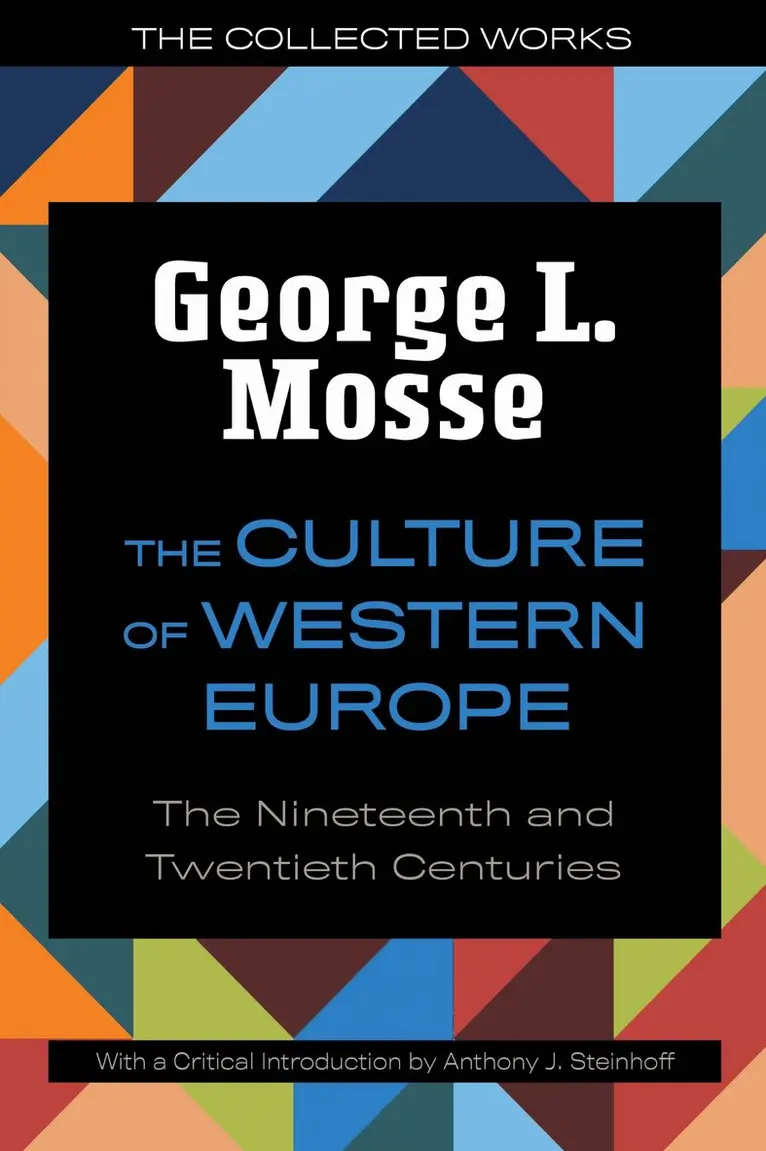
The Culture of Western Europe, George L. Mosse’s sweeping cultural history, was originally published in 1961 and revised and expanded in 1974 and 1988. Originating from the lectures at the University of Wisconsin–Madison for which Mosse would become famous, the book addresses, in crisp and accessible language, the key issues he saw as animating the movement of culture in Europe. Mosse emphasizes the role of both rational and irrational forces in making modern Europe, beginning with the interplay between eighteenth-century rationalism and nineteenth-century Romanticism. He traces cultural and political movements in all areas of society, especially nationalism but also economics, class identity and conflict, religion and morality, family structure, medicine, and art. This new edition restores the original 1961 illustrations and features a critical introduction by Anthony J. Steinhoff, professor in the department of history at the UniversitÉ du QuÉbec À MontrÉal, contextualizing Mosse’s project and arguing for its continued relevance today.
Häftad, Engelska, 2023
248 kr
Skickas inom 10-15 vardagar
Originally published in 1970, Germans and Jews brings together George L. Mosse’s thoughts on a critical time in German history when thinkers on both the left and the right shared a common goal. In the late nineteenth and early twentieth centuries, intellectuals across the political spectrum aimed to solve the problems of contemporary society by creating a force that would eliminate both state Marxism and bourgeois society: a “third force” beyond communism and capitalism. This pervasive turn in ideology had profound effects on German history. In Mosse’s reading, left-wing political efforts became increasingly unrelated to reality, while the right finally discovered in fascism the force it had been seeking.This innovative perspective has implications for understanding not only the rise of fascism and Nazism in Germany but also the rise and fall of the New Left in the United States and Europe, which was occurring at the time of Mosse’s writing. A new critical introduction by Sarah Wobick-Segev, research associate at the University of Hamburg, places Mosse’s work in its historical and intellectual contexts and draws lessons for students and scholars today.
Häftad, Engelska, 2024
248 kr
Skickas inom 10-15 vardagar
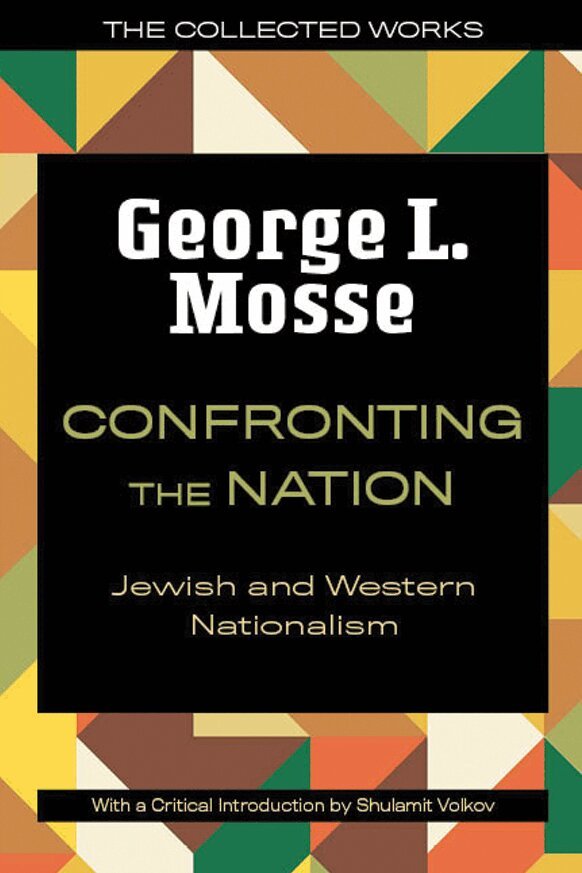
Confronting the Nation brings together twelve of celebrated historian George L. Mosse’s most important essays to explore competing forms of European nationalism in the nineteenth and twentieth centuries. Mosse coins the term “civic religion” to describe how nationalism, especially in Germany and France, simultaneously inspired and disciplined the populace through the use of rituals and symbols. The definition of citizenship shaped by this nationalism, however, frequently excluded Jews, who were stereotyped as outsiders who sought to undermine the national community. With keen attention to liberal forms of nationalism, Mosse examines the clash of aspirational visions of an inclusive nation against cultural registers of nativist political ideologies. Mosse considers a broad range of topics, from Nazi book burnings to Americans’ search for unifying national symbols during the Great Depression, exploring how the development of particular modes of art, architecture, and mass movements served nationalist agendas by dictating who was included in the image of the nation. These essays retain their significance today in their examination of the cultural and social implications of contemporary nationalism. A new critical introduction by Shulamit Volkov, professor emerita of history at Tel Aviv University, situates Mosse’s analysis within its historiographical context.
Häftad, Engelska, 2024
319 kr
Skickas inom 10-15 vardagar
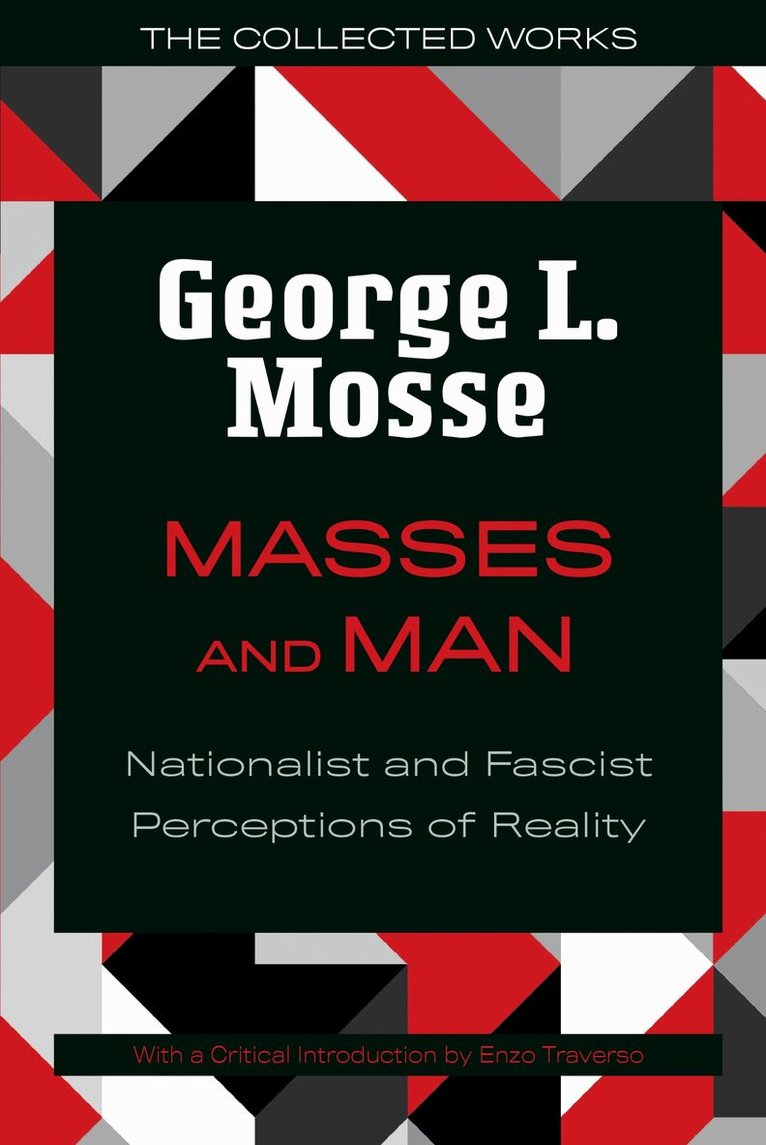
In fourteen essays that speak to the full breadth of George L. Mosse’s intellectual horizons and scholarly legacy, Masses and Man explores radical nationalism, fascism, and Jewish modernity in twentieth-century Europe. Breaking from the conventions of historical analysis, Mosse shows that “secular religions” like fascism cannot be understood only as the products of socioeconomic or intellectual histories but rather must be approached first and foremost as cultural phenomena.Masses and Man comprises three parts. The first lays out a cultural history of nationalism, essentially the first of its kind, emphasizing the importance of sacred expressions like myths, symbols, and rituals as appropriated in a political context. The second zeroes in on fascism’s most dramatic irruptions in European history in the rise of Italian Fascism and the Nazi Party in Germany, elucidating these as not just political movements but also cultural and even aesthetic ones. The third part considers nationalism and fascism from the particular standpoint of German Jews.Taken in full, the volume offers an eloquent summation of Mosse’s groundbreaking insights into European nationalism, fascism, and Jewish history in the twentieth century. A new critical introduction by Enzo Traverso helpfully situates Mosse’s work in context and exposes the many ways in which Masses and Man, first published in 1980, remains relevant today.
Häftad, Engelska, 2025
248 kr
Skickas inom 10-15 vardagar
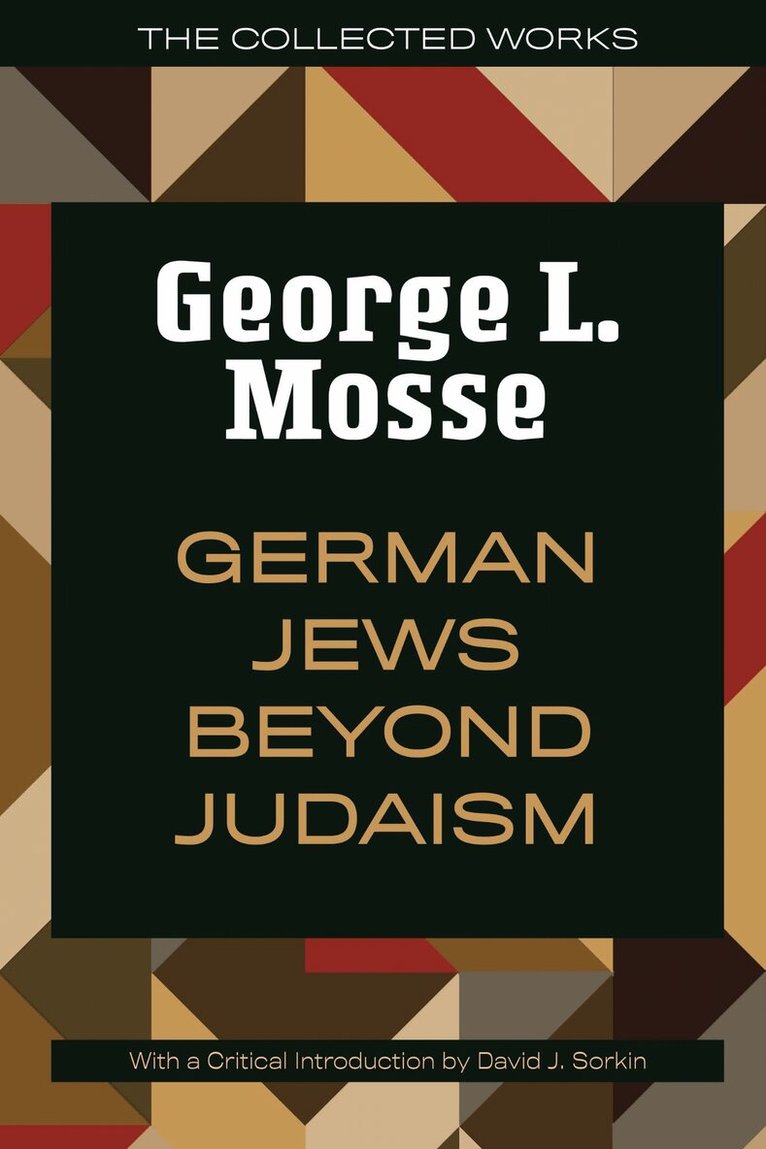
First published in 1985, German Jews Beyond Judaism is George L. Mosse’s sweeping exploration of German Jewish secular identity across the nineteenth and twentieth centuries. In Germany, Jews were emancipated at a time when cultural education was becoming an integral part of German society. They felt a powerful urge to find their Jewish substance within German culture and thus craft an identity as both Germans and Jews. Mosse argues that they did so by adopting the concept of Bildung―the idea of intellectual and moral self-cultivation―combined with key Enlightenment ideals of human potential, individualism, and the connection between knowledge and morality through aesthetics. He traces how Jewish artists, writers, and thinkers actively sought to participate in German culture through popular culture, scholarship, and political activity. Despite the eventual dissolution of German-Jewish dialogue due to the emergence of a virulently racist nationalism, important Jewish heritage emerged as a result of this attempt to integrate both identities.German Jews Beyond Judaism was, in Mosse’s own estimation, his “most personal book, almost a confession of faith.” David J. Sorkin’s new critical introduction illustrates how Mosse’s life and values both shaped and exemplified his historical analysis and offers potential meanings of his intellectual legacy for the present day.
Häftad, Engelska, 2026
319 kr
Skickas inom 10-15 vardagar
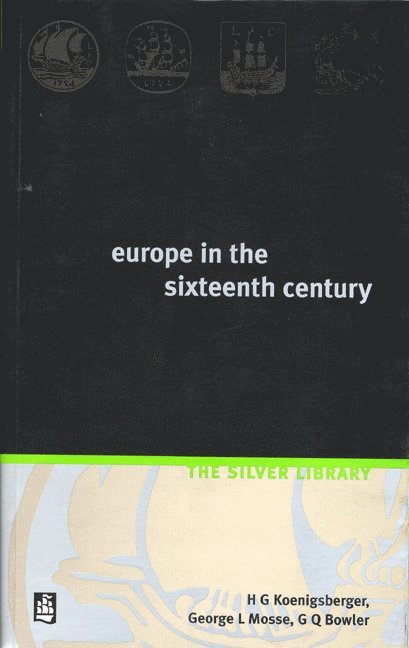
The revised and updated edition of a seminal text, Europe in the Sixteenth Century weaves the distinct histories of various European states into a vivid and complex tapestry. Focusing on similarities of experience across borders, including the centralization of town life and development of market economics, the authors reexamine familiar subjects of the era—from religious upheaval to imperial conflict to artistic revolutions—creating a dynamic, unified narrative of change. This third edition features a new introduction by Magda Teter, tracing the influence of H. G. Koenigsberger, George L. Mosse, and G. Q. Bowler’s work on the historiography of Europe well into the twenty-first century.
Häftad, Engelska, 2026
288 kr
Kommande
In 1963, nearly two decades after the end of the most destructive war in human history, George L. Mosse assembled a group of interdisciplinary scholars from diverse backgrounds to answer a seemingly simple question: What is fascism? The landmark seminar that followed, held at Stanford University, came to define the intellectual conversation about European fascism throughout the postwar era. Mosse strove to better understand the legacy of fascism by debating its origins—often contentiously—with the sharpest minds of his generation.In this volume, which collects Mosse’s lectures as well as his peers’ responses, Mosse and his colleagues wrestle with fascism’s origins and impact. The straightforward question that launched the seminar quickly expands to deeper debates. What are the intellectual foundations of right-wing populist political movements? How had this particular movement risen to power so quickly and then left so much devastation in its wake? Were charismatic leaders like Hitler and Mussolini the driving forces, or did the various incarnations of fascism throughout Europe and beyond constitute a broader revolution? What was the relationship of religious and cultural institutions to fascism’s rise and cataclysmic fall? As the word “fascism” takes on new meaning in the twenty-first century, it is more urgent than ever to revisit the work of scholars who witnessed its birth—and its defeat. In the foreword, Stanley G. Payne situates the lively debate in its historical context, and in the critical introduction, James J. Sheehan shares his own memories of the seminar and reflects on how the experience drove Mosse’s later work.
Häftad, Tyska, 2006
281 kr
Skickas inom 3-6 vardagar
E-bok
PDF, Tyska, 2022160 kr
Läs direkt efter köp
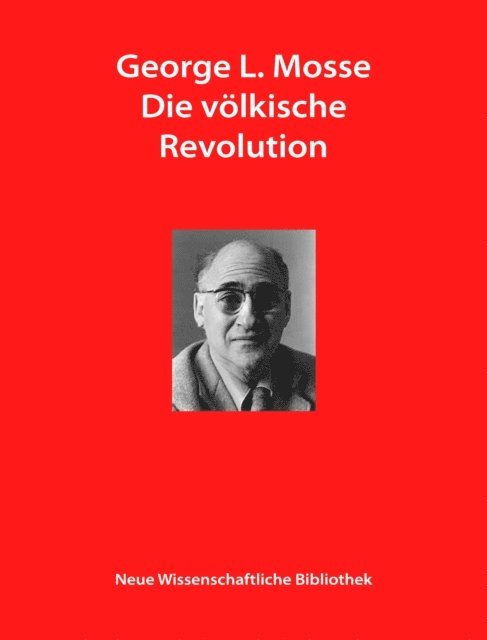
George L. Mosse zeichnet das Anwachsen und die Entwicklung völkischer Ideen und ihrer Ideologie bis zum Nationalsozialismus nach. »Dieses ausgezeichnete Buch, unabkömmlich für jeden, der sich ernsthaft mit Europa im 19. und 20. Jahrhundert beschäftigen will, wird nicht nur Widerspruch und Kritik hervorrufen, sondern besonders die Diskussion anfachen, eine Diskussion, die sehr notwendig und längst überfällig ist.« Walter Laqueur in >The New York Review of Books<
Häftad, Engelska
595 kr
Tillfälligt slut
Inbunden, Engelska, 2016
1 366 kr
Tillfälligt slut
This well-established survey of Europe explores the various political structures of the age - empires, monarchies, city-republics - and how they functioned and related to one another. It examines the growing importance of town-life in the sixteenth century, the economic background of political change, while giving full weight to the cultural acheivements of the age..