George Perle - Böcker
Visar alla böcker från författaren George Perle. Handla med fri frakt och snabb leverans.
5 produkter
5 produkter
609 kr
Skickas inom 3-6 vardagar
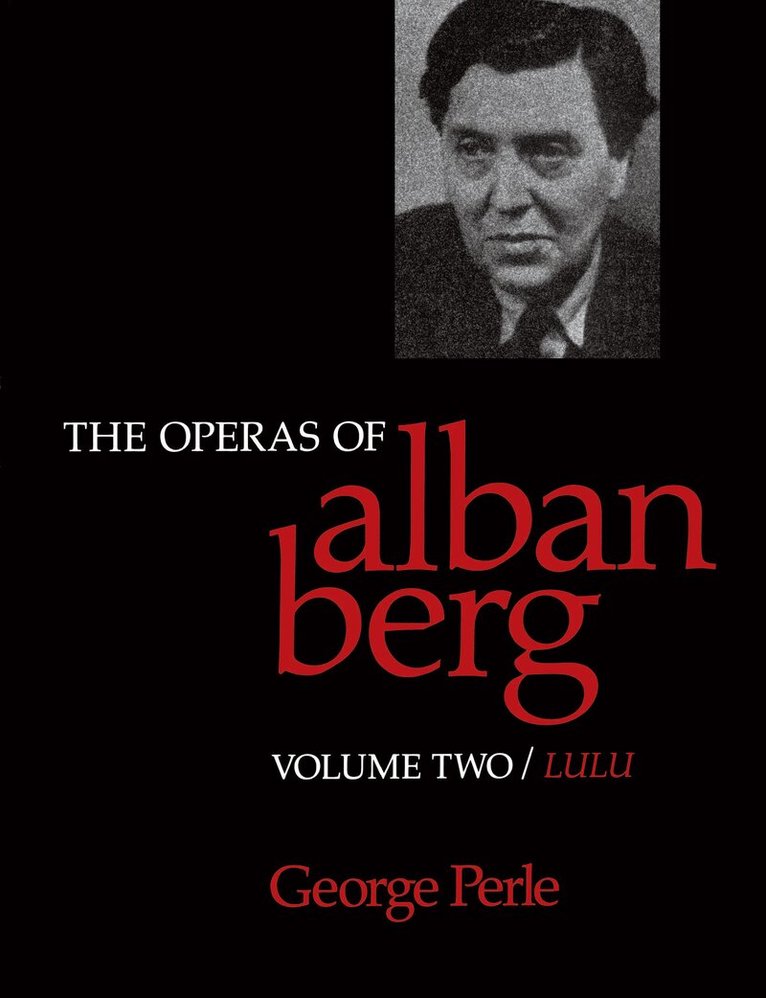
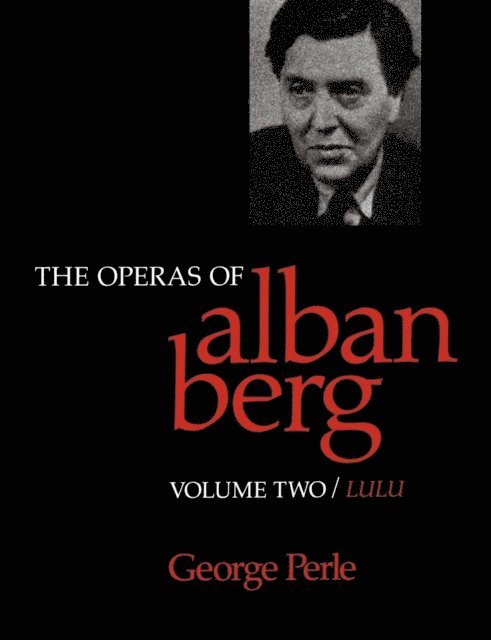
"The first volume of Perle's magnificent study focused on Wozuck ...Its successor, equally painstaking and perceptive, is if anything more invaluable, for the clouds of mystery around Berg's second opera are only now beginning to disperse, and the work is coming to be regarded properly as the climax of the composer's achievement." (Andrew Clements, Opera). "Perle's books have laid the groundwork for a thorough exploration of the remarkably successful ways in which Berg was able to marry a powerful intellectual grasp of a richly developing language to an instinctive feel for dramatic shape, a process that marks him out as one of the few genuine opera composers this century." (Michael Taylor, Music and Letters). "The first volume, Wozzeck ...was universally recognized as being a work of outstanding scholarship. The Lulu volume is an even more impressive achievement. In its analytical sophistication, its critical insights and in the implications which it has for our understanding not only of Berg but of a whole body of post-diatonic music, Perle's Lulu is one of the most exciting and important books on music to appear for many years." (Douglas Jarman, Times Literary Supplement)."With the second of his books on The Operas of Alban Berg, this American musicologist and composer has now taken advantage of all this new material to consolidate his own research and present us with the most sophisticated musical analysis yet made of the composer ...As Perle shows, Lulu represents the highest point of development in Berg's music from the point of view of ambiguity of fabrication." (Stephen Reeve, Classical Music). "Nothing I've read in the past year makes as important a contribution to this literature as The Operas of Alban Berg: Volume Two: Lulu ...Perle's saga of the opera's release from partial captivity reads like one of the great intellectual detective stories of our era ...What emerges most flavorfully is Perle's portrait of a haunted artist who imbued his later works with concealed autobiographical gestures, including his longtime love affair with a Prague matron." (Ailan Ulrich, San Francisco Focus). "The goal of the two-volume work is not merely to dwell in detail on the operas themselves, but to give some account of Berg's other music, in order to set the operas in the context of his complete output.With a composer like Berg, whose music is intimately bound up with his own personal life, such an approach is particularly appropriate ...George Perle has given the world two volumes which will remain at the top of their field for many years to come." (Douglass M. Green, Journal of the American Musicological Society).
609 kr
Skickas inom 3-6 vardagar
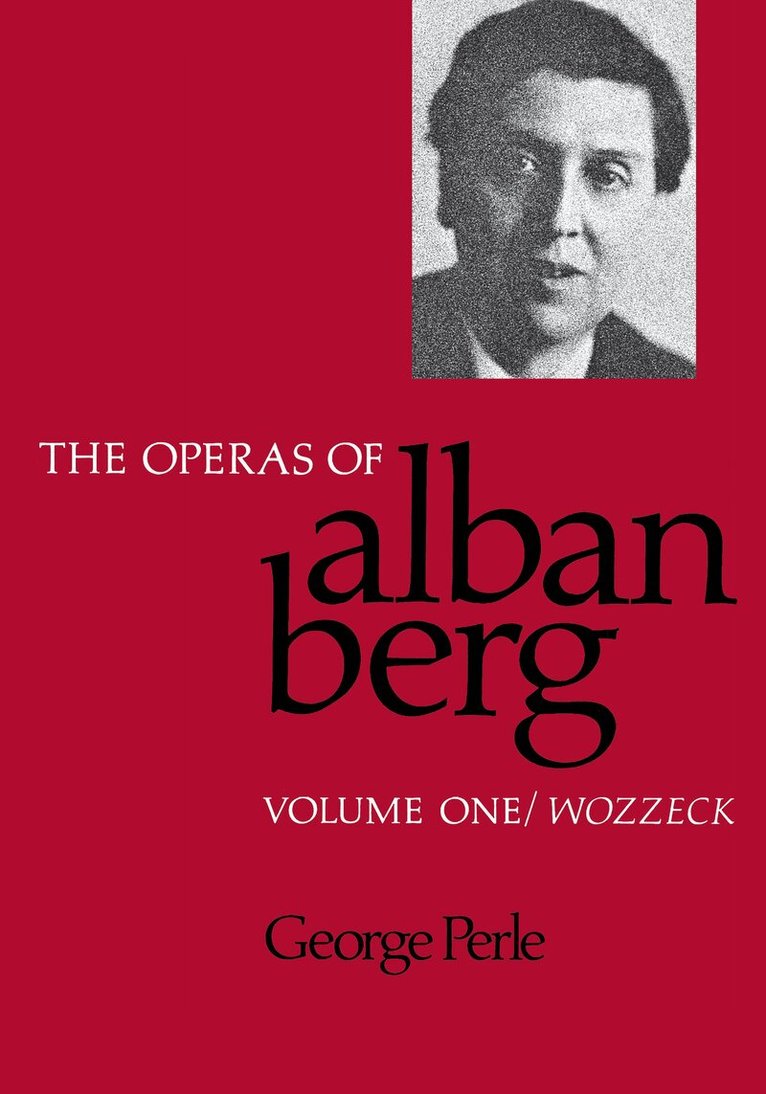
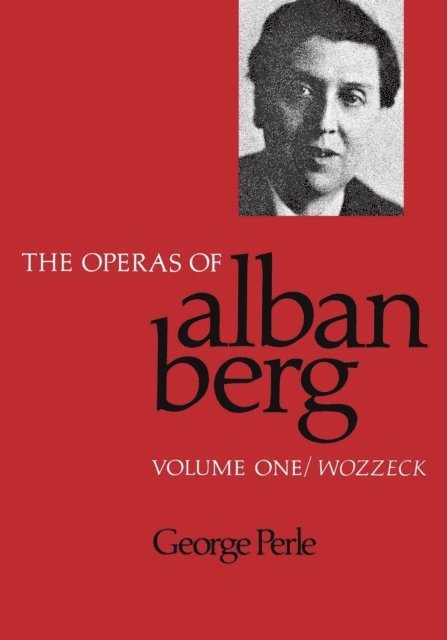
"Of the greatest significance ...The first volume of George Perle's two volume study on the two operas of Alban Berg ...is one of those few works of scholarship and analysis you can label 'definitive'; it may in time be supplemented, but not superseded."--Richard Dyer, Boston Sunday Globe "It is difficult to see how Professor Perle's exhaustive study can ever be superseded...or how such future work as may appear can do anything but add new details to his exposition of the basic clements of the work's musical language...After twenty years' work on the composer he brings to this study of Wozzeck not only a penetrating analytical mind, great scholarship and a comprehensive knowledge of the music but an almost uncanny insight into what seem to be the inner workings of Berg's mind."--Douglas Jarman, Music and Letters "If you have ever had any questions about Berg's opera Wozzeck, Mr. Perle probably answers them for you in The Operas of Alban Berg: Volume One/Wozzeck...An indispensable work on Berg's life as reflected in his work."--Donal Hcnahan, The New York Times "As with Perle's previous books, one notes with pleasure how well written is this one, how simultaneously economical and comfortable the prose, even when the subject is as complex and manifold as Wozzeck."--Mark DeVoto, Music Library Association Notes "A great and unique contribution ...[Perle] is a leading authority on Berg, and his analysis of Berg's compositional methods in the two operas is likely to be definitive."--George Martin, The Opera Quarterly "George Perle has contributed more than anyone of any nationality to a true understanding of Berg's music."--Douglass Green, Journal of Music Theory "George Perle ...possesses the kind of complete credential required for this study. [Volume I: Wozzeck] is a model of scholarly writing. Every paragraph, each quoted music example, each analysis moves the argument forward in a clear incisive manner ...Essential reading for the serious student of the music of Alban Berg."--Choice
Serial Composition and Atonality
An Introduction to the Music of Schoenberg, Berg, and Webern
Inbunden, Engelska, 1991
565 kr
Skickas inom 7-10 vardagar
Widely recognized as the definitive work in its field ever since its original publication in 1962, Serial Composition and Atonality remains an unsurpassed introduction to the technical features of what is probably the most revolutionary body of work since the beginnings of polyphony. In the analysis of specific compositions there is first and last of all a concern with the musical surface--an attempt to trace connections and distinctions there before offering any deeper-level constructions, and to offer none where their effects are not obvious on more immediate levels of musical experience. In this sixth edition of the book, George Perle employs the new and more consistent terminology for the identification of transpositional levels of twelve-tone sets that he first proposed in Twelve-Tone Tonality (1977).
606 kr
Skickas inom 7-10 vardagar
In this classic work, George Perle argues that the seemingly disparate styles of post-triadic music in fact share common structural elements. These elements collectively imply a new tonality as 'natural' and coherent as the major-minor tonality that was the basis of a common musical language in the past. His book describes the foundational assumptions of this post-diatonic tonality and illustrates its compositional functions with numerous musical examples. The second edition of "Twelve-Tone Tonality" is enlarged by eleven new chapters, some of which are 'postscripts' to earlier chapters - clarifying, elucidating, and expanding upon concepts discussed in the original edition. Others discuss new developments in the theory and practice of twelve-tone tonality, including voice-leading implications of the system and dissonance treatment.
266 kr
Skickas inom 7-10 vardagar
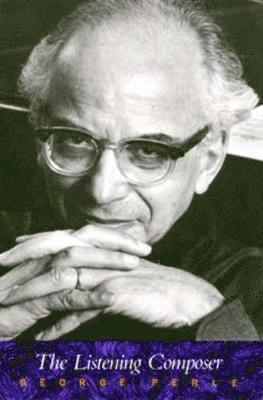
George Perle takes us into the composer's workshop as he reevaluates what we call 'twentieth-century music' - a term used to refer to new or modern or contemporary music that represents a radical break from the tonal tradition, or 'common practice', of the preceding three centuries. He proposes that this music, in the course of breaking with the tonal tradition, presents coherent and definable elements of a new tradition. In spite of the disparity in their styles, idioms, and compositional methods, he argues, what unites Scriabin, Stravinsky, Bartok, and the Viennese circle (Schoenberg, Berg, and Webern) is more important than what separates them. If we are to understand the connections among these mainstream composers, we also have to understand their connections with the past. Through an extraordinarily comprehensive analysis of a single piece by Varese, Density 21.5 for unaccompanied flute, Perle shows how these composers refer not only to their contemporaries but also to Wagner, Debussy, and Beethoven. Perle isolates the years 1909-10 as the moment of revolutionary transformation in the foundational premises of our musical language.He asks: What are the implications of this revolution, not only for the composer, but also for the listener? What are the consequences for the theory and teaching of music today? In his highly original answers, Perle relates the role of intuition in the listening experience to its role in the compositional process. Perle asserts that the post-Schoenbergian serialists have preoccupied themselves with secondary and superficial aspects of Schoenberg's twelve-tone method that have led it to a dead end but he also exposes the speciousness of current alternatives such as chance music, minimalism, and the so-called return to tonality. He offers a new and more comprehensive definition of 'twelve-tone music' and firmly rejects the notion that accessibility to the new music is reserved for a special class of elite listeners.