
Gerald L Mackie – författare
Visar alla böcker från författaren Gerald L Mackie. Handla med fri frakt och snabb leverans.
3 produkter
3 produkter
Häftad, Engelska, 2004
2 362 kr
Skickas inom 5-8 vardagar
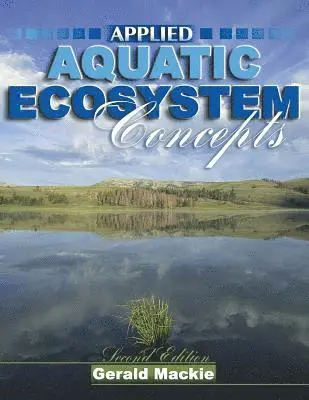
Numerous concepts are applied to everydayexperiences that we have in our homes, at the cottages, while fishing,canoeing, or swimming Applied Aquatic Ecosystem Concepts by Gerald L. Mackie,provides explanations for observations that we often take for granted; whywater and skies are blue, why snow flakes are six-sides, why pipes burst in thewinter and why objects in water are "bent" from our angle or view.Applied Aquatic Ecosystem Concepts is a single source for information onfreshwater concepts, the application of these concepts, and their integrationand use for assessing impacts of different kinds of pollution. Applied AquaticEcosystem Concepts not only applies physical, chemical and biological conceptsof rivers and lakes and specialized aquatic habitats, but also describespollution, how to assess toxicity of pollutants, water quality, environmentalimpacts, conservation status of species at risk and how to control exoticspecies."This is a fantastic book thatcomprehensively gives a good introduction to aplethora of aquatic ecological concepts. I was amazed at the balancebetweenthe general application of ecological principles and the degree of detailusedto do so. Without overkill, the author provides adequate detail for eachsection,effectively using figures and tables in a manner that conveys the importantcomponents being outlined. Each chapter begins with a very useful set ofpointsthat are highlighted and discussed, and then each point is marked withinthe chapter.Further, the concepts are described without too many scientific references,which canbe distracting in educational texts. The glossary, species lists and indexare adequateand useful for general reference. This would be an especially good text forteaching atthe undergraduate and graduate levels in aquatic ecology or aquaticenvironmentalbiology. Lessons and labs could be easily developed around this text.Mackie has donea superb job at integrating a multitude of aquatic ecology principleswithin an appliedcontext, which I feel will be useful to many educators andprofessionals."RichardW. Merritt, ProfessorDepartments of Entomology and Fisheries and WildlifeMichigan State UniversityEast Lansing,MI 48824
E-bok
Engelska, 20093 082 kr
Läs direkt efter köp
Upon its initial publication more than fifteen years ago, this book broke new ground with its comprehensive coverage of the biology and ecology, distribution and dispersal mechanisms, physiology, monitoring, negative and positive impacts, and control of aquatic invasive species of mussels, clams, and snails. Building on this foundation, the second
Inbunden, Engelska, 2009
2 687 kr
Skickas inom 10-15 vardagar
Upon its initial publication more than fifteen years ago, this book broke new ground with its comprehensive coverage of the biology and ecology, distribution and dispersal mechanisms, physiology, monitoring, negative and positive impacts, and control of aquatic invasive species of mussels, clams, and snails. Building on this foundation, the second edition of Monitoring and Control of Macrofouling Mollusks in Fresh Water Systems includes completely revised information on species such as the zebra mussel while also covering up-and-coming nuisance species such as the quagga mussel, Conrad’s false mussel, the Asian clam, and the fast-spreading golden mussel.The Second Edition includes: Ten new species of mussels and snailsInternational case studies on mussel fouling problems and how to cope with themNew control and monitoring techniquesDiscussions of the latest threats and possible future scenariosThe book contains brief descriptions of the external and internal structures, examining only those features relevant to the monitoring and control of the invasive species. It discusses why the mollusks are pests, distinguishing nuisance species from native species, their habits and habitat, reproductive potential, and life cycles and population dynamics. The authors also explain how efficient dispersal mechanisms employed by the nuisance mollusks not only help them spread so rapidly to inland lakes and rivers across continents, but how they can invade virtually every part of a facility. While many other resources contain segments of this information, none cover all areas and link them in a cohesive fashion. It is this approach that makes the understanding of potential impacts on ecosystems, industries and utilities, as well as the many human-made physical and chemical mitigants for controlling the mollusks supplied by this book so crucial for preserving the health of raw water supplies.